
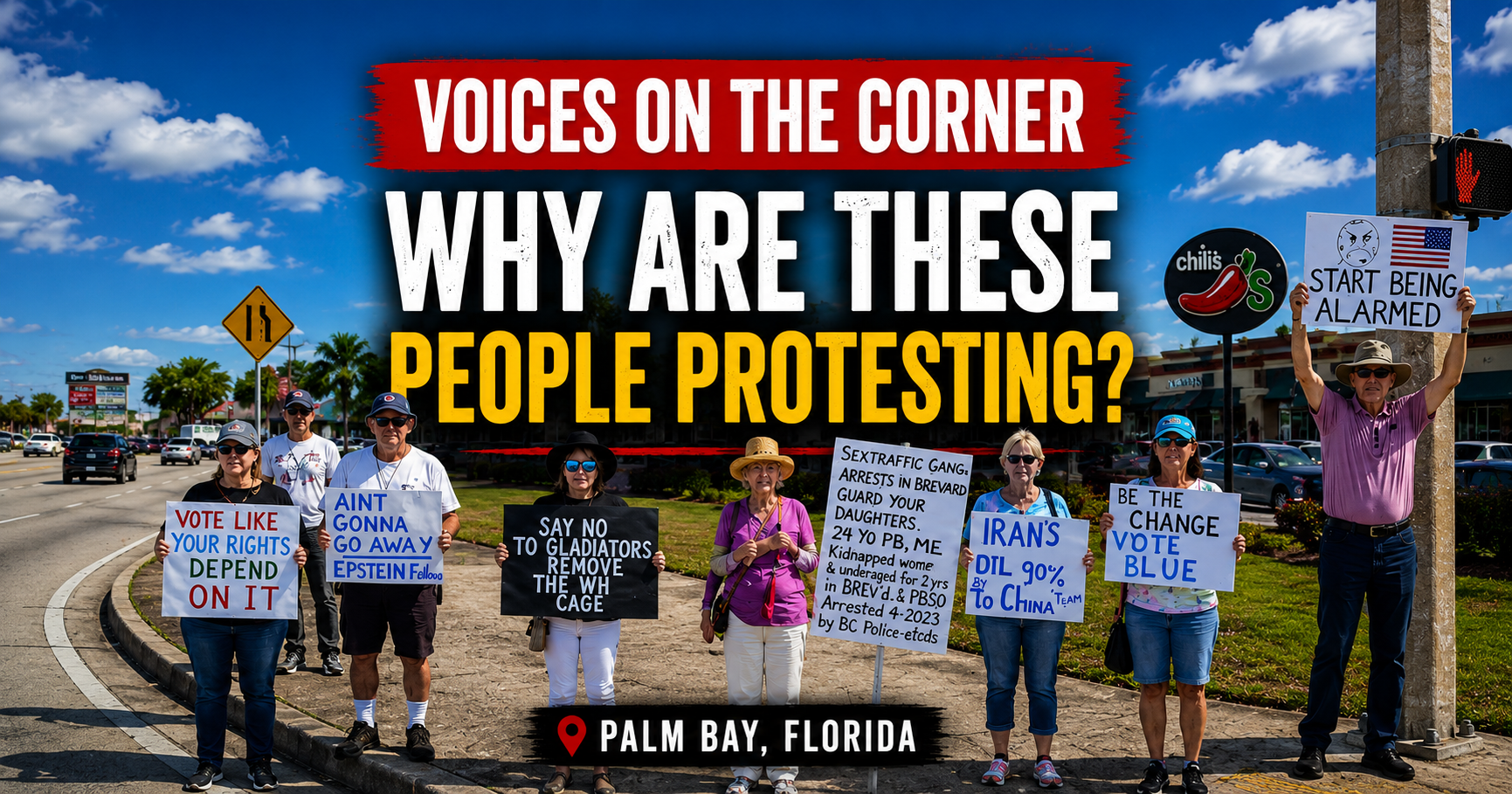
VOICES ON THE CORNER
Why are these people protesting?
A roadside demonstration in Palm Bay, Florida reveals growing concerns about democracy, immigration, civic participation, and the future of the nation. Voices on the Corner explores what these citizens want America to hear.
What a Small Palm Bay Protest Reveals About America's Growing Crisis of Trust
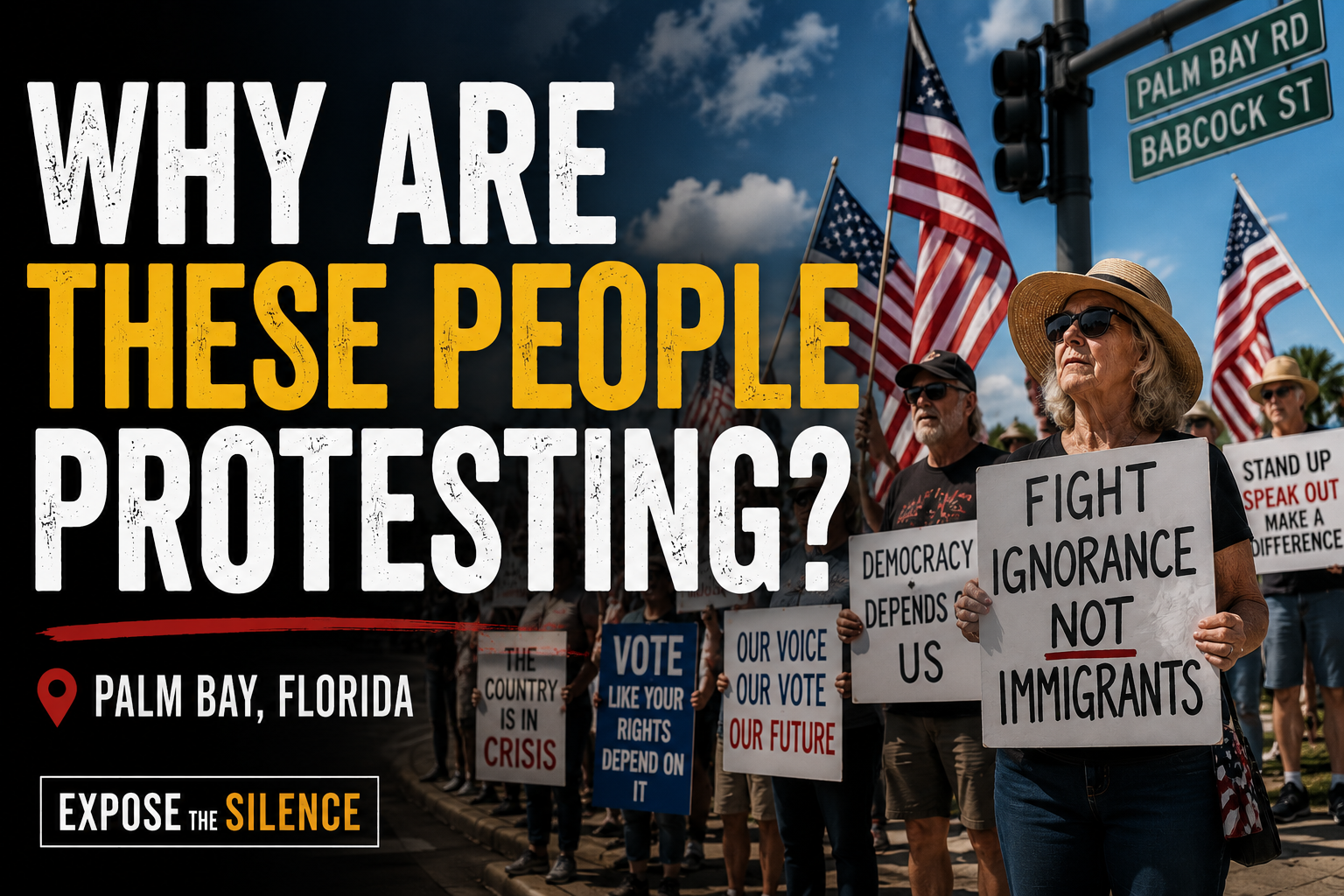
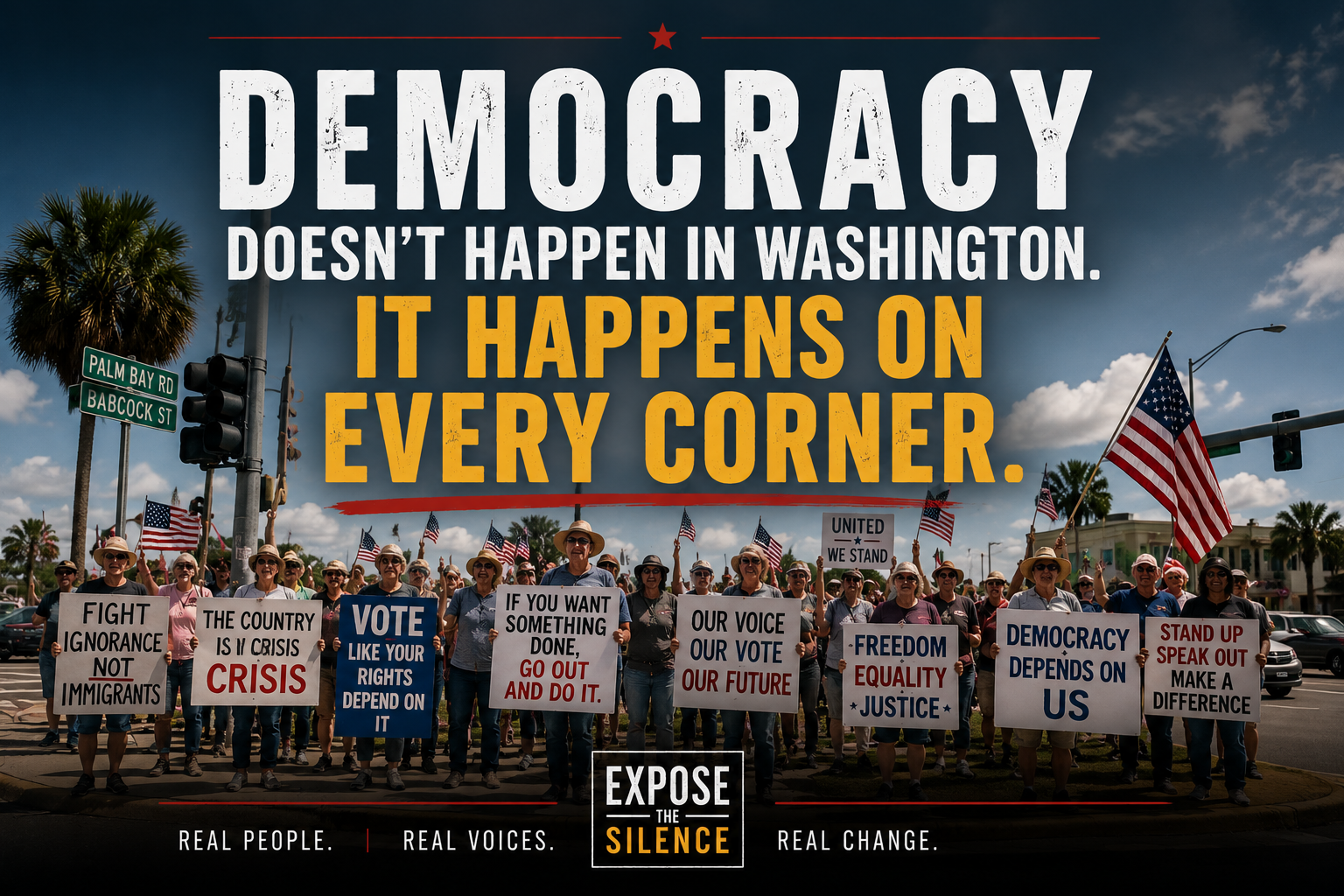
At the intersection of Palm Bay Road and Babcock Street, a small group of citizens gathered with handmade signs and a message they believed could no longer remain silent.
Some signs focused on immigration.
Others warned about threats to democracy.
Some called for greater voter participation.
Others expressed concerns about government accountability, civil liberties, detention policies, and foreign affairs.
To passing motorists, it appeared to be a modest roadside demonstration.
Yet the concerns expressed by these citizens reflect many of the same debates taking place across the United States today.
The protest was not organized around a single issue.
It was a public expression of frustration, concern, and civic engagement from individuals who believe America is at a crossroads.
WHAT WERE THEY SAYING?
The messages displayed during the demonstration varied widely.
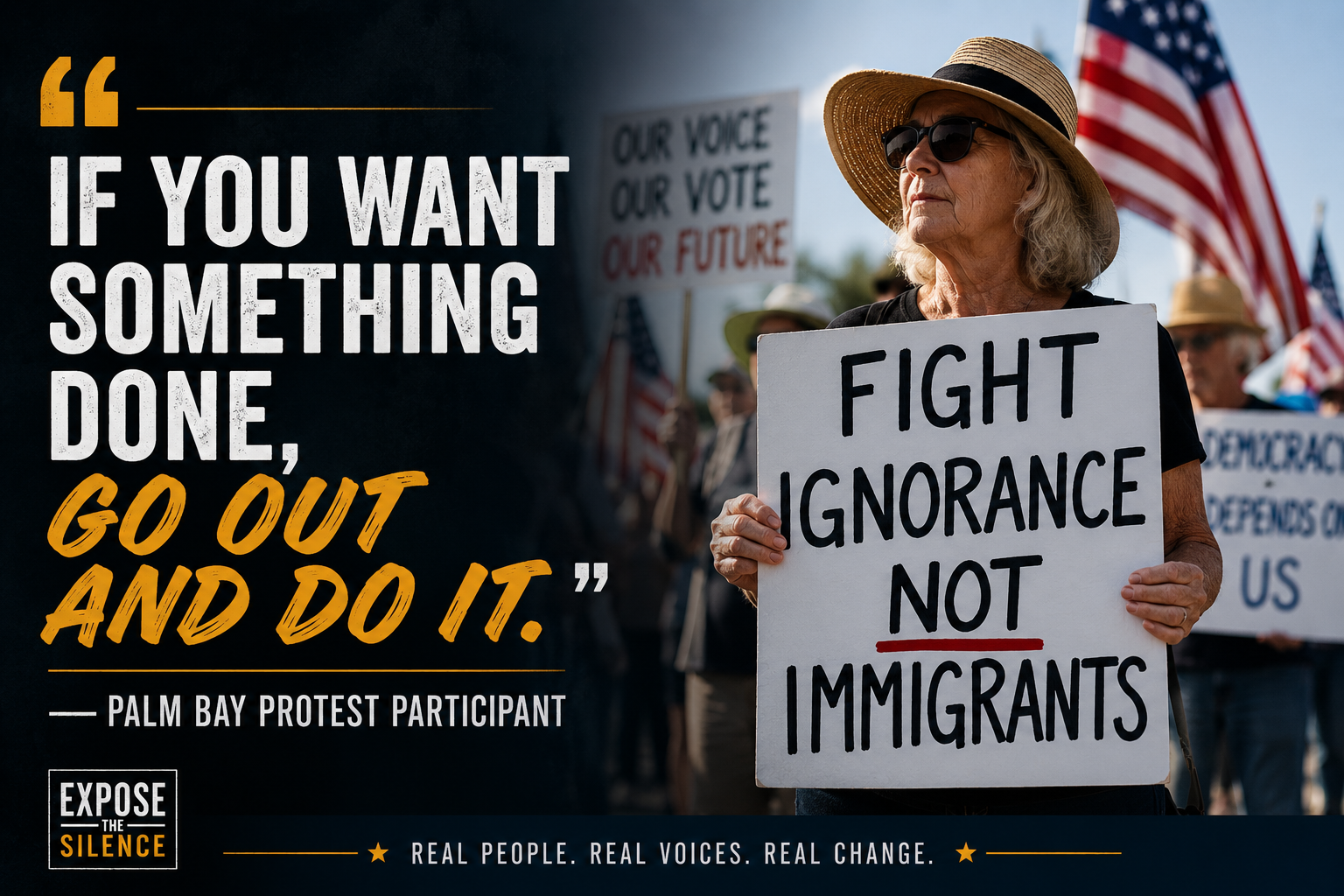
One participant held a sign reading:
"Fight Ignorance, Not Immigrants."
Another displayed:
"Vote Like Your Rights Depend On It."
Others carried signs warning about government overreach, detention facilities, democratic participation, and international conflicts.
One protester expressed concern about what she views as increasing public apathy.
"If you want something done, go out and do it."
Another argued that Americans should remember the country's immigrant history.
"The only real Americans were Native Americans. Everybody else came from somewhere."
While opinions differed, participants repeatedly returned to a common theme:
Citizens must become more involved in public life.
THE IMMIGRATION DEBATE
Immigration was one of the most visible themes represented during the demonstration.
Participants expressed concern about how immigrants are portrayed in public discourse and questioned whether current policies reflect American values.
The sign reading:
"Fight Ignorance, Not Immigrants"
captured a broader concern shared by several demonstrators: that immigration debates have increasingly become driven by fear, misinformation, and political polarization.
According to the U.S. Census Bureau, immigrants account for approximately 14–15% of the American population, representing one of the largest immigrant populations in the world.
Supporters of immigration reform argue that immigrants contribute significantly to the economy, workforce, entrepreneurship, and cultural diversity.
Critics often cite concerns regarding border security, public resources, crime, and economic competition.
The Palm Bay demonstrators largely emphasized the humanitarian and historical dimensions of the issue.
THE CRISIS OF TRUST
Although the protest covered multiple topics, a deeper theme connected many of them.
TRUST.
Trust in government.
Trust in institutions.
Trust in elected officials.
Trust in media.
Trust in the systems responsible for protecting democratic values.
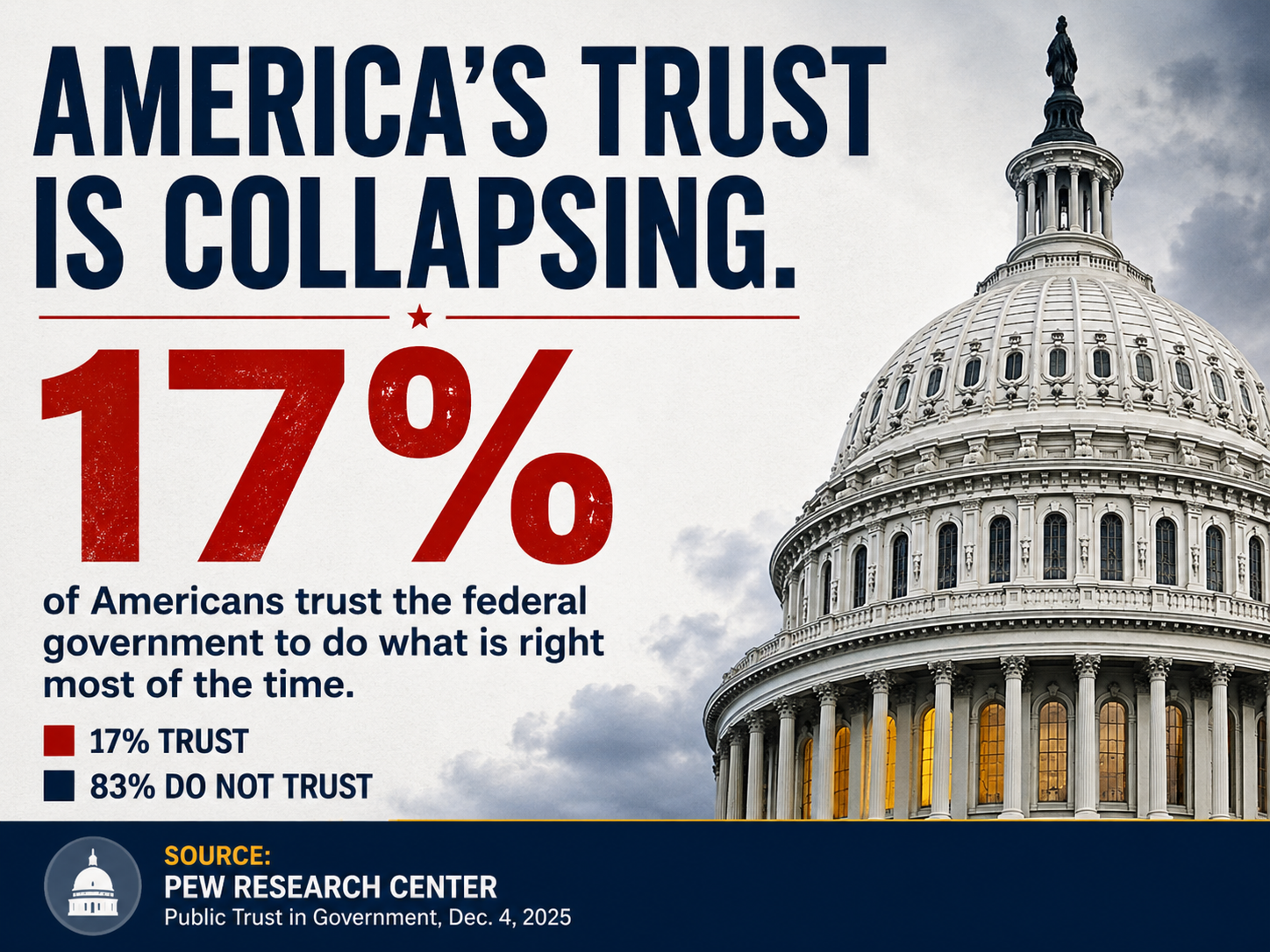
Infographic 1. Public trust in the federal government has fallen to one of the lowest levels recorded in modern American history.
According to Pew Research Center, only 17% of Americans report trusting the federal government to do what is right most of the time.
That represents one of the lowest levels of trust recorded in modern American history.
The decline in trust affects more than politics.
It shapes how Americans view elections, news, public health, law enforcement, and one another.
For many citizens, the loss of trust has become a motivating force for civic participation.
CIVIC ENGAGEMENT IS STILL ALIVE
Despite declining trust in institutions, Americans continue to invest heavily in their communities.
According to AmeriCorps, approximately 75.7 million Americans volunteered through organizations in 2023.
That represents nearly one-third of the adult population.
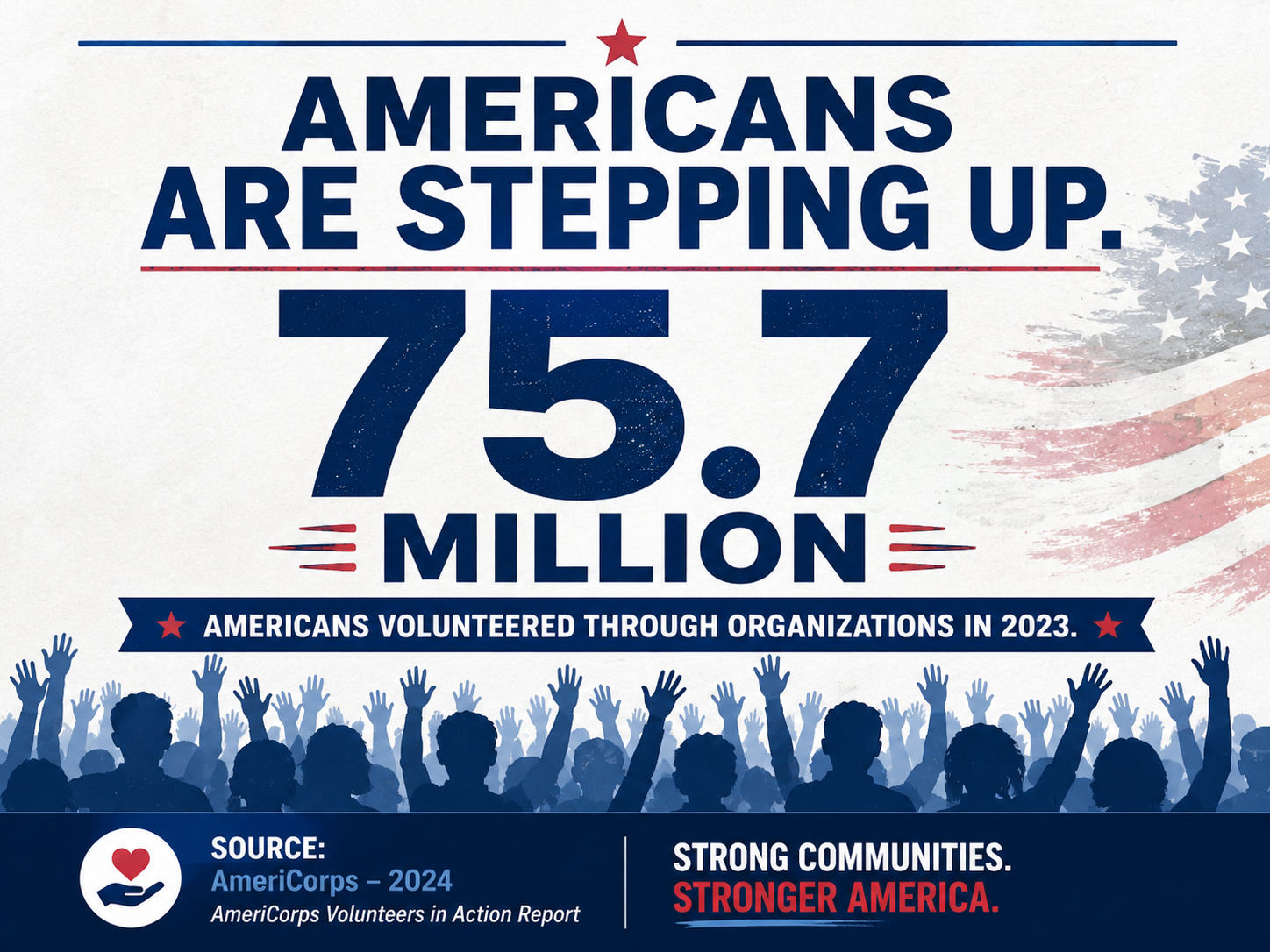
Infographic 2. Despite declining trust in institutions, civic engagement remains strong across the United States. According to AmeriCorps, approximately 75.7 million Americans volunteered through organizations in 2023, demonstrating that millions continue to invest their time, skills, and energy in strengthening their communities.
Volunteerism remains one of the strongest indicators that civic life in America is still active.
From food banks and animal rescues to youth mentorship and disaster relief, millions of Americans continue serving their communities regardless of political affiliation.
The Palm Bay demonstrators represent another form of civic engagement: public participation.
AMERICANS ARE SPEAKING UP
The citizens gathered at this intersection are not alone.
Research suggests that approximately 35% of Americans have participated in some form of activism, public advocacy, petitioning, demonstration, or civic action.
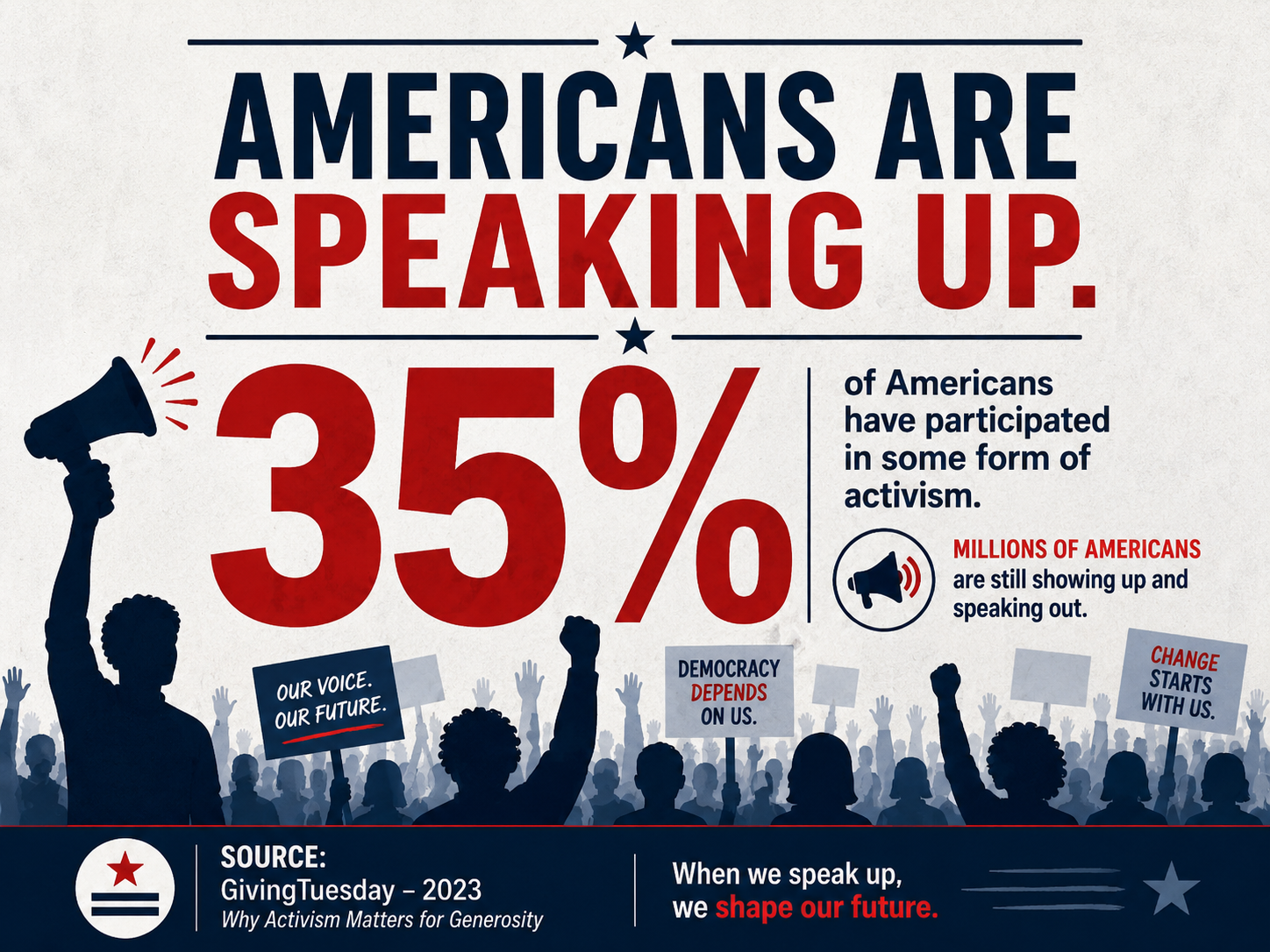
Infographic 3. The citizens gathered at Palm Bay Road and Babcock Street are part of a broader trend of civic participation across the United States. Research indicates that approximately 35% of Americans have engaged in some form of activism, advocacy, petitioning, public demonstration, or civic action, reflecting a growing desire among citizens to make their voices heard on issues they believe matter.
Whether motivated by social justice, civil rights, economic concerns, environmental issues, immigration policy, or political reform, millions of Americans continue to engage in public advocacy.
The Palm Bay demonstration represents one small example of a larger national trend.
People increasingly feel compelled to make their voices heard.
A NATION OF INDEPENDENTS
One of the most significant political developments in America today is the rise of political independents.
According to Gallup, approximately 45% of Americans now identify as independents rather than aligning with either major political party.
A record high.
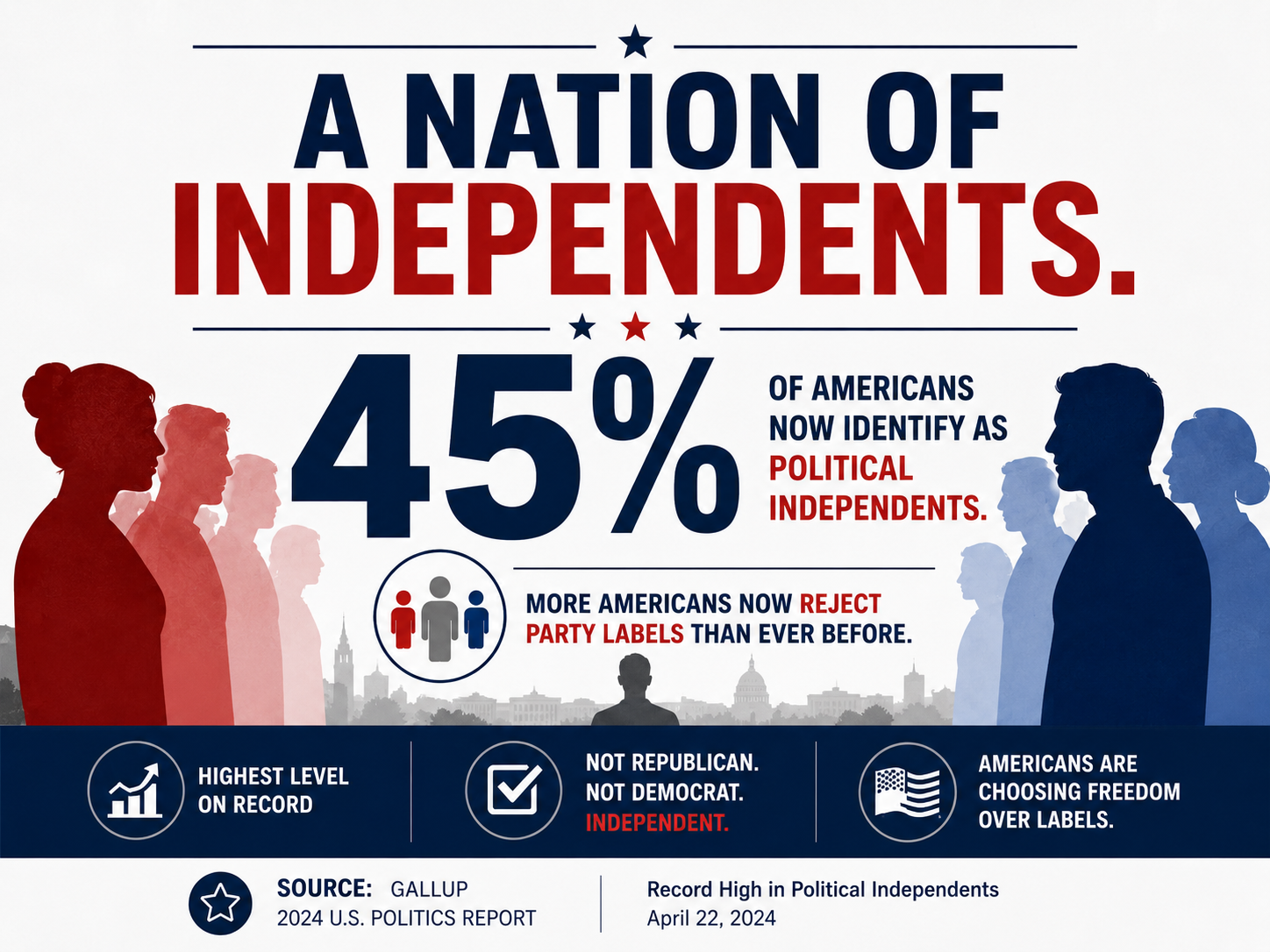
Infographic 4. America's political landscape is changing. According to Gallup, approximately 45% of Americans now identify as political independents rather than aligning with either major political party. The trend suggests a growing number of citizens feel disconnected from traditional political institutions and are seeking solutions beyond conventional partisan divides.
The growth of political independence suggests that many Americans feel disconnected from traditional political institutions.
For some, neither party fully represents their views.
For others, the country's challenges have become too complex for simple partisan solutions.
The result is a growing number of citizens searching for alternatives outside conventional political labels.
WHY PEOPLE TAKE TO THE STREETS
Public demonstrations have long been part of American democracy.
From the Civil Rights Movement to anti-war protests, labor movements, women's suffrage campaigns, and contemporary social justice efforts, public assembly remains one of the most visible expressions of civic participation.
The individuals standing on this Palm Bay street corner were exercising that tradition.
Their signs differed.
Their priorities differed.
But their actions reflected a common belief:
Democracy requires participation.
VOICES FROM THE CORNER
"If you want something done, go out and do it."
"Fight Ignorance, Not Immigrants."
"Vote Like Your Rights Depend On It."
"The country is in crisis."
These statements may not represent every American.
But they represent citizens who felt strongly enough to leave their homes, stand in public, and advocate for what they believe.
The demonstration at Palm Bay Road and Babcock Street was small.
But the issues raised were not.
Immigration.
Civil liberties.
Voting rights.
Government accountability.
Public participation.
Trust.
Whether one agrees with the protesters or disagrees with them entirely, their presence reflects a reality that cannot be ignored:
Many Americans believe the country is facing important challenges and feel compelled to speak out.
At a time when political division often dominates public conversation, these citizens chose a different approach.
They showed up.
They participated.
And they reminded everyone driving past that democracy is not something that happens only in Washington.
It happens wherever citizens decide their voices matter.
Sources
Pew Research Center – Trust in Government
Gallup – Political Independents in America
AmeriCorps – Volunteering and Civic Life in America
U.S. Census Bureau – Foreign-Born Population Statistics
Field interviews and photographs conducted in Palm Bay, Florida
Editorial Note
This article documents a public demonstration and the perspectives expressed by participants. Inclusion of those views does not imply endorsement by Expose The Silence.
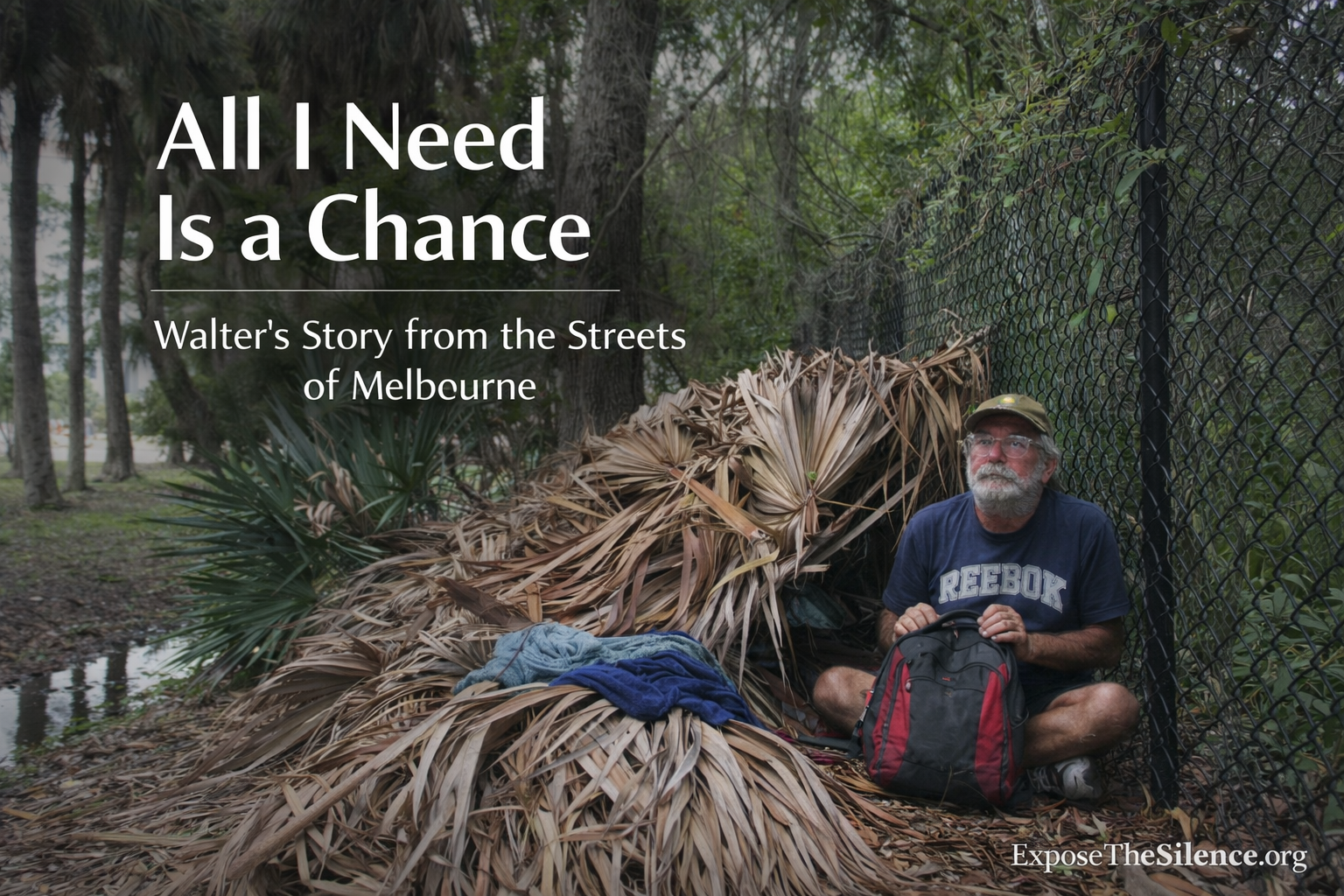
All I Need Is a Chance
Walter Henry Regeski III’s story reveals the hidden barriers that keep people trapped in homelessness: lost identification, lack of phone access, unsafe shelter, and systems that demand stability before offering help. “ALL I NEED IS A CHANCE,” he says—a plea that exposes a crisis far deeper than the loss of housing.
How One Man’s Story Reveals the Hidden Barriers Keeping People Trapped in Homelessness
Homelessness Is More Than the Loss of Shelter
Homelessness is often reduced in public discourse to a question of housing: whether someone has a roof overhead or not.
But for those living it, homelessness is rarely caused by a single event—and it is never solved by shelter alone.
It is often the result of cascading failures: illness, financial collapse, lost transportation, missing identification, lack of communication access, untreated trauma, and systems that demand stability before offering help.
Once someone falls into homelessness, the pathways back are often blocked by the very institutions meant to assist them.
Walter Henry Regeski III knows that reality intimately.
His story exposes what happens when a working life collapses under pressure—and how difficult recovery becomes when survival itself consumes every hour of the day.
“You have to have ID to do anything.”
A Working Life Before the Streets
Walter is not the stereotype many imagine when they think of homelessness.
Before losing housing, he operated a pool service business and spent years caring for his aging parents in Georgia. For nearly two decades, he helped care for family members as their health declined.
He describes himself simply:
“A good person. A hard worker.”
When his parents died, Walter was left to absorb the financial consequences alone: probate costs, foreclosure, and mounting instability.
Then came the next collapse.
His truck failed.
Without transportation, he lost his ability to work.
Without work, he lost income.
Without income, there was nowhere left to go.
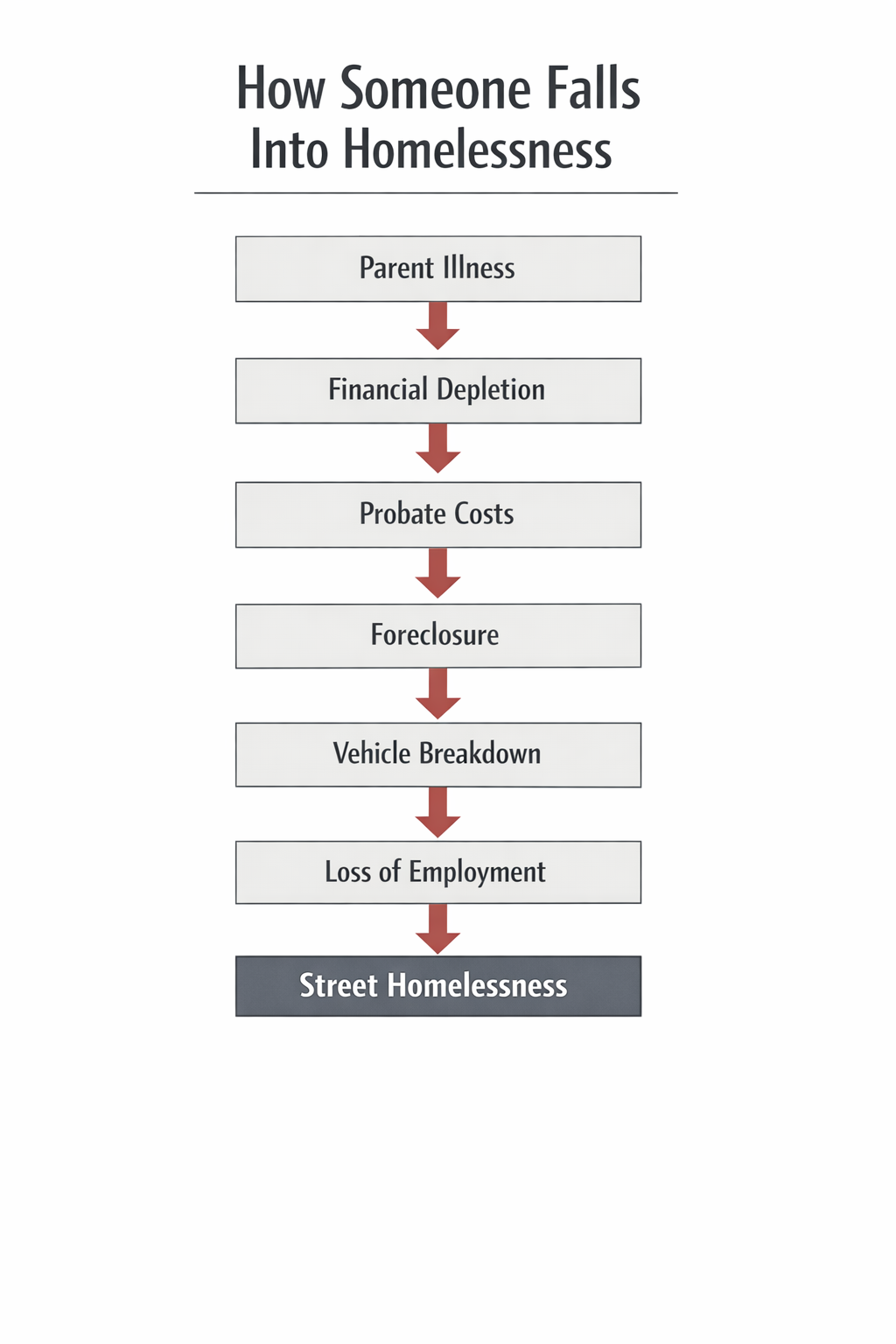
Walter’s journey into homelessness shown as a simple step-by-step chart: after his vehicle broke down, he lost his job, and eventually ended up living on the streets.
The System Trap: Why Getting Back Becomes So Hard
Losing housing is one crisis.
Trying to recover without basic tools is another.
Walter identifies two barriers that define his inability to get back on his feet:
Identification
Communication Access
Without identification, he cannot apply for jobs.
According to the National Alliance to End Homelessness, lack of identification documents is one of the most common barriers preventing unhoused individuals from accessing employment, benefits, and housing services.
Without a phone, he cannot receive callbacks, verify appointments, contact agencies, or coordinate interviews.
“Without a phone… that’s the hardest part.”
These are not failures of effort.
They are failures of access.
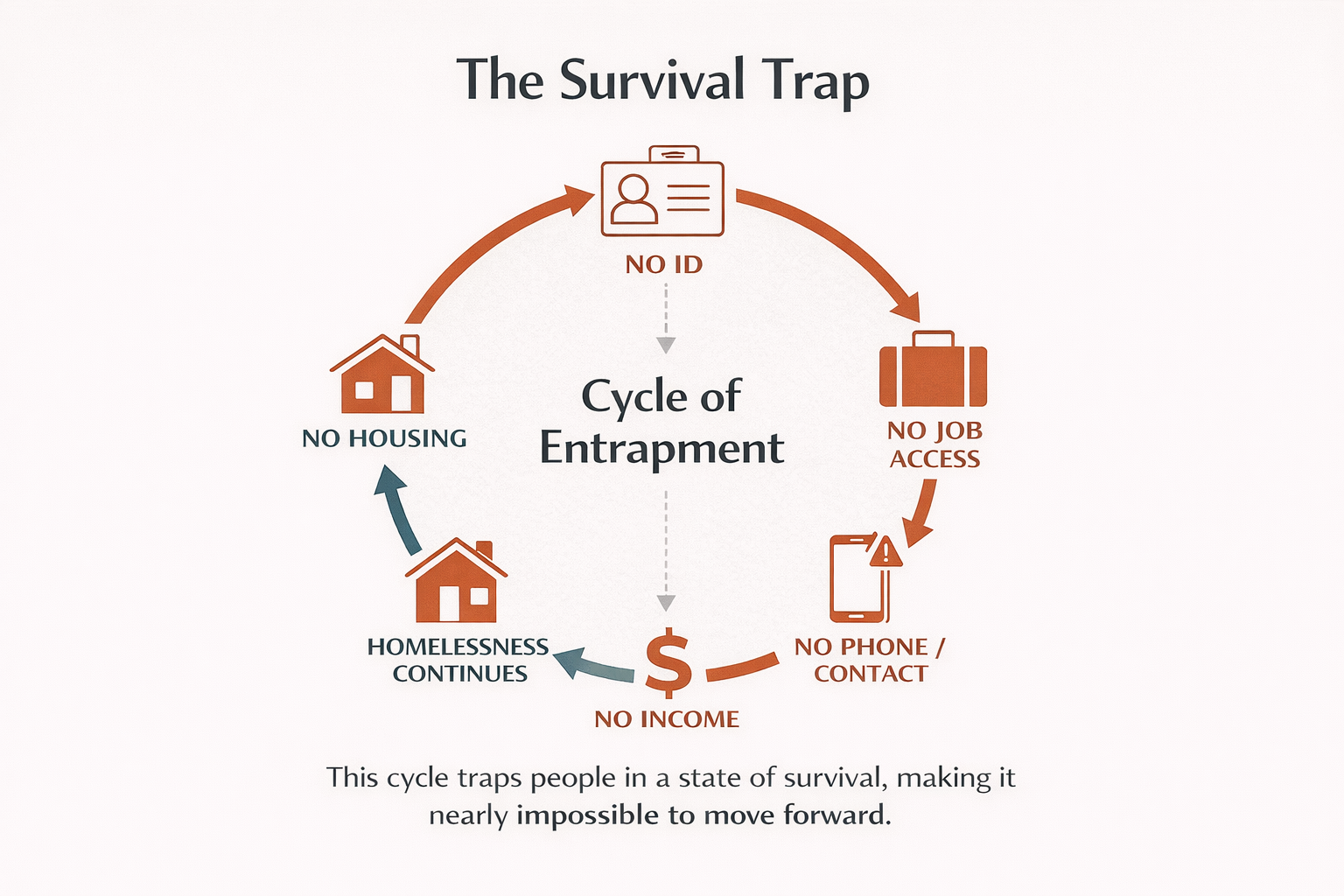
This chart shows how homelessness becomes a trap: without ID, phone access, income, or housing, it becomes nearly impossible for people like Walter to get back on their feet.
Survival Becomes Full-Time Labor
Walter’s days are governed by uncertainty.
Each morning begins with basic maintenance:
securing shelter
protecting belongings
searching for food
finding ways to survive
By nightfall, the task shifts to safety.
Rain floods campsites. Theft is common. Sleep is fragmented.
“24 hours… survival 24 hours a day.”
His shelter—built from palm fronds and salvaged materials—is not designed for comfort.
It is designed for concealment and endurance.
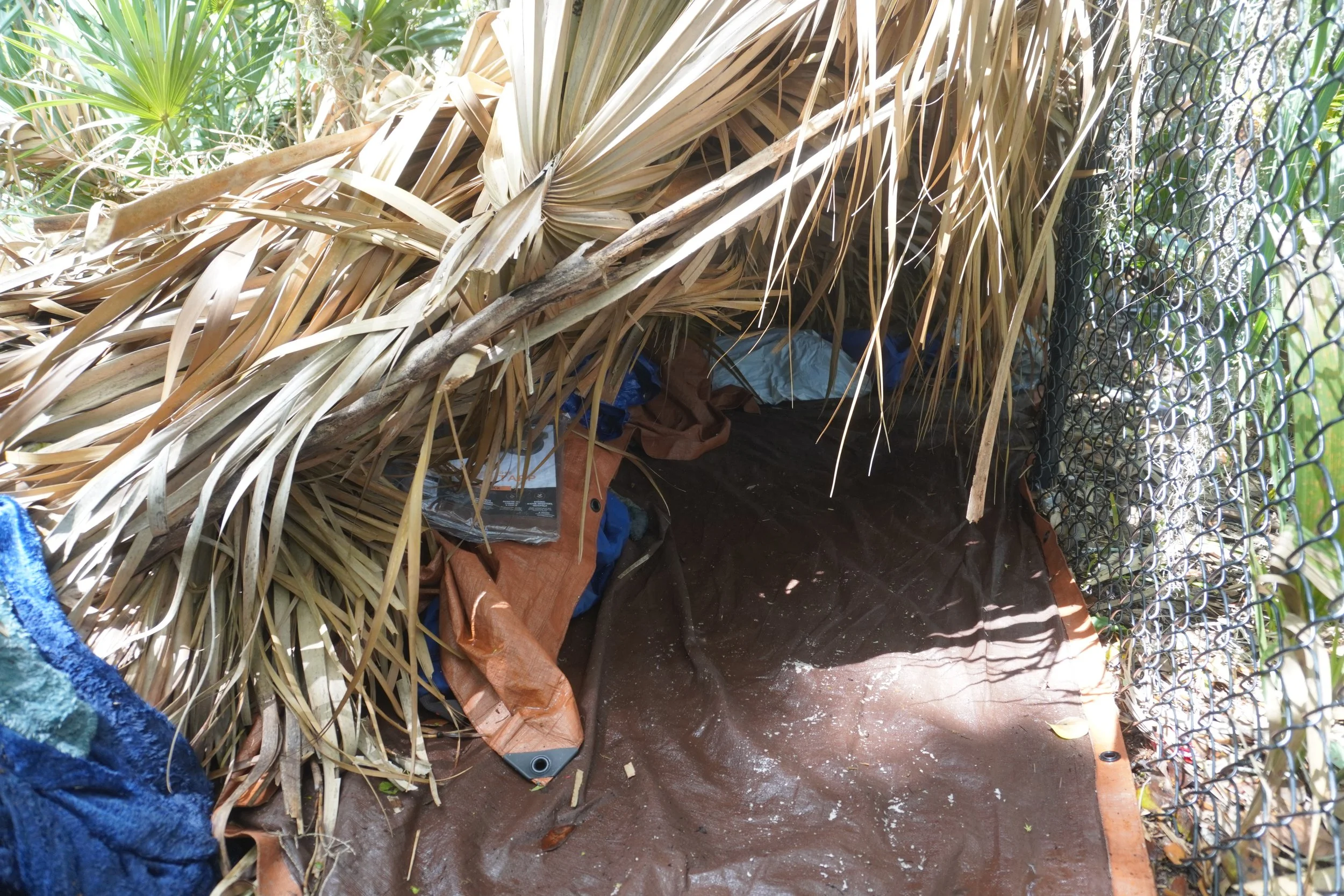
Inside Walter’s handmade palm-frond shelter, a tarp-covered sleeping space offers minimal protection from rain, heat, and exposure—showing the harsh reality of surviving without stable housing.
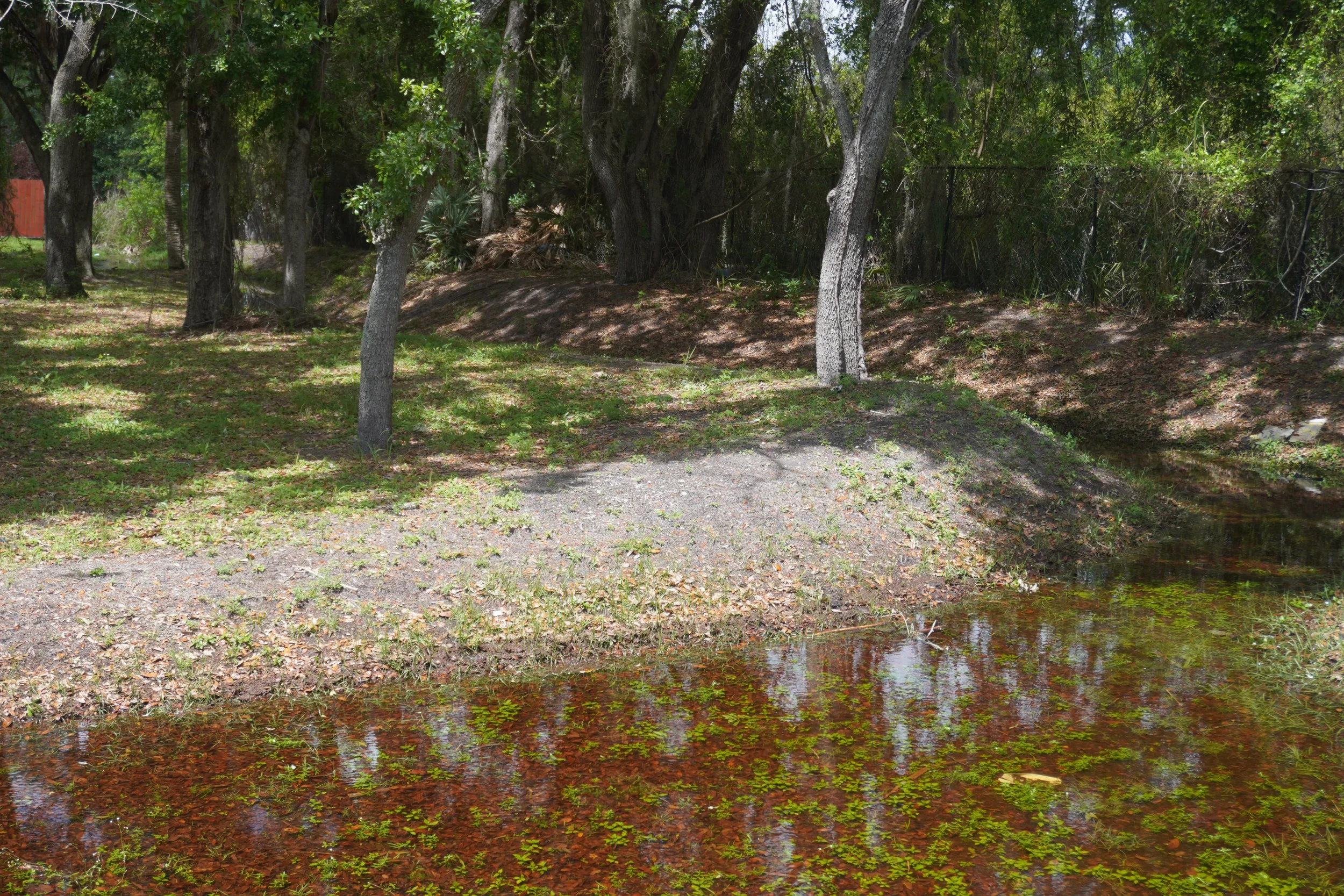
Hidden in plain sight, Walter’s shelter is tucked behind trees and water, blending into the landscape so it goes unnoticed—a fragile refuge designed as much for concealment as for survival.
The Psychological Cost No One Sees
The visible hardships of homelessness are easier to document than the invisible ones.
Walter describes the mental erosion that accompanies prolonged instability:
“It makes you feel worthless.”
“Your mind starts to go.”
“Half the time I don’t know what day it is.”
This is the psychological cost of living without continuity, safety, or certainty.
Homelessness destabilizes time itself.
Danger Is Constant
Living unsheltered is not only exhausting—it is dangerous.
Walter recounts the story of Tina, another homeless woman in the area, who was attacked while sleeping outdoors.
“She got hit in the head with a hammer…”
She survived.
Many do not.
Violence against unhoused people remains chronically underreported despite elevated rates of victimization nationwide.
HUD and national homelessness studies consistently show that unsheltered individuals face significantly higher rates of assault and victimization than the general population.
What Actually Helps
Walter does not describe abstract solutions.
His proposals are practical:
Safe shelter
Phone access
ID recovery assistance
Employment pathways
Transitional support
What he outlines is not charity.
It is infrastructure.
Florida Council on Homelessness policy reports emphasize that stable shelter, identification recovery, communication access, and employment support are among the strongest predictors of successful reentry.
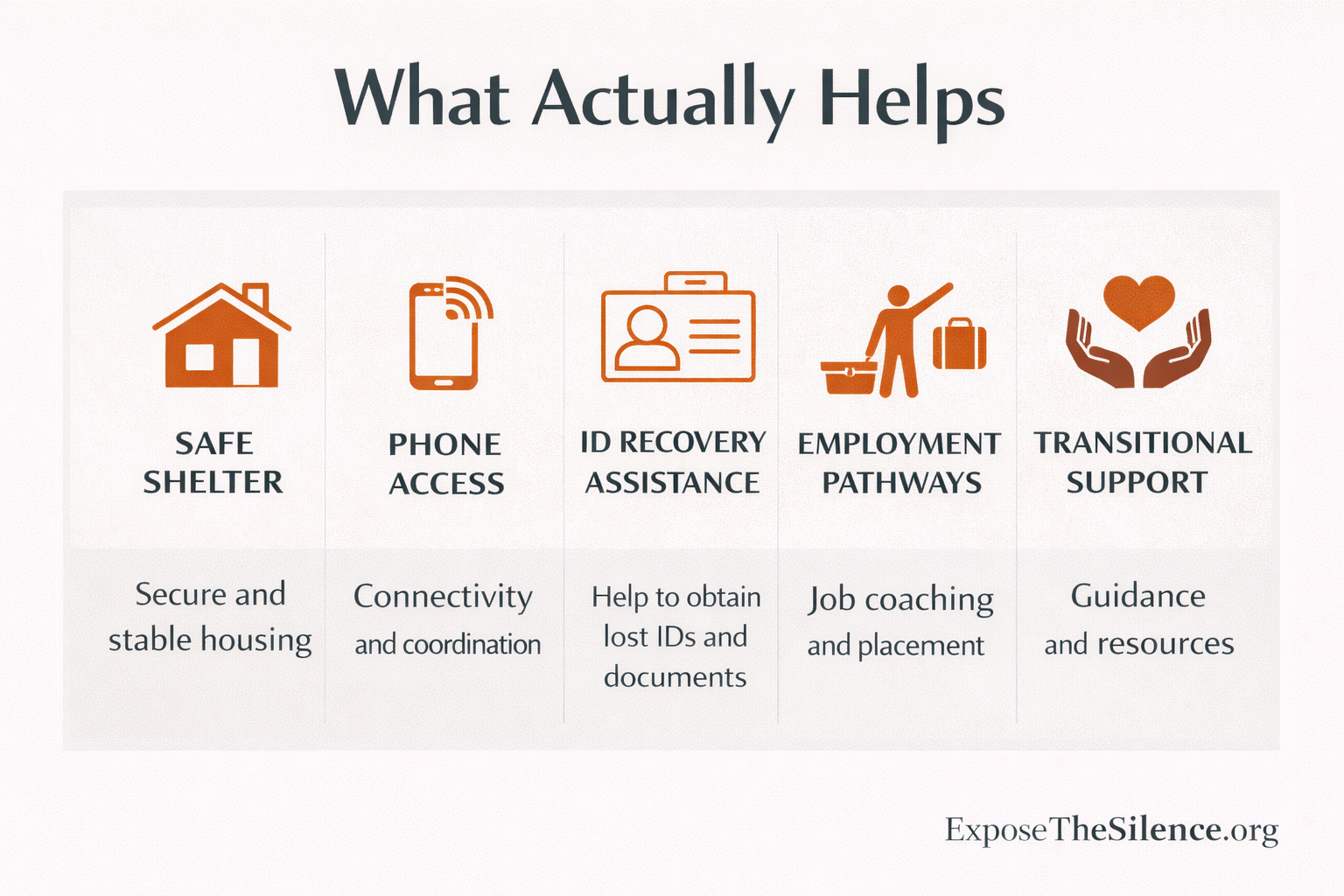
Walter says rebuilding a life starts with the basics: safe shelter, phone access, replacing lost identification, pathways to work, and support that helps people transition back into stability.
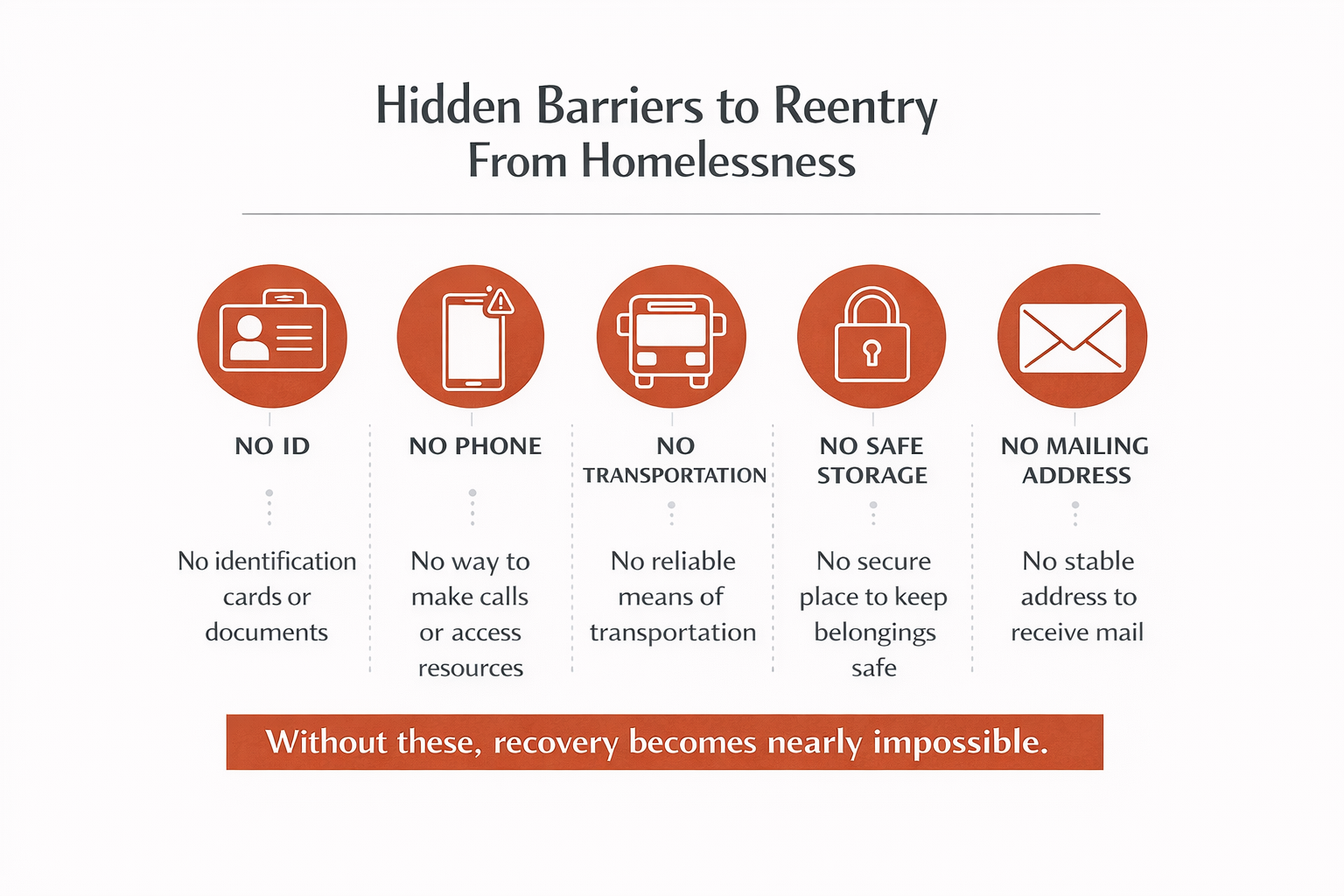
Even when someone wants to rebuild, hidden barriers like missing ID, no phone, lack of transportation, no safe storage, and no mailing address make escaping homelessness far harder than most people realize.
“All I Need Is a Chance”
Walter’s requests are modest.
He is not asking for sympathy.
He is asking for reentry.
“I want a house.”
“I want a job.”
“I want my life back.”
“All I need is a chance.”
His story is not exceptional.
That is precisely the problem.
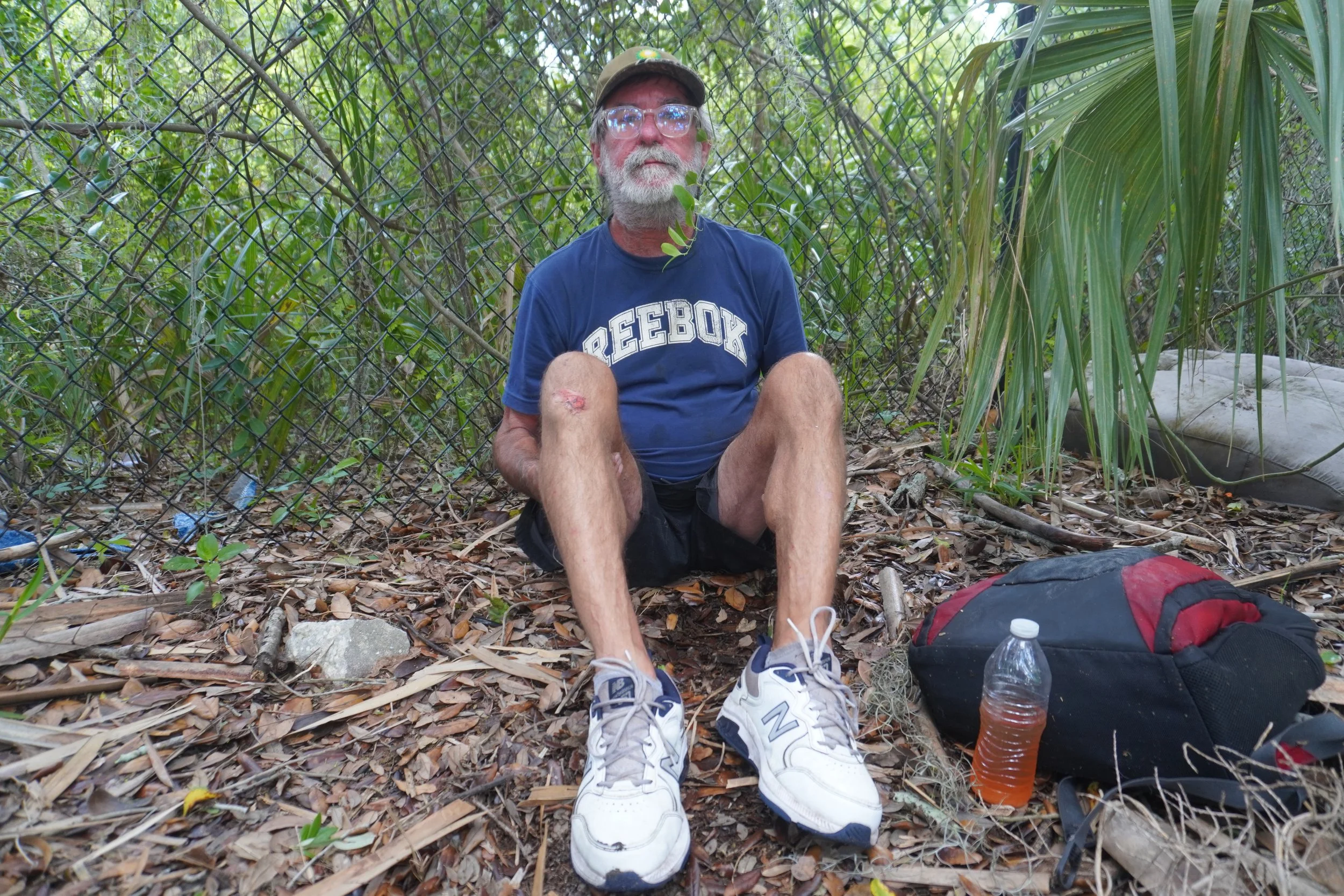
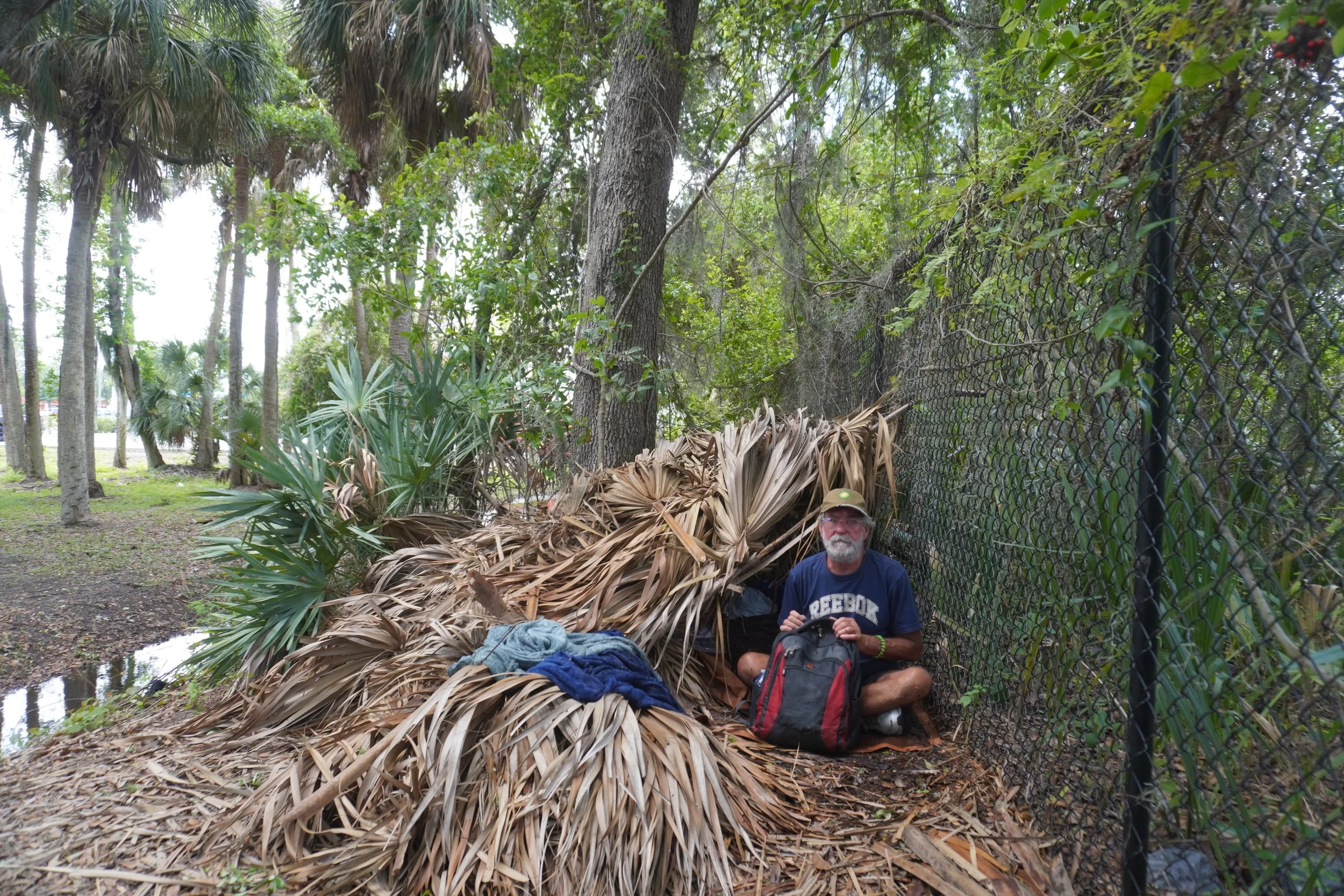
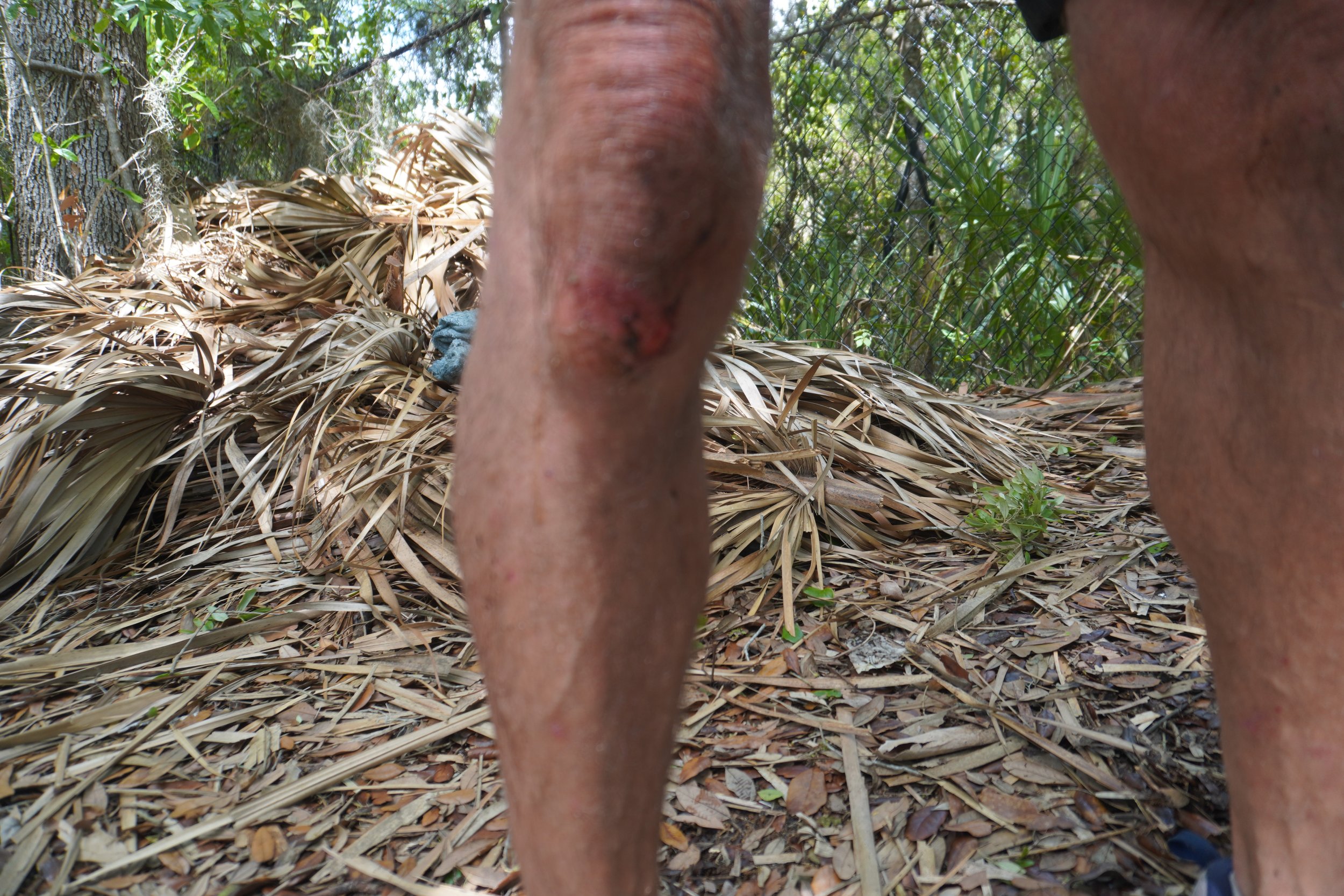
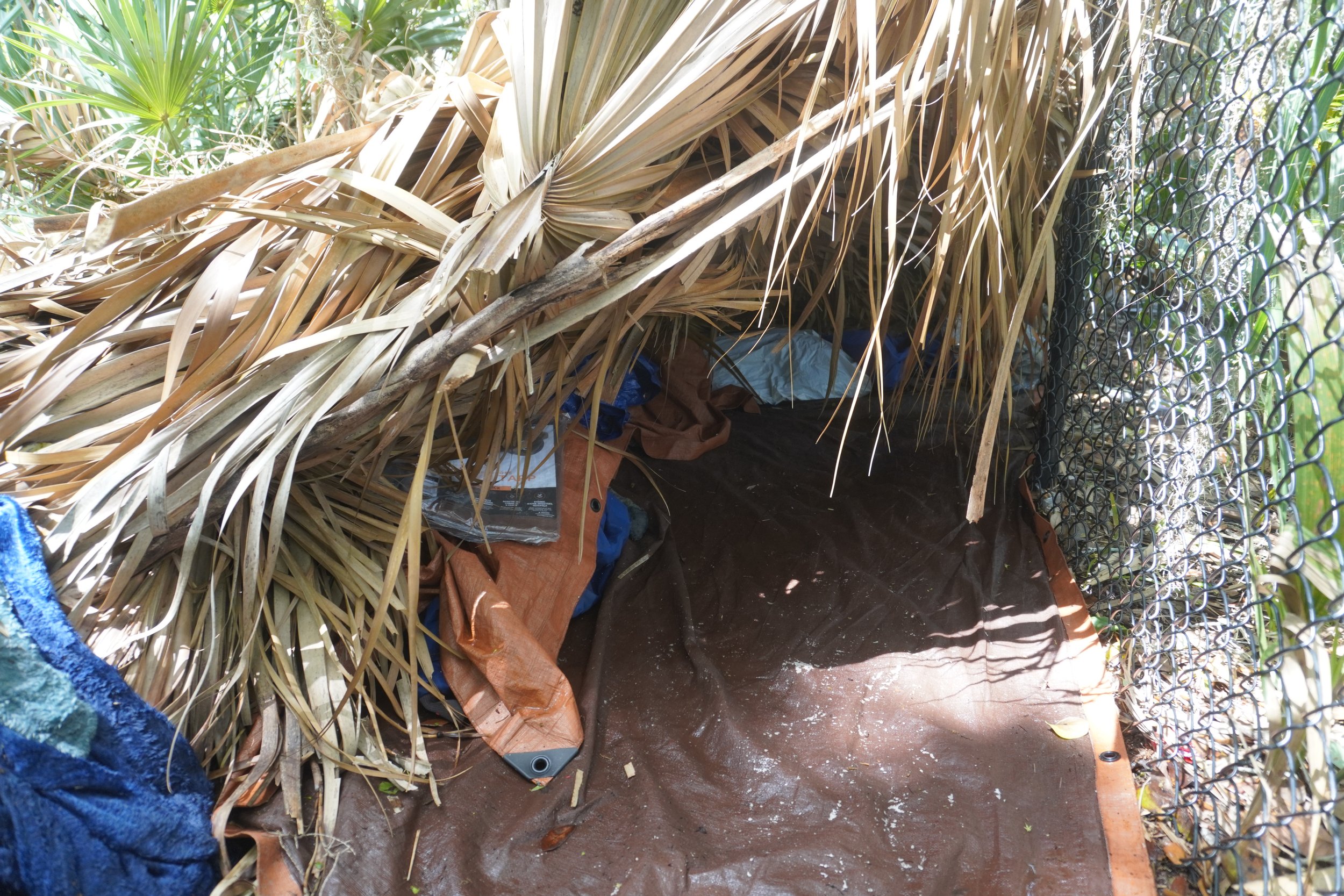
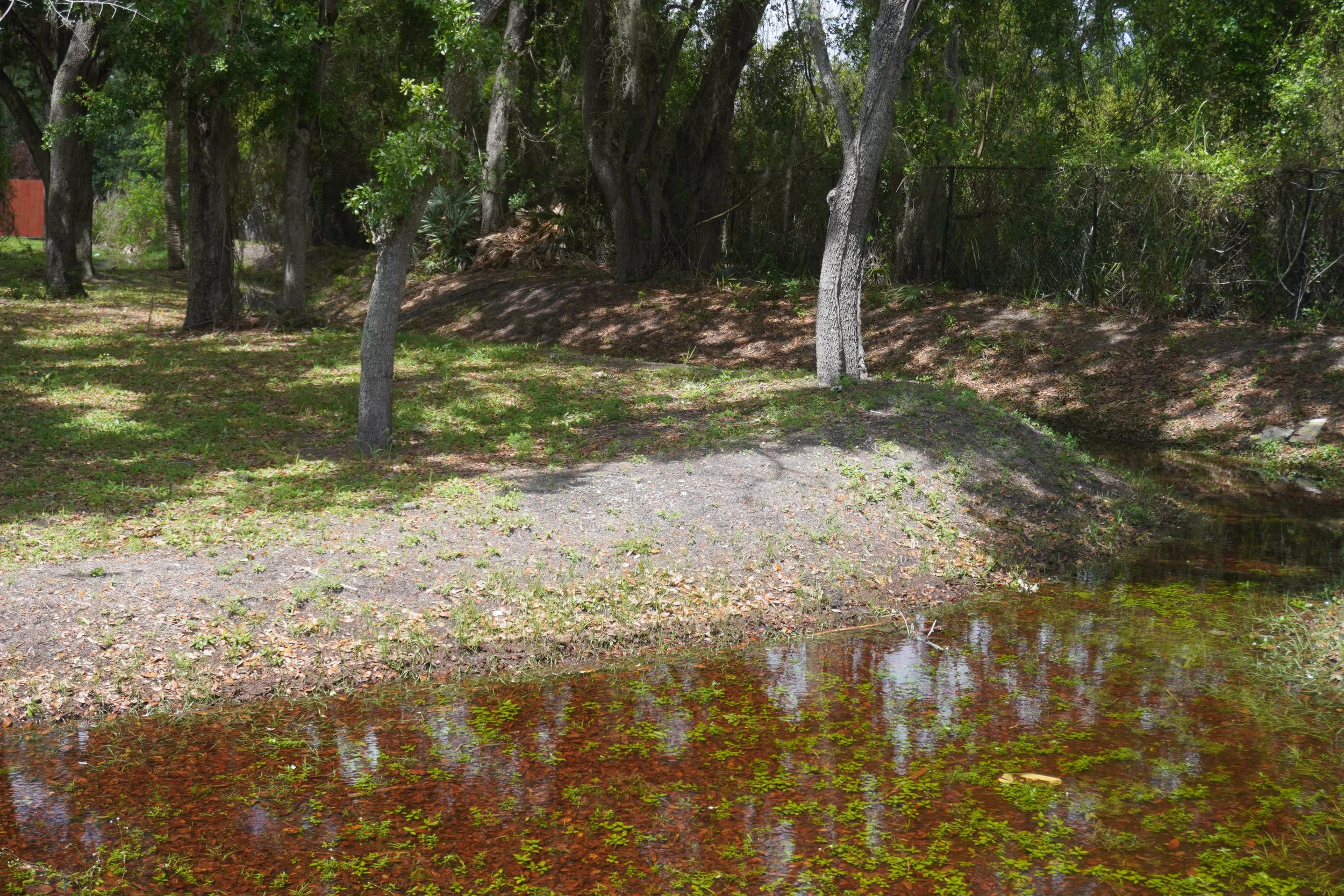
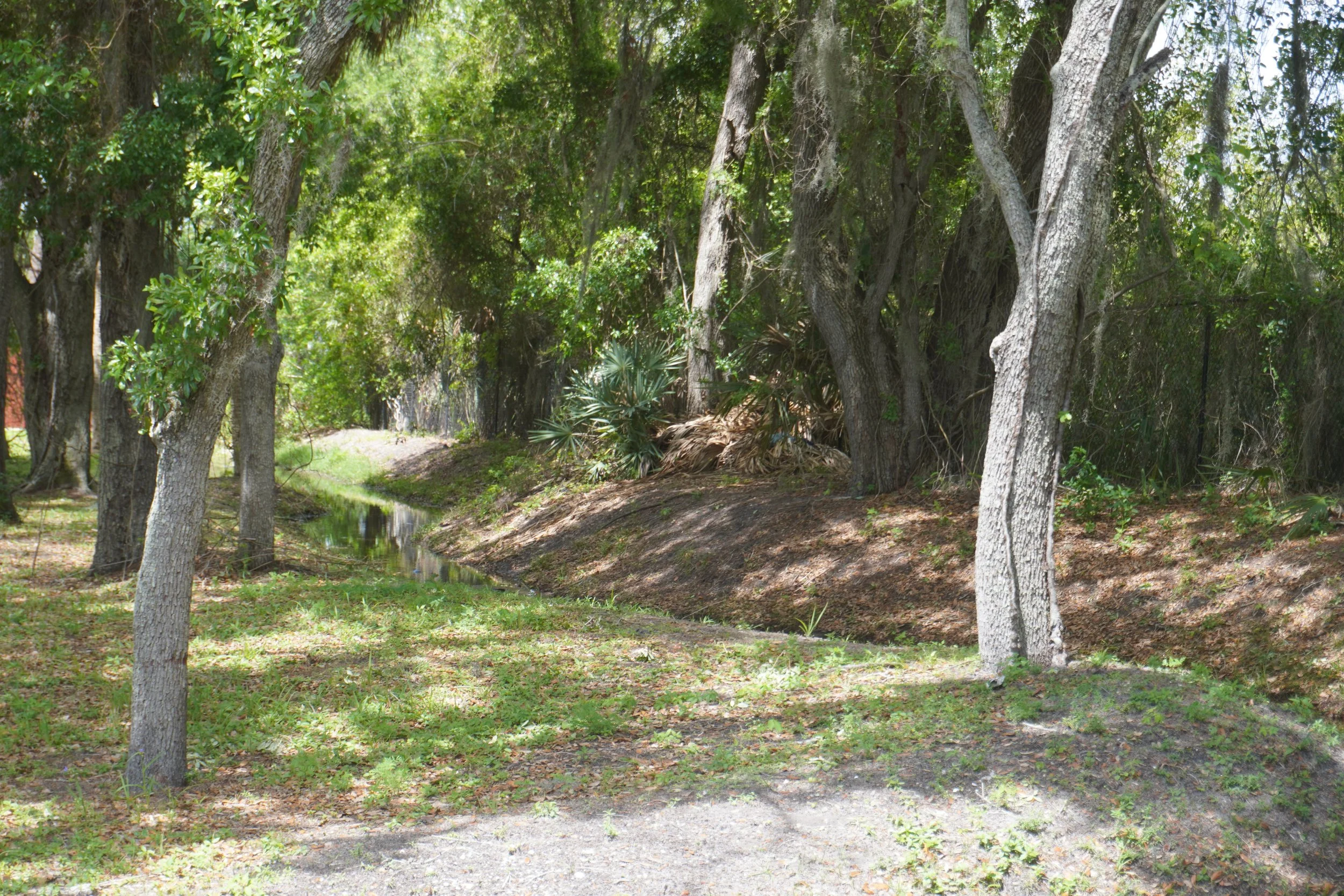
Walter’s world in images: the hidden shelter he built for survival, the fragile space he calls home, and the harsh outdoor conditions that shape daily life on the streets of Melbourne.
Source Attribution
Primary Source:
Interview with Walter Henry Regeski III conducted by Ricardo Stoyell, Melbourne, Florida, April 2026.
Photography:
Original field photography by Ricardo Stoyell.
Editorial Note
This article is part of ExposeTheSilence.org’s continuing investigative coverage of homelessness, systemic poverty, and barriers to recovery in Florida communities.
References
U.S. Department of Housing and Urban Development (HUD), Annual Homeless Assessment Report (AHAR) to Congress
https://www.huduser.gov/portal/datasets/ahar.html National Alliance to End Homelessness, Barriers to Employment and Housing for People Experiencing Homelessness
https://endhomelessness.org Florida Council on Homelessness, Annual Report and Statewide Homelessness Data
https://www.myflfamilies.com Primary interview conducted by Ricardo Stoyell with Walter Henry Regeski III, Melbourne, Florida, April 2026.
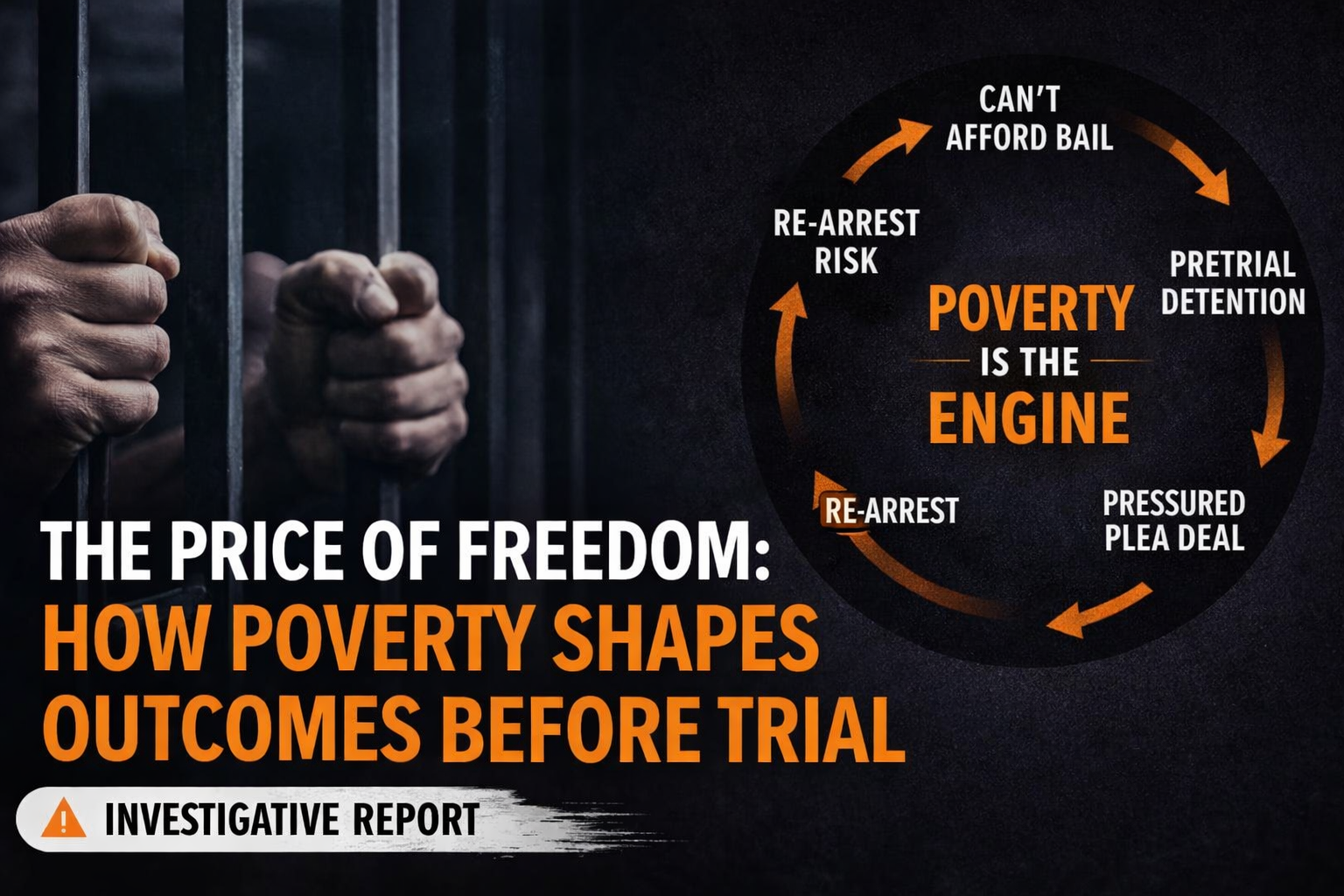
The PRICE of FREEDOM
Nearly 70% of people in U.S. jails have not been convicted of a crime—they are detained because they cannot afford bail.
This investigation explores how poverty, not guilt, shapes outcomes before trial and drives a cycle of incarceration.
How America’s Jail System Punishes Poverty Before Trial
JUSTICE HAS A PRICE TAG
In the United States, freedom is often framed as a fundamental right.
But for millions of people each year, freedom has a price—and if you cannot afford it, you lose it.
On any given day, hundreds of thousands of individuals sit in county jails across America not because they have been convicted of a crime, but because they cannot afford bail. According to the Prison Policy Initiative, nearly 70% of people in U.S. jails are pretrial detainees, legally presumed innocent.
Their detention is not based on guilt.
It is based on poverty.
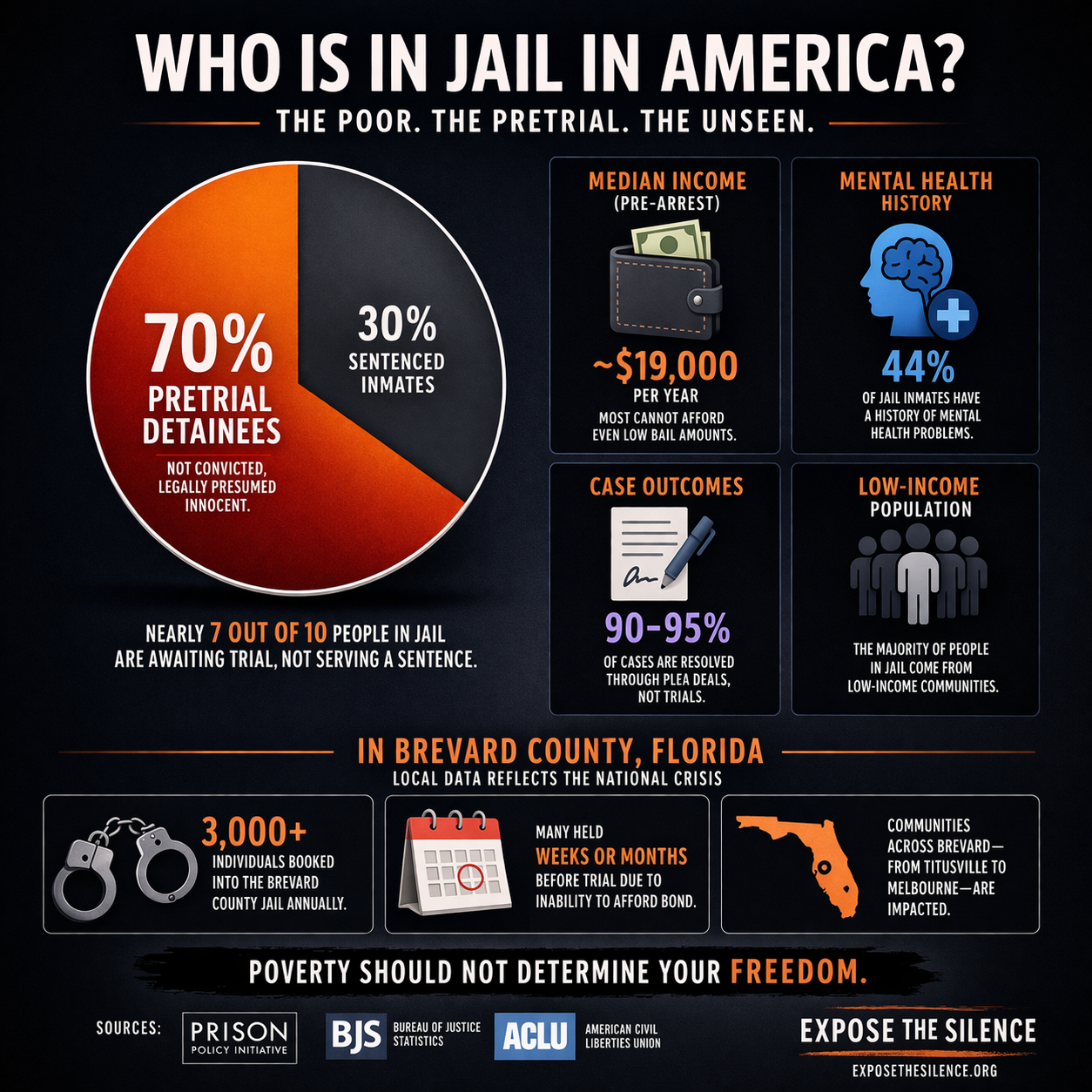
Local data reflects a broader national pattern, where pretrial detention disproportionately affects low-income individuals and extends incarceration beyond conviction.
THE BAIL SYSTEM: DETENTION BY INCOME
The American bail system was designed to ensure court appearance. In practice, it has evolved into a mechanism that disproportionately detains the poor.
Data from the Bureau of Justice Statistics shows that the median annual income of individuals incarcerated prior to arrest is less than $20,000. For many, even a few hundred dollars in bail is unattainable.
This creates a two-tier system of justice:
Those WITH financial resources secure release and prepare their defense
Those WITHOUT resources remain incarcerated, often for weeks or months
Research consistently shows that pretrial detention increases the likelihood of conviction, not because of guilt, but because of pressure.
As the American Civil Liberties Union has argued, cash bail effectively criminalizes poverty by turning financial status into a determinant of liberty.
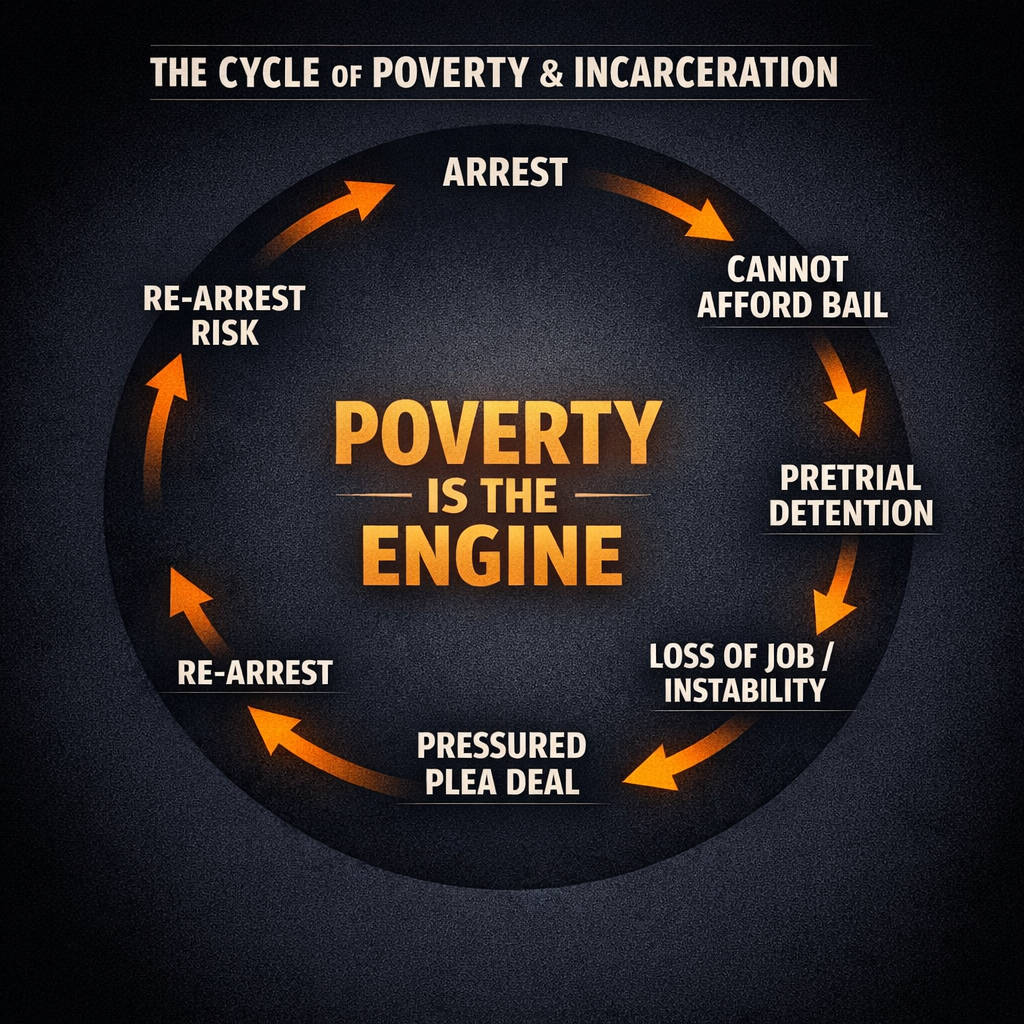
Pretrial detention, economic instability, and plea pressure form a self-reinforcing cycle in which poverty drives outcomes at every stage of the justice process.
INSIDE THE JAIL: CONDITIONS OF CONFINEMENT
While awaiting trial, detainees are subjected to conditions that raise serious constitutional concerns.
Investigations by Human Rights Watch and multiple civil rights organizations have documented:
Overcrowded and unsanitary environments
Limited access to sunlight and outdoor activity
Inadequate nutrition
Extreme temperature conditions
Limited or delayed medical care
The legal standard governing these conditions was shaped by Farmer v. Brennan, which established that prison officials violate the Eighth Amendment when they show “deliberate indifference” to inmate safety.
Yet despite this precedent, systemic neglect remains widespread.
When harmful conditions are normalized across entire facilities, the distinction between negligence and policy becomes increasingly blurred.
SURVIVAL FOR SALE: THE ECONOMICS OF INCARCERATION
Inside jail, survival often depends on access to money from outside.
Basic necessities—such as hygiene products, additional food, and communication—are frequently only available through commissary systems. These goods are often sold at inflated prices.
A report by the Prison Policy Initiative found that incarcerated individuals and their families spend billions annually on commissary items, phone calls, and fees.
This creates an internal economic hierarchy:
Individuals with outside financial support can supplement inadequate provisions
Those without support endure significantly harsher conditions
The system effectively extends punishment beyond incarceration, placing financial strain on already vulnerable families.
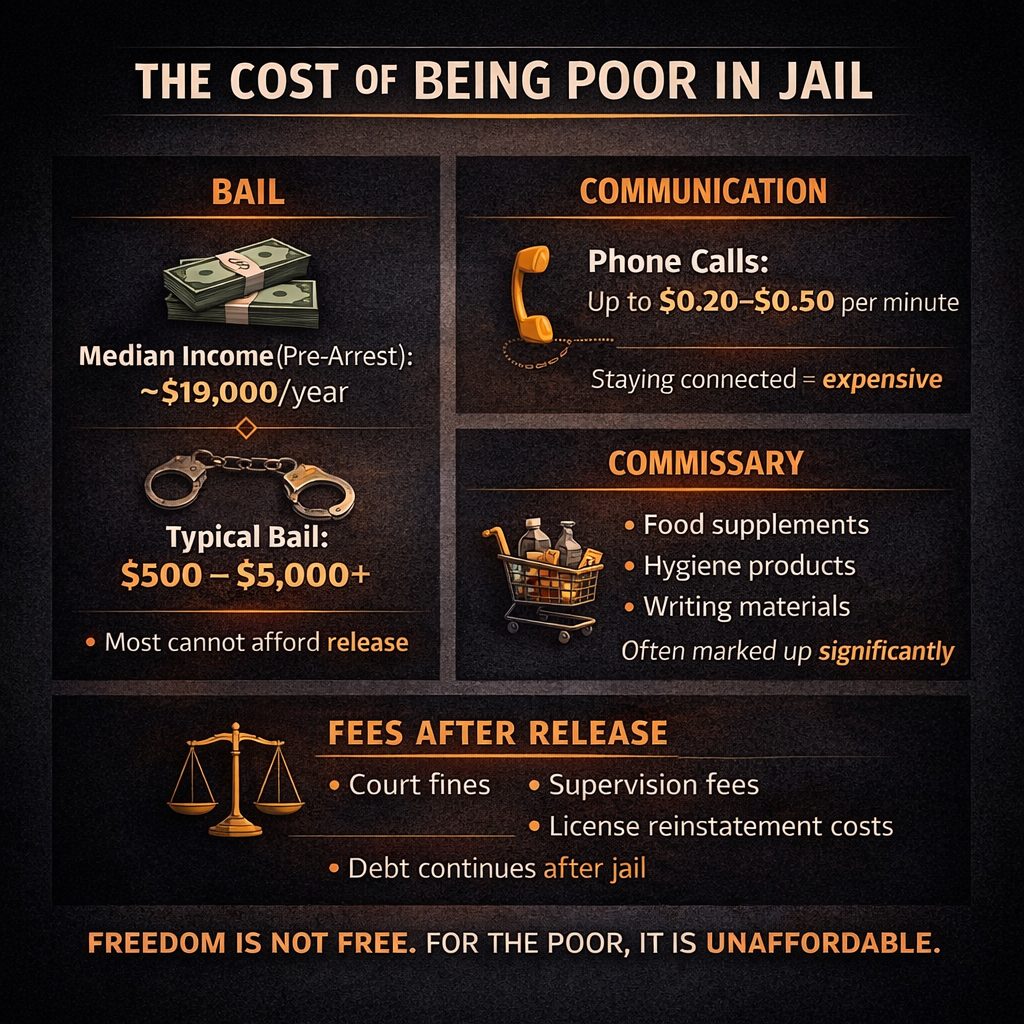
From bail to basic necessities, incarceration creates a system where survival depends on financial resources—extending punishment beyond detention and into long-term economic hardship.
MENTAL HEALTH: A SYSTEM IN CRISIS
Mental illness is disproportionately represented in jail populations.
According to the Bureau of Justice Statistics, approximately 44% of jail inmates have a history of mental health problems.
Despite this, access to meaningful treatment remains limited.
Reports from American Civil Liberties Union indicate:
Shortages of mental health professionals
Delays in evaluation and treatment
Reliance on isolation rather than care
Without proper intervention, incarceration exacerbates existing conditions, often leading to deterioration rather than rehabilitation.
THE PLEA BARGAIN PRESSURE
The overwhelming majority of criminal cases in the United States are resolved through plea agreements.
Estimates suggest that over 90% of cases end in guilty pleas.
For pretrial detainees, the decision is often shaped less by legal strategy and more by survival.
Remaining in jail while awaiting trial can mean:
Continued exposure to harsh conditions
Loss of employment
Separation from family
Psychological strain
Faced with these realities, many accept plea deals—including for offenses they might otherwise contest—simply to secure release.
This raises critical questions about the voluntariness of such pleas within a system defined by coercive conditions.
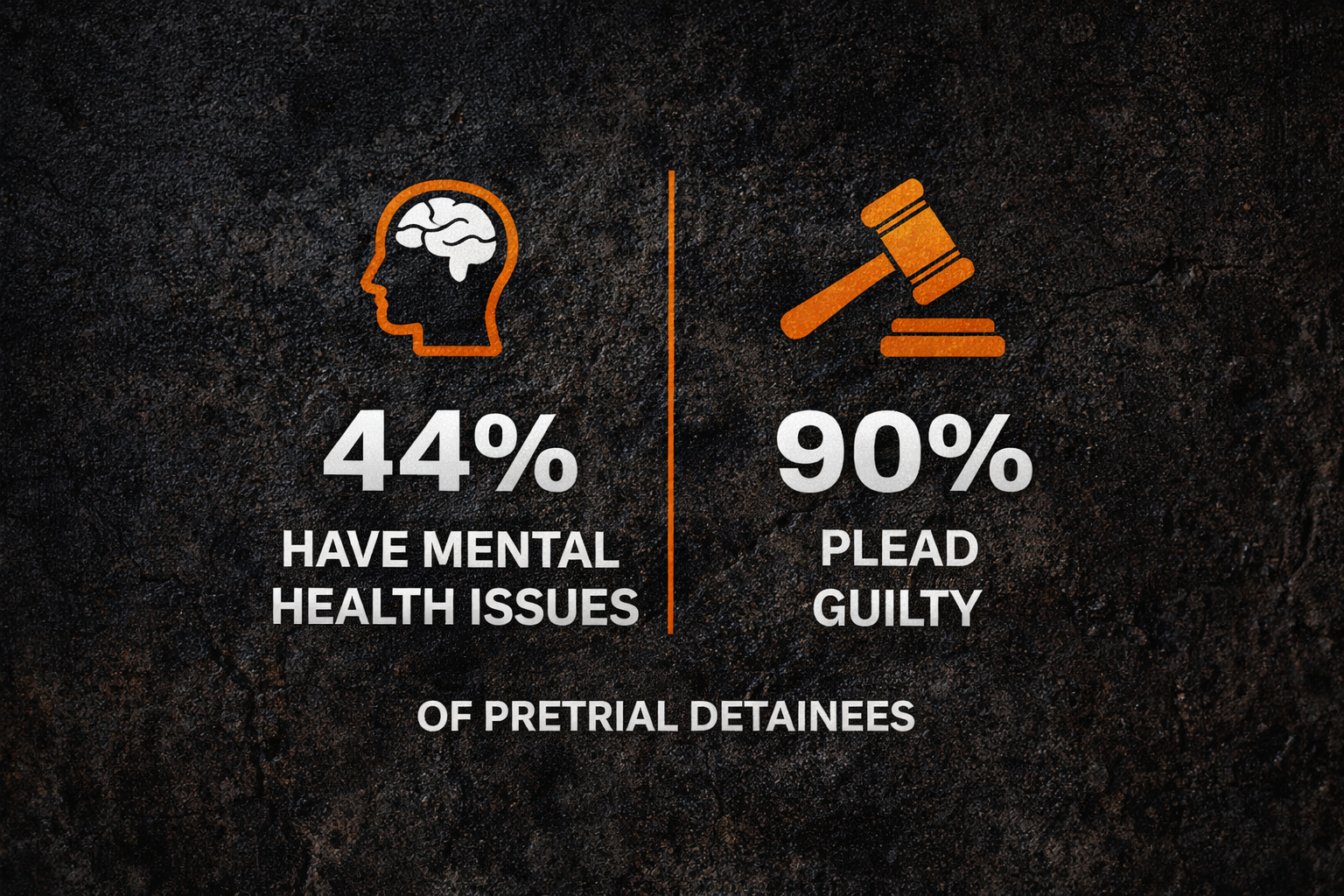
Nearly half of jail detainees report mental health challenges, while the vast majority of cases are resolved through plea agreements—highlighting how pretrial detention pressures outcomes before trial.
REENTRY: FREEDOM WITH CONSEQUENCES
Release from jail does not end the impact of incarceration.
Individuals often leave with:
Court-imposed fines and fees
Suspended driver’s licenses for nonpayment
Limited employment opportunities due to criminal records
The Prison Policy Initiative highlights how these barriers contribute to a cycle of instability, increasing the likelihood of re-arrest.
Without access to stable housing, employment, and support, many individuals face structural obstacles that make reintegration difficult.
PERSONAL TESTIMONY: A SYSTEM EXPERIENCED
Beyond the data lies lived experience.
I have seen firsthand how the system operates—not as a pathway to justice, but as a process that strips individuals of dignity and agency.
Inside, you are not treated as a person navigating a legal process.
You are processed.
Time slows. Access disappears. Your ability to advocate for yourself diminishes with each passing day.
And eventually, the question is no longer whether you are innocent or guilty.
The question becomes:
How much more can you endure?
A SYSTEM OF REINFORCEMENT, NOT REHABILITATION
The structure of pretrial detention, economic exploitation, and post-release barriers forms a cycle:
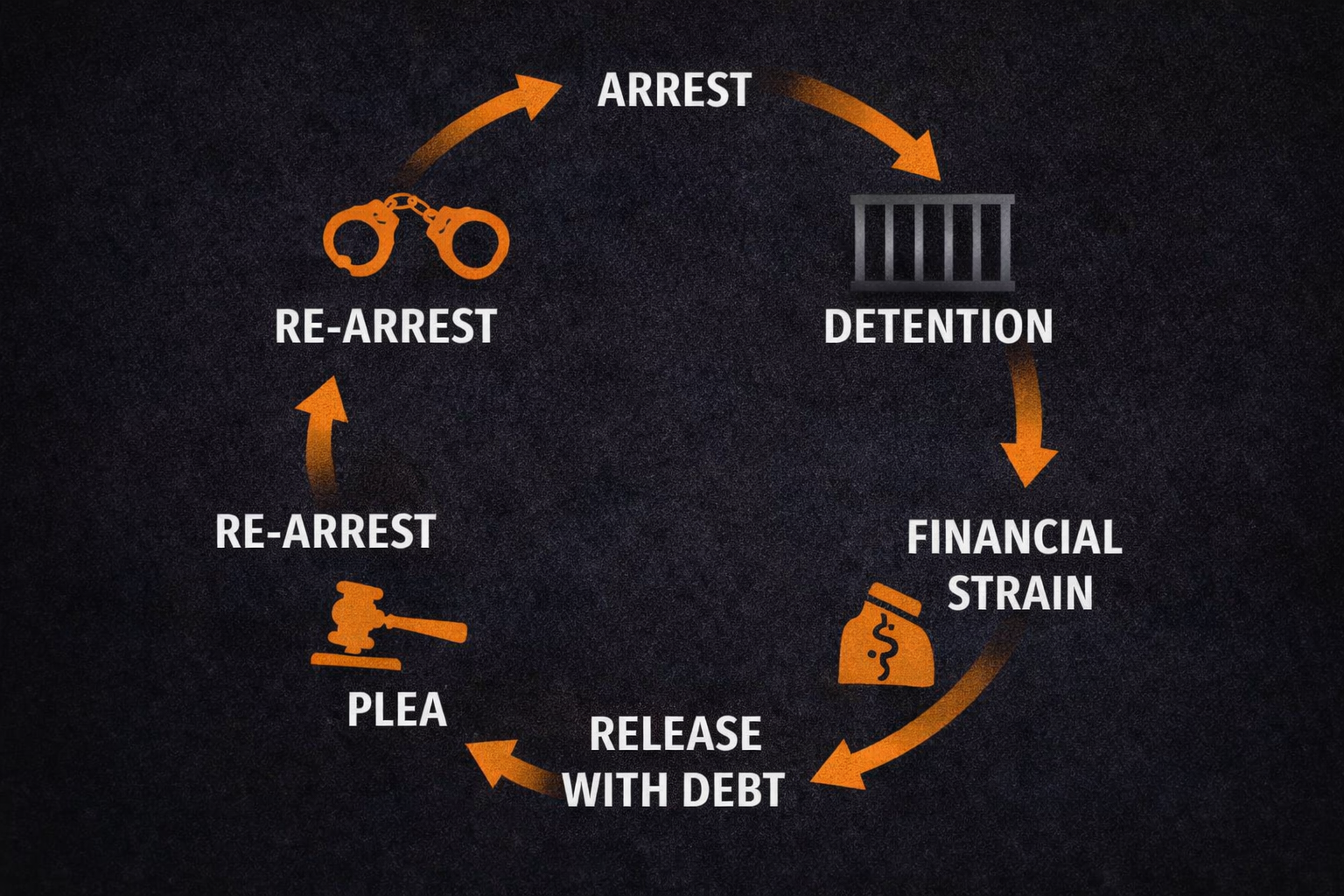
The structure of pretrial detention, financial strain, and post-release barriers creates a self-reinforcing cycle in which poverty increases the likelihood of continued incarceration.
This cycle disproportionately affects low-income individuals, reinforcing inequality at every stage.
While the system is often described as broken, the consistency of these outcomes suggests otherwise.
It functions with precision.
CONCLUSION: EXPOSING THE SILENCE
The American justice system is built on the principle of fairness under the law.
Yet for many, the experience of that system is defined not by fairness, but by financial capacity.
Until pretrial detention is no longer determined by income…
Until conditions of confinement meet constitutional standards…
Until release does not lead to systemic barriers…
The cycle will continue.
And the silence surrounding it will persist.
Why Evidence Matters in Conversations About Homelessness
Public conversations about homelessness often move faster than the facts. This video examines financial vulnerability, national trends, and why evidence — not assumptions — should guide public understanding.
Public conversations about homelessness often move quickly — sometimes faster than the facts.
Headlines circulate.
Opinions form.
Narratives harden.
But context matters.
According to the Federal Reserve, a significant percentage of U.S. adults would struggle to cover a $400 emergency expense using cash or its equivalent.
Financial instability is not rare. It is widespread.
At the same time, national homelessness counts have increased in recent years.
Local communities, including Brevard County, reflect broader economic pressures.
This video is not about advocacy.
It is about methodology.
Assumptions can cause harm.
Evidence builds trust.
Before drawing conclusions, we should ask:
What context is missing?
Can it be verified?
ExposeTheSilence.org exists to approach difficult topics with documentation, restraint, and accountability.
Independent Journalism.
Brevard County | National Reporting.
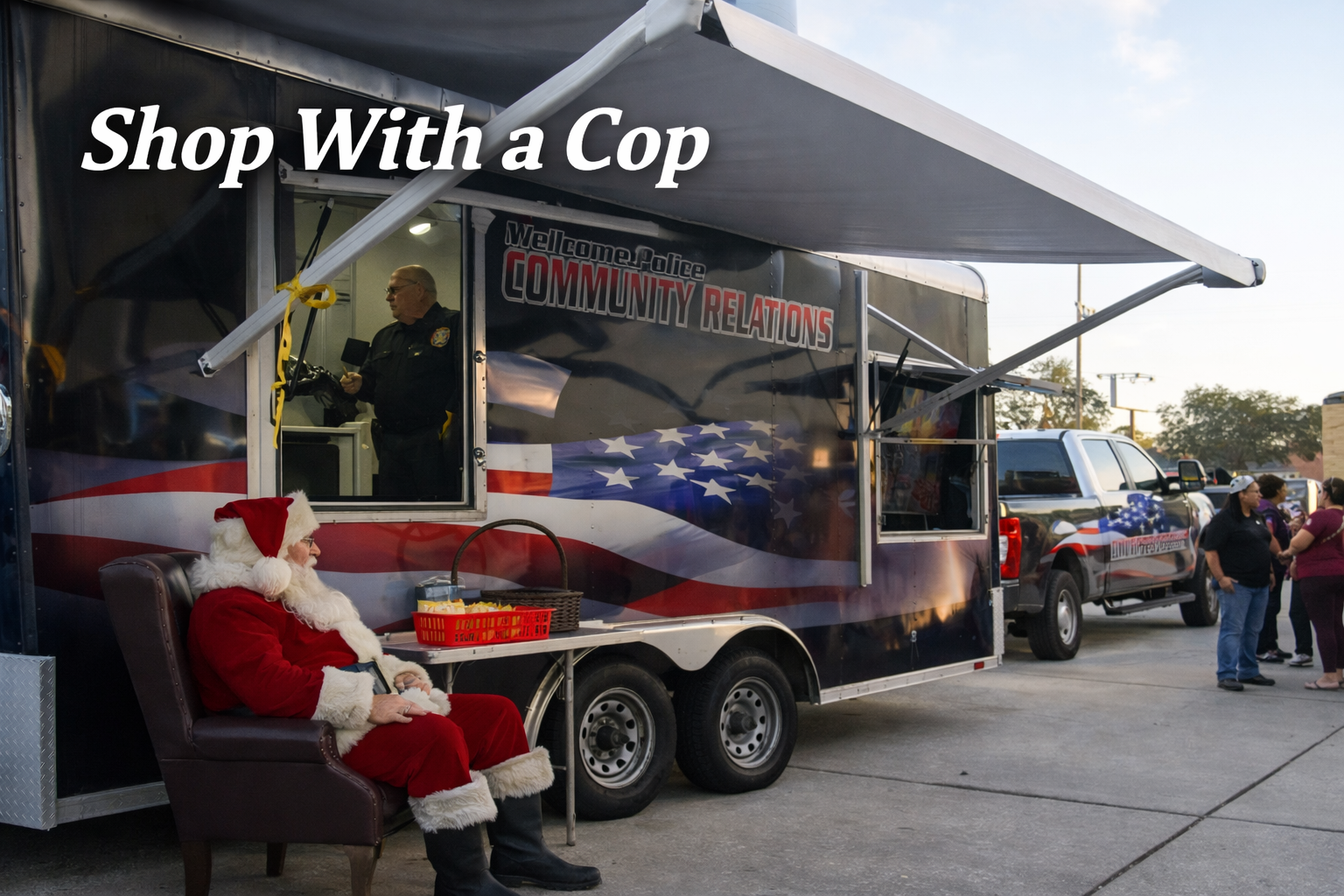
Community and Holiday Spirit at Melbourne’s Shop With a Cop Event
Families, children, and local law enforcement came together at a Melbourne Walmart for Brevard County’s annual Shop With a Cop event, a holiday program designed to support families while fostering positive community connections. The event paired children with officers for an evening of shopping, celebration, and engagement, creating a festive atmosphere centered on generosity, trust, and shared experience during the holiday season.
At around 5 p.m. on Friday, December 19, the Walmart located at Sarno Road and Wickham Road in Melbourne, Florida became the site of a holiday community event that brought together families, children, and local law enforcement. The occasion was Brevard County’s annual Shop With a Cop program, a holiday initiative designed to support families while fostering positive connections within the community.
Hosted by the Brevard County Sheriff’s Office, Shop With a Cop pairs children with law enforcement officers for an evening of shopping and celebration. According to the sheriff’s office, the program aims to provide support during the holiday season while also building trust and engagement between deputies and the families they serve. More information about the program is available on the official Brevard County Sheriff’s Office Shop With a Cop page:
👉 https://www.brevardsheriff.com/bcso_events/shop-with-a-cop/
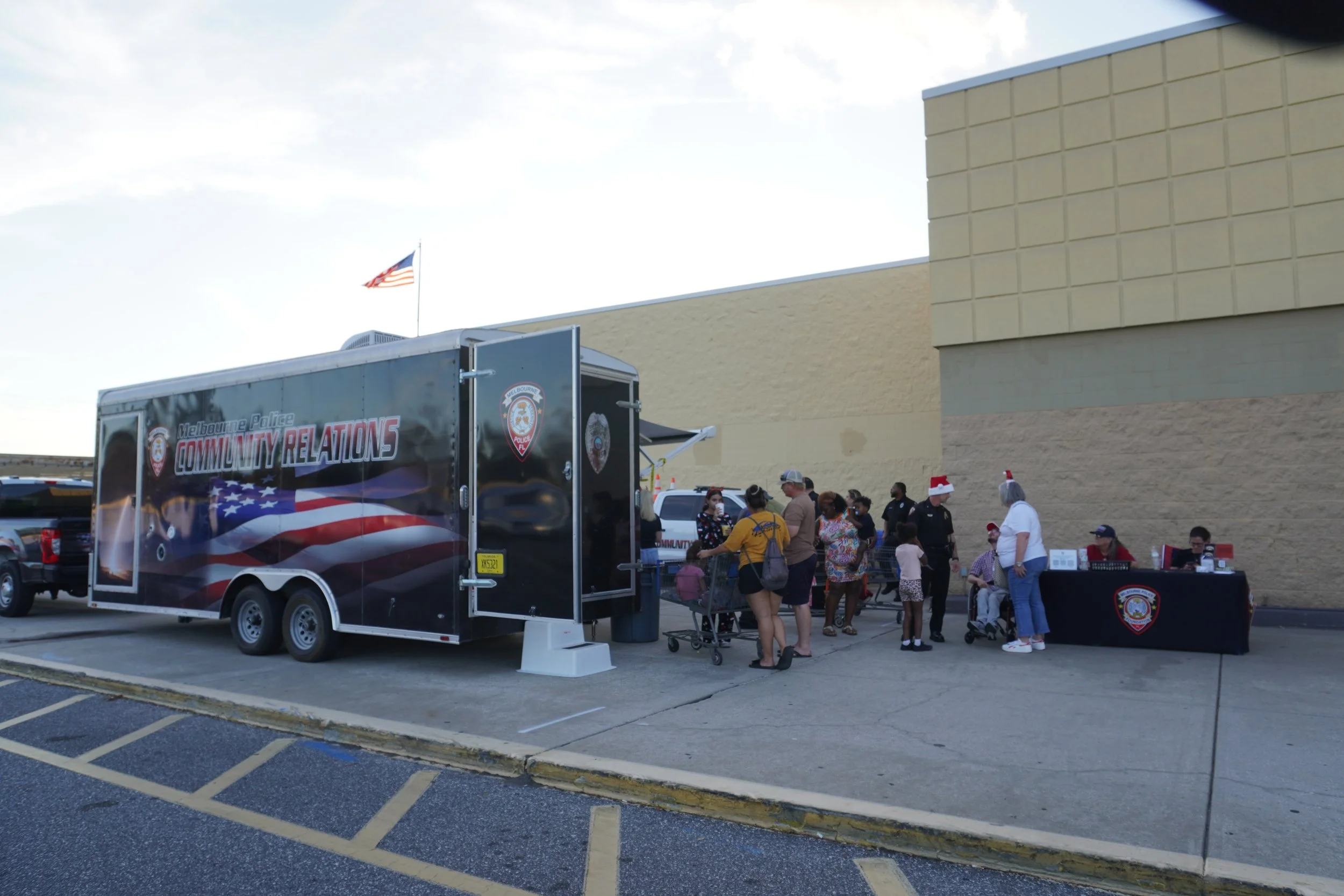
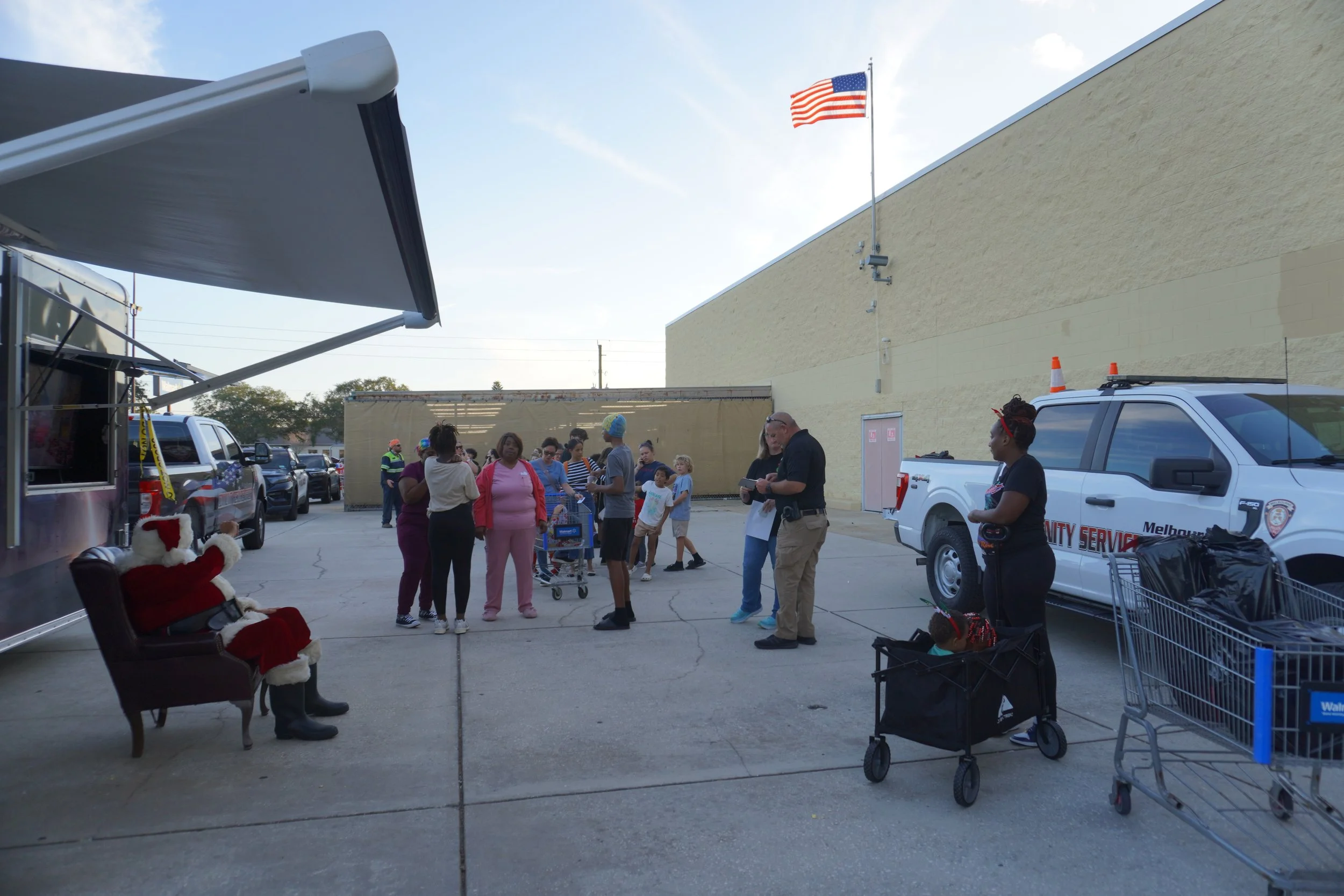
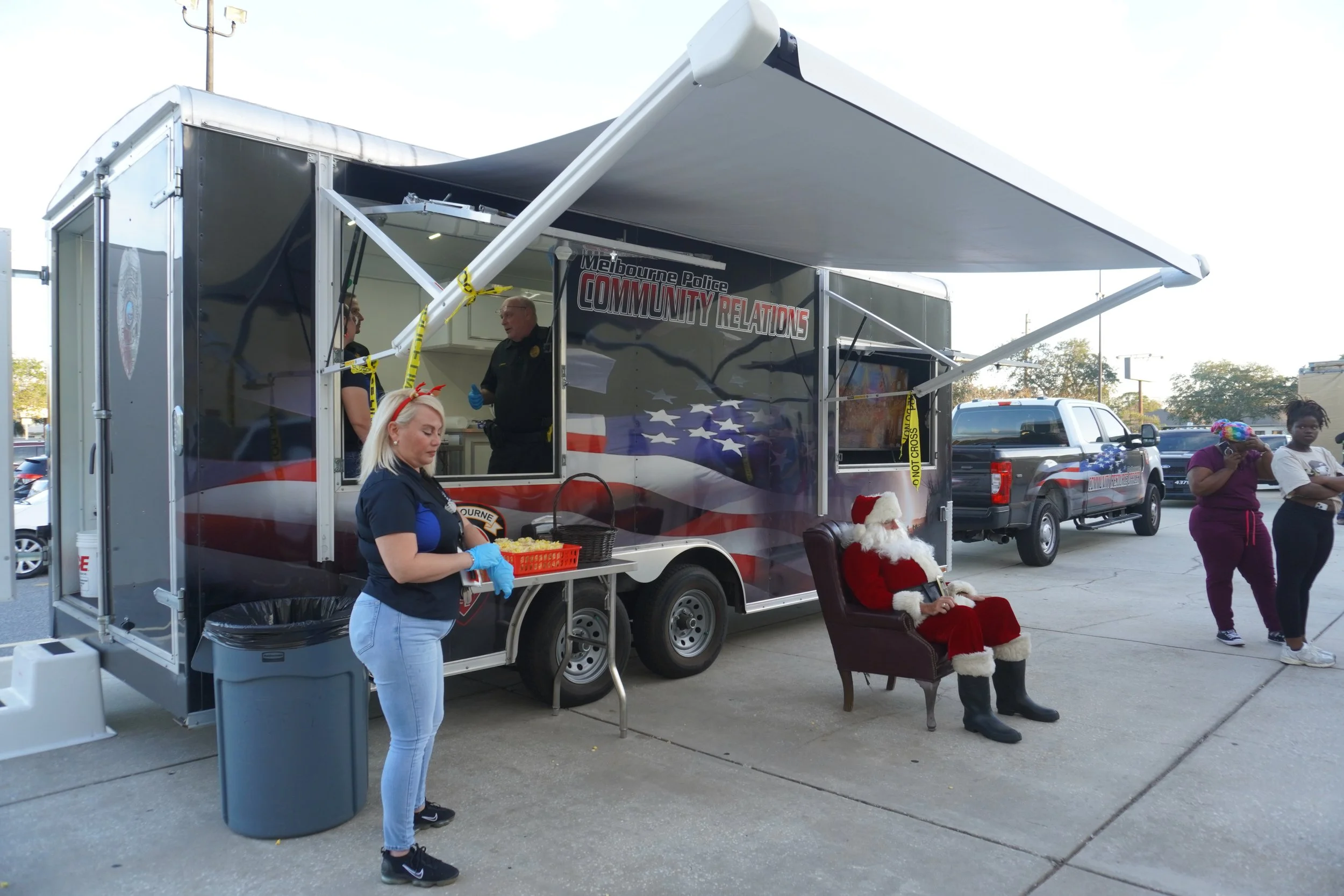
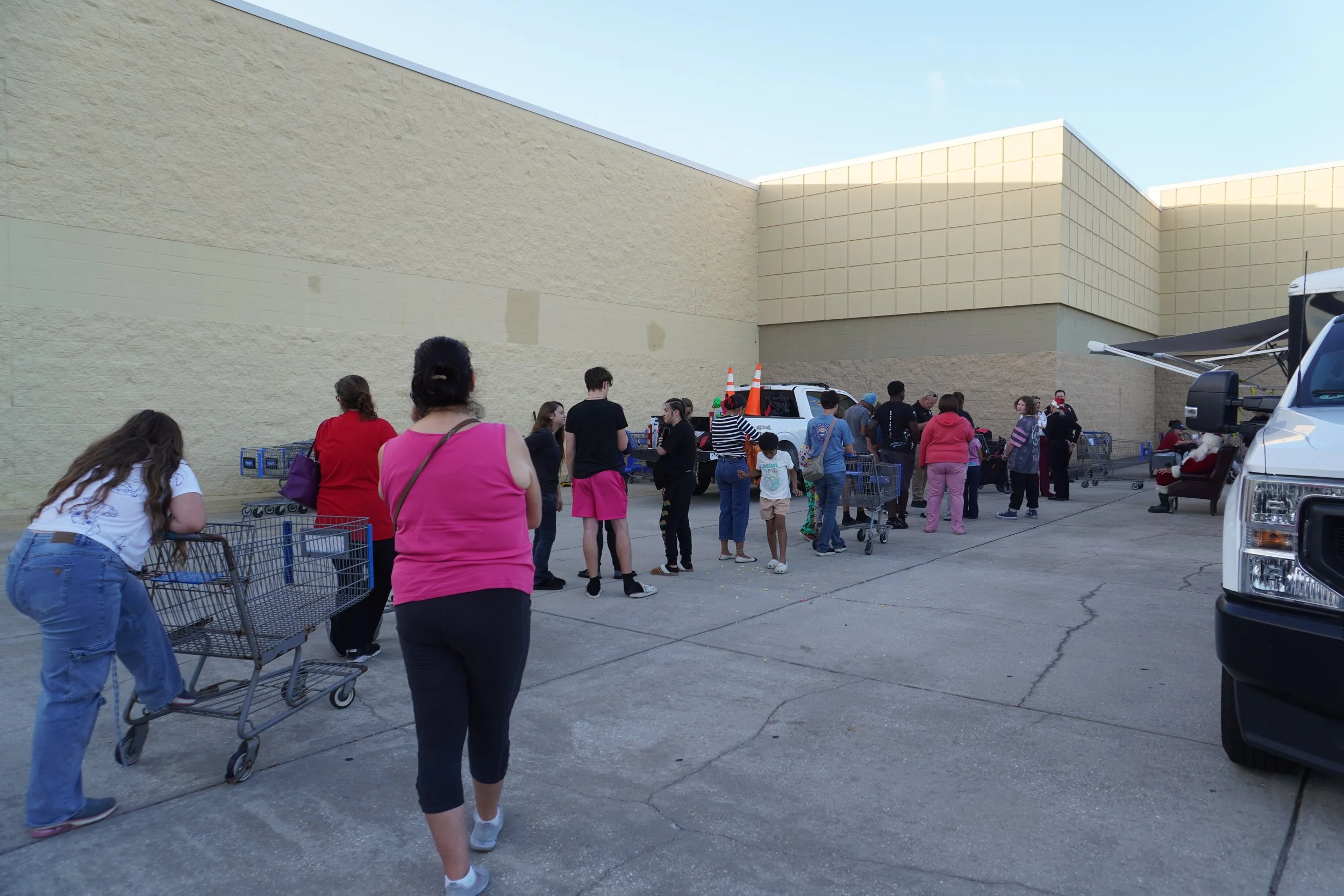
Santa Claus greeted children as deputies walked alongside families through the aisles, helping kids choose gifts and offering encouragement along the way. What is typically a busy retail environment took on a different tone for the evening, filled with holiday music, conversation, and moments of connection between officers and participants. Parents and guardians observed nearby, many capturing photos as children interacted with deputies and volunteers.
One attendee described the experience as “a great opportunity for kids to feel supported during the holidays,” adding that seeing officers engage with families in this setting helped create a sense of comfort and positivity. Another participant noted that the event was “about more than shopping,” explaining that it gave families a chance to feel included and cared for during a busy and sometimes stressful season.
During the event, I also spoke with the Deputy Chief of the Melbourne Police Department, who emphasized the importance of programs like Shop With a Cop in strengthening relationships between law enforcement and the community. The Deputy Chief noted that events like this allow officers to connect with families in a positive, informal environment and help reinforce the idea that community policing is built on presence, trust, and engagement.
Shop With a Cop is part of the sheriff’s office’s broader Community Services efforts, which include outreach programs and charitable initiatives throughout Brevard County. These initiatives focus on engagement, service, and building long-term trust across the county. Additional information about these efforts can be found through the sheriff’s office’s Community Services division:
👉 https://www.brevardsheriff.com/units-services/community-services/
Local reporting has also highlighted Shop With a Cop as a long-standing holiday tradition in Brevard County, with deputies and volunteers dedicating their time to making the season brighter for participating families. Coverage of similar events this year can be found through Space Coast Daily, which documented the program’s impact across the county:
👉 https://spacecoastdaily.com/2025/12/watch-brevard-sheriffs-office-holds-annual-shop-with-a-cop-to-provide-christmas-gifts-for-kids/
As the evening came to a close, shopping carts were filled with gifts, families gathered near checkout lines, and children posed for photos with Santa and officers before heading home. The event served as a reminder that community-focused initiatives like Shop With a Cop extend beyond holiday traditions, offering meaningful moments of connection and support during the season.

Trapped Without Shelter: How Brevard County Profits from the Pain of the Poor
In Brevard County, homelessness isn’t just ignored—it’s punished. This exposé uncovers how Florida’s laws and local enforcement turn poverty into profit through arrests, hidden jail fees, and forced displacement. Told through personal experience and backed by evidence, Trapped Without Shelter demands accountability and justice.
Introduction: When Survival Is a Crime
You’re arrested for sleeping. Booked for existing. Fined for having nowhere to go.
I know—because I lived it.
In Brevard County, Florida, especially here in Melbourne, homelessness is not treated as a crisis to solve. It's treated as a nuisance to erase. Police target the poor, not to protect the community—but to sanitize the city for profit. And it’s working... for them.
But it’s destroying lives like mine. Like yours. Like the voiceless ones no one hears from because they’re locked up, shipped out, or buried under bureaucracy.
This is what they don’t want you to see.
The Cost of Being Homeless in Brevard County

"The Price of Poverty"
“Stripped, Starved, Hunted”: My Testimony
I was arrested for trespassing while resting near a business—because I had nowhere else to go. I was barefoot when released. My wallet was empty. I owed more money than I started with. And I was told: don’t come back here.
They expect us to "get a job." But how, when we’re not even allowed to exist?
There’s no shelter. No transportation. No water. No electricity. And the only “help” comes with religious strings attached. Faith-based shelters demand conversion. If you don’t comply—you don’t eat, don’t shower, don’t sleep inside.
This isn’t rehabilitation. It’s coercion.
And every time you’re seen again—police circle like hawks. The goal is clear: remove the visible poor so developers can sell a prettier Melbourne.

The Pattern: Who Really Benefits?
Behind the scenes, this cycle makes money:
Police trust funds are paid with court fines and booking fees
Private jails benefit from longer pre-trial detentions due to unpaid bail
Religious nonprofits get tax funding while forcing participation in their faith
Developers and politicians cash in on “cleaning up the streets”
Call to Justice
This is systemic abuse—not an accident, not isolated.
It’s time to expose the silence.
We need:
A federal investigation into Brevard County’s use of arrests as revenue.
An end to forced religious programming tied to aid.
A Housing First policy with real shelter options—not church pews and police cells.
Transparency. Public records must be opened. Every arrest, every fine, every dollar tracked.
What You Can Do
Share this post.
File a public records request: [link to FOIA template]
Donate to secular aid groups serving Brevard County.
Join the #ExposeTheSilence campaign and share your story.
You Are Not Alone
To anyone living on the street, scared of being seen, hunted by the very system sworn to protect you—you are not the problem.
You are the truth they are afraid of.
And now, we’re going to make sure the world sees it.
— Ricardo A. Stoyell
Founder, ExposetheSilence.org