

Left Behind: Florida’s Hidden Encampments
Hidden in the flooded woods of Brevard County, entire lives unfold beyond the public eye. Left Behind: Florida’s Hidden Encampments exposes the human cost of a system that punishes poverty instead of healing it. Through raw photography and firsthand accounts, this story reveals the invisible struggle of families and individuals surviving in the margins — where resilience meets neglect, and hope clings to the edges of the forgotten.
Hidden behind palmettos and “No Trespassing” signs, entire lives unfold in the shadows of Brevard County’s wetlands.
What looks like untouched forest is, in truth, the last refuge for people pushed out by high rents, stagnant wages, and systemic neglect.
After weeks of rain, makeshift camps near Eau Gallie sit half-flooded, furniture sinking into the mud.
Each piece tells a story—a dresser that once held family photos, a mattress now water-logged and forgotten.
The flooded ground reflects both sky and circumstance, mirroring a system that leaves no firm place to stand.
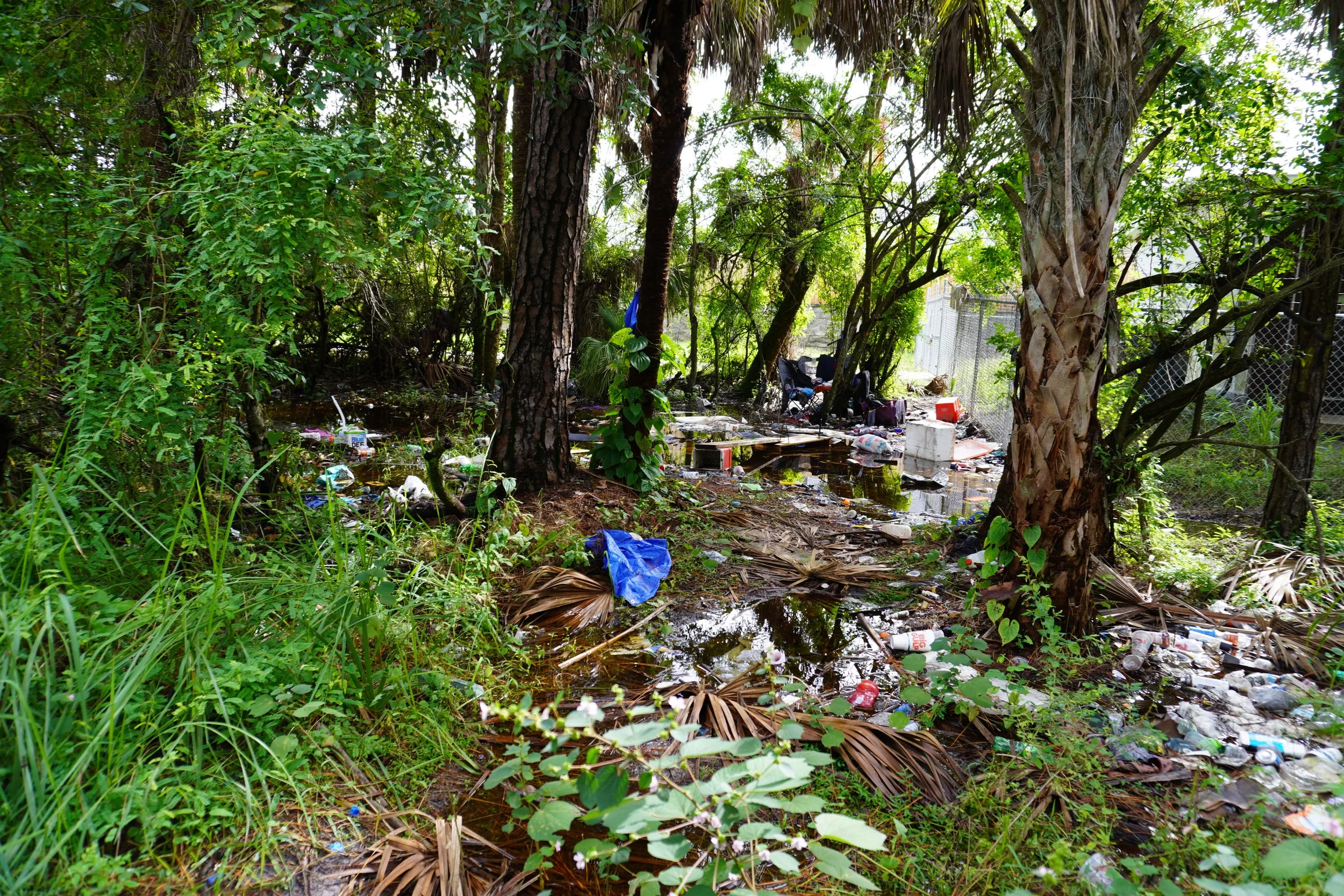
Flooded forest littered with discarded furniture—remnants of a hidden encampment after heavy rain. (Photo: Ricardo Stoyell)
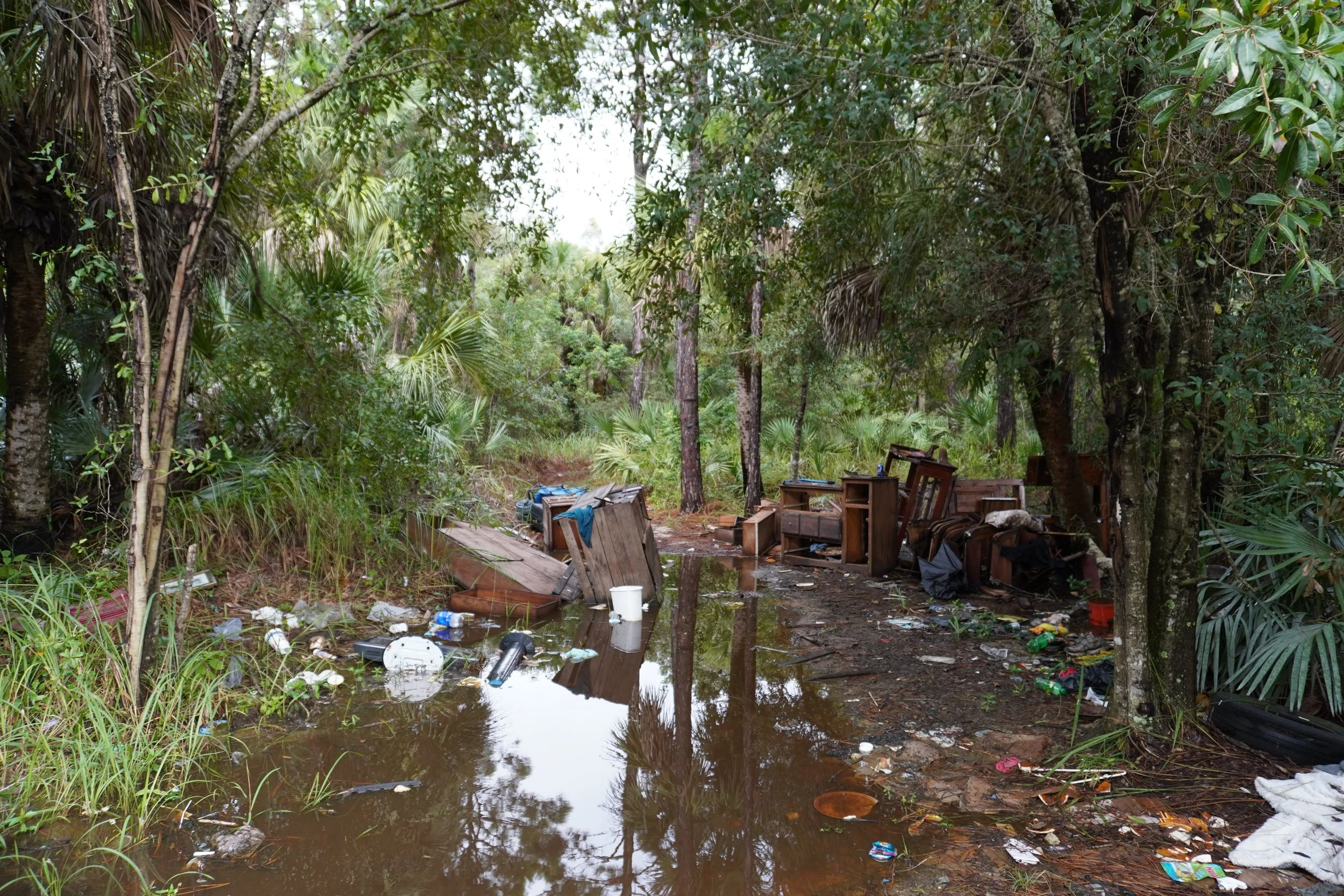
A second flooded area reveals the fragile remains of temporary shelter washed away by storms. (Photo: Ricardo Stoyell)
At a metal recycling yard in Melbourne, Jason sorts through buckets of aluminum and brass, salvaging what others discard. “Everybody’s trying to scrap and make a little money,” he said. “You find stuff people dump out by the road, clean it up, and bring it here. It’s not much, but it keeps me going.”
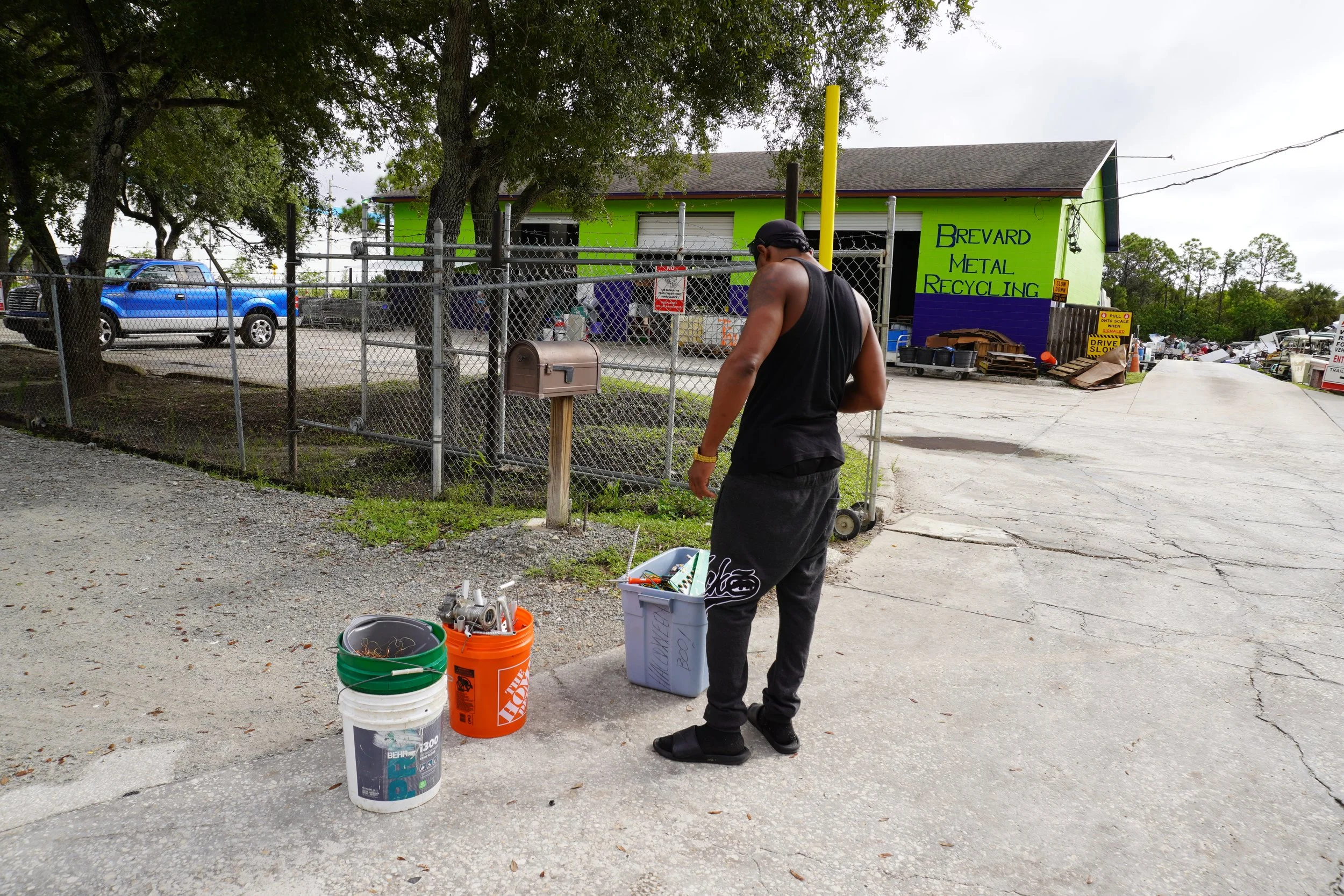
Jason sorts metals at Brevard Metal Recycling. “Everybody’s trying to scrap and make a little money,” he said. (Photo: Ricardo Stoyell)
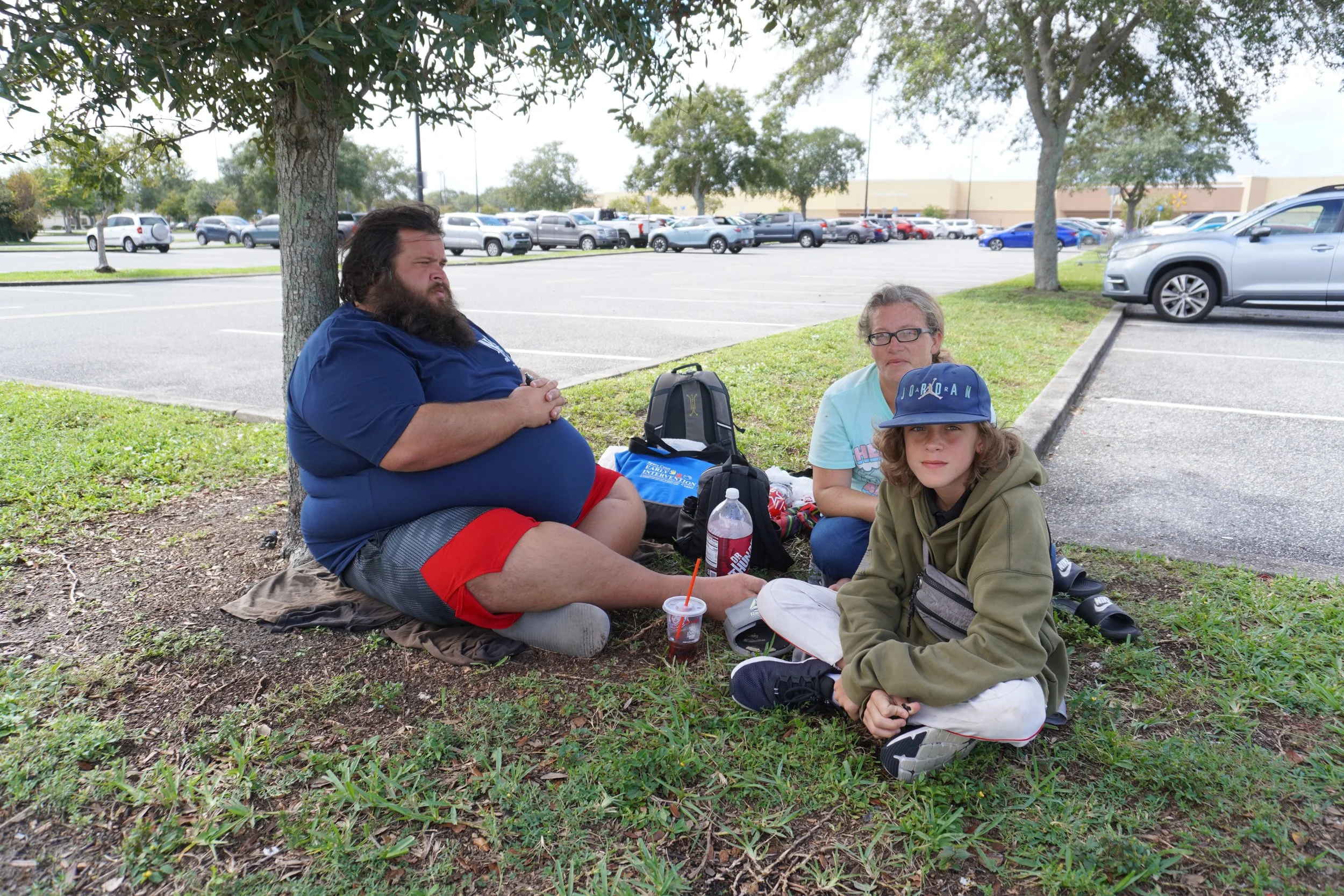
Across town, families with children gather daily near Walmart parking lots. For many, survival means raising about $80 each day—just enough for a single night in a motel room. “We just want to keep our kids with us,” one mother said. “If they go into the system, you never know if you’ll see them again.”
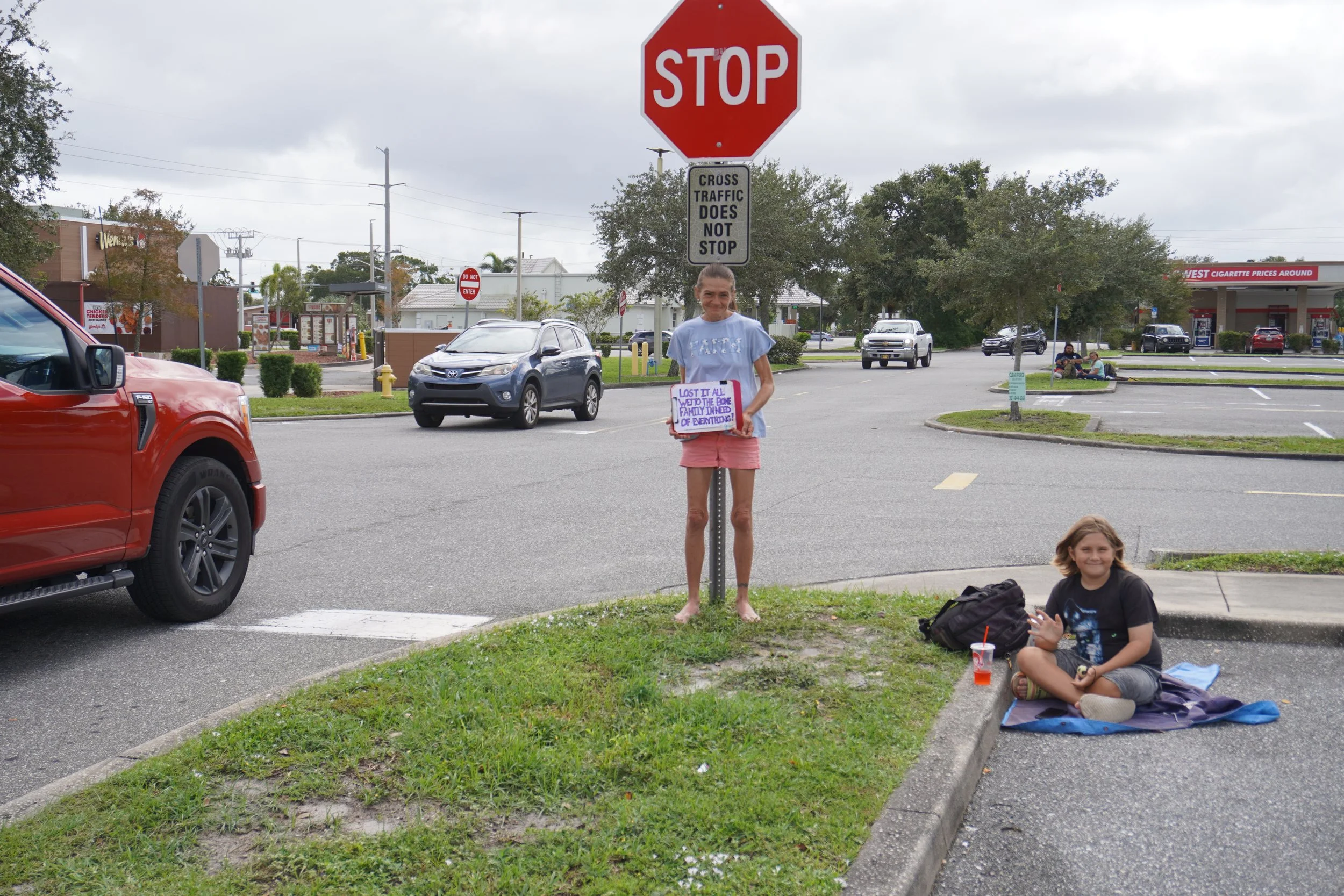
A mother and her child rest near a Walmart parking lot after a day of collecting donations. “We just want to keep our kids with us,” she said. (Photo: Ricardo Stoyell)
A young boy clutches his toy near a store entrance—innocence surviving amid instability.* (Photo: Ricardo Stoyell)
Local shelters and housing programs are overwhelmed. Section 8 waiting lists in Florida can stretch for years, sometimes more than a decade, leaving thousands without realistic access to assistance.
The Florida Council on Homelessness 2024 Report shows statewide wait times averaging over 24 months, and many shelters cannot accept pets—forcing families to choose between housing and their animals.
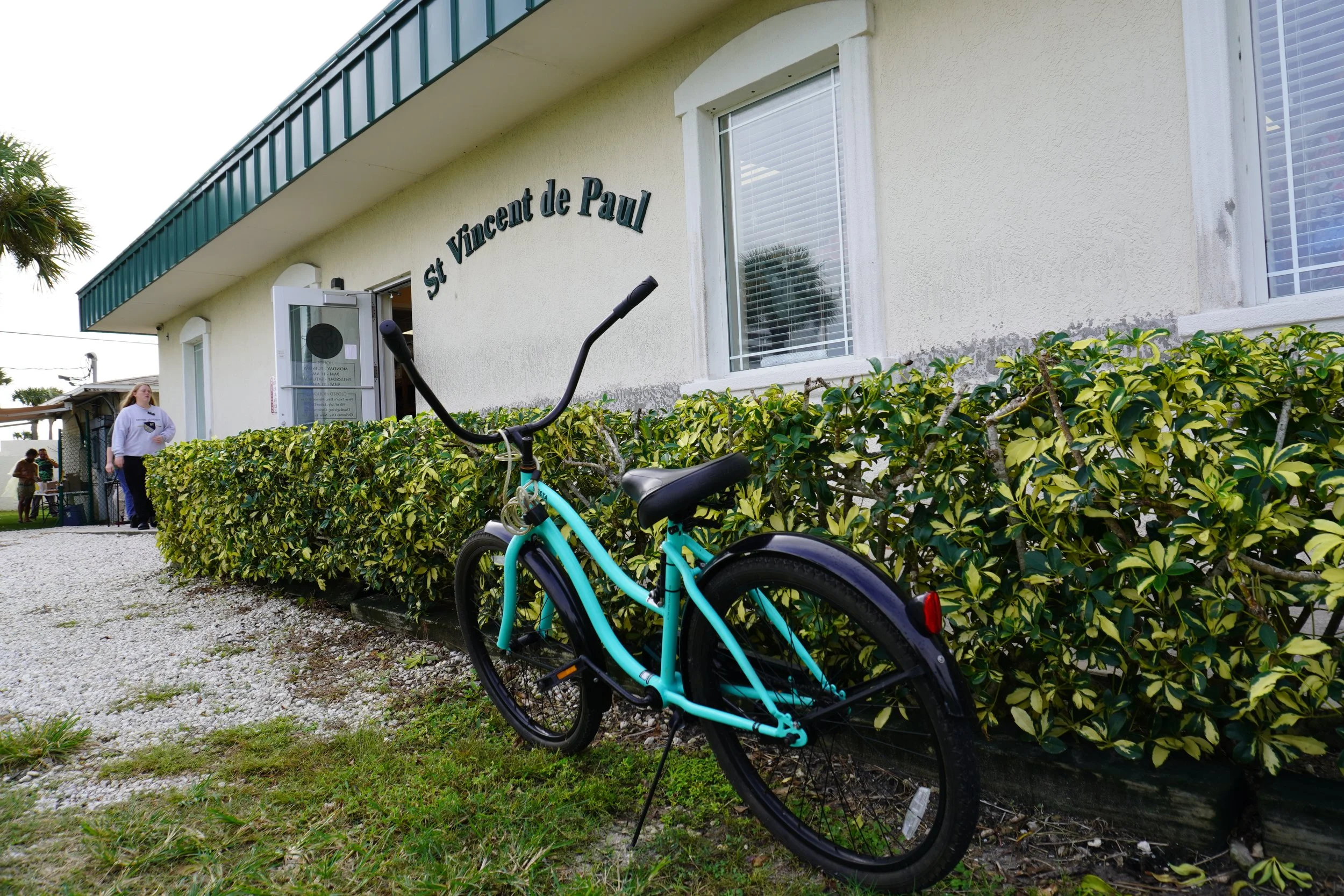
A bicycle waits outside St. Vincent de Paul—transportation, hope, and survival in one frame. (Photo: Ricardo Stoyell)
The public often views encampments as unsanitary, but conditions vary. Some residents keep their spaces meticulously clean, while others struggle with waste and fatigue.
When local authorities clear the woods to develop affordable housing, the act meant to help also erases fragile ecosystems and the only shelter many people have.
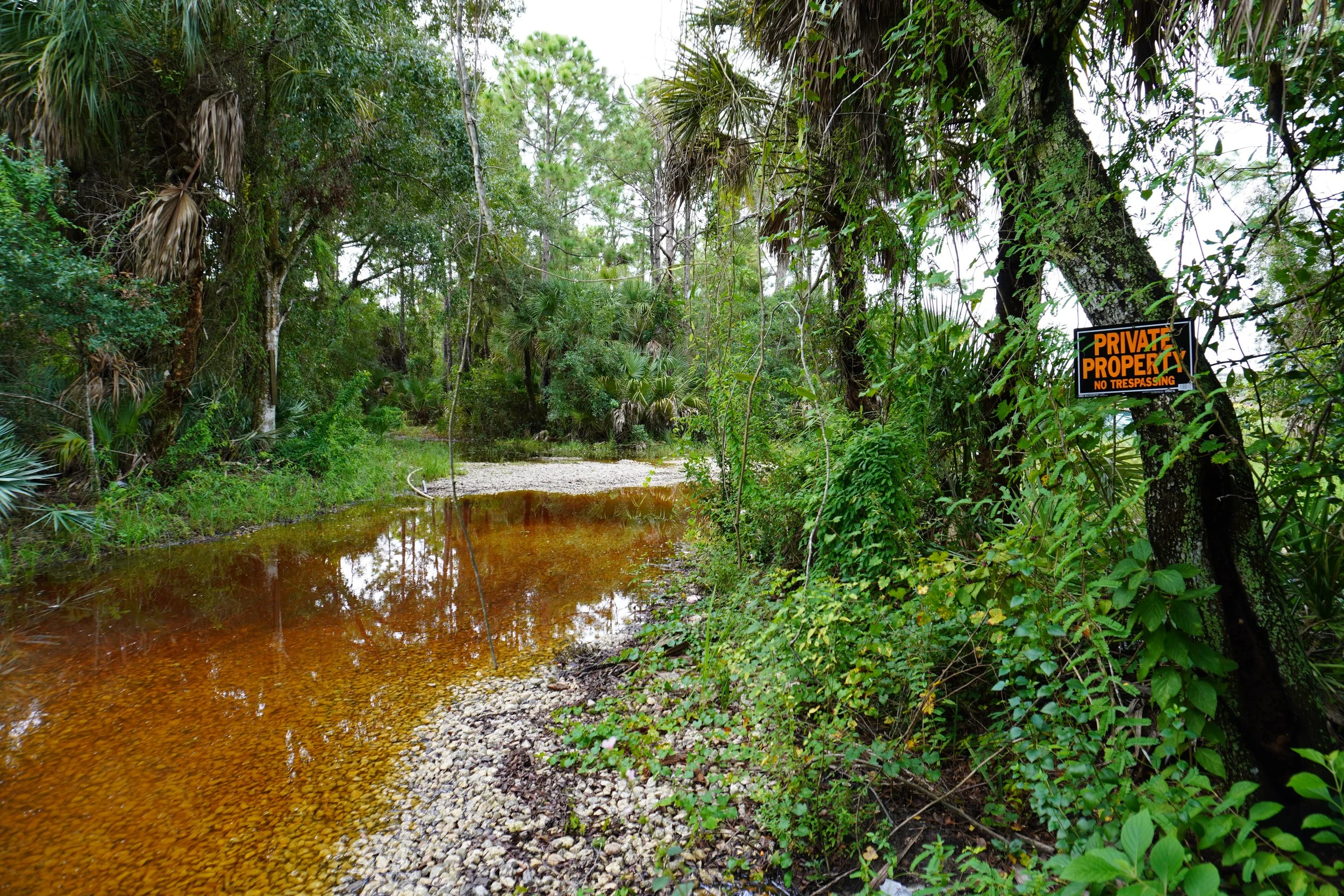
Posted warnings mark the boundaries of the forest where the unhoused find refuge.(Photo: Ricardo Stoyell)
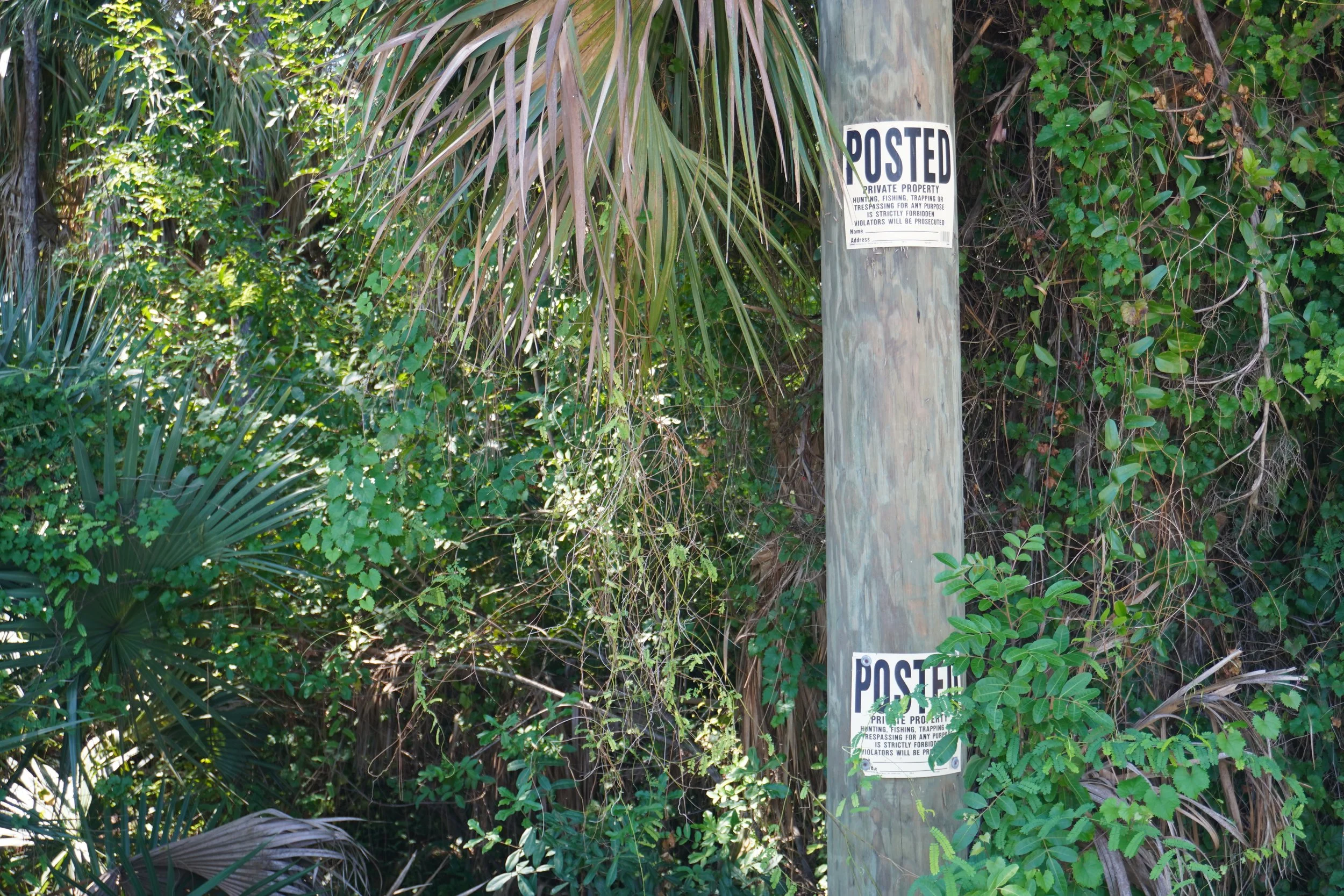
“No Trespassing” signs dot the forest edge, signaling the tension between ownership and necessity. (Photo: Ricardo Stoyell)
According to the National Homelessness Law Center, anti-camping ordinances and “clean-ups” frequently result in fines or jail time. Once incarcerated, people enter privatized systems where commissary goods are sold at steep markups by corporations such as Aramark, deepening the poverty they were arrested for.
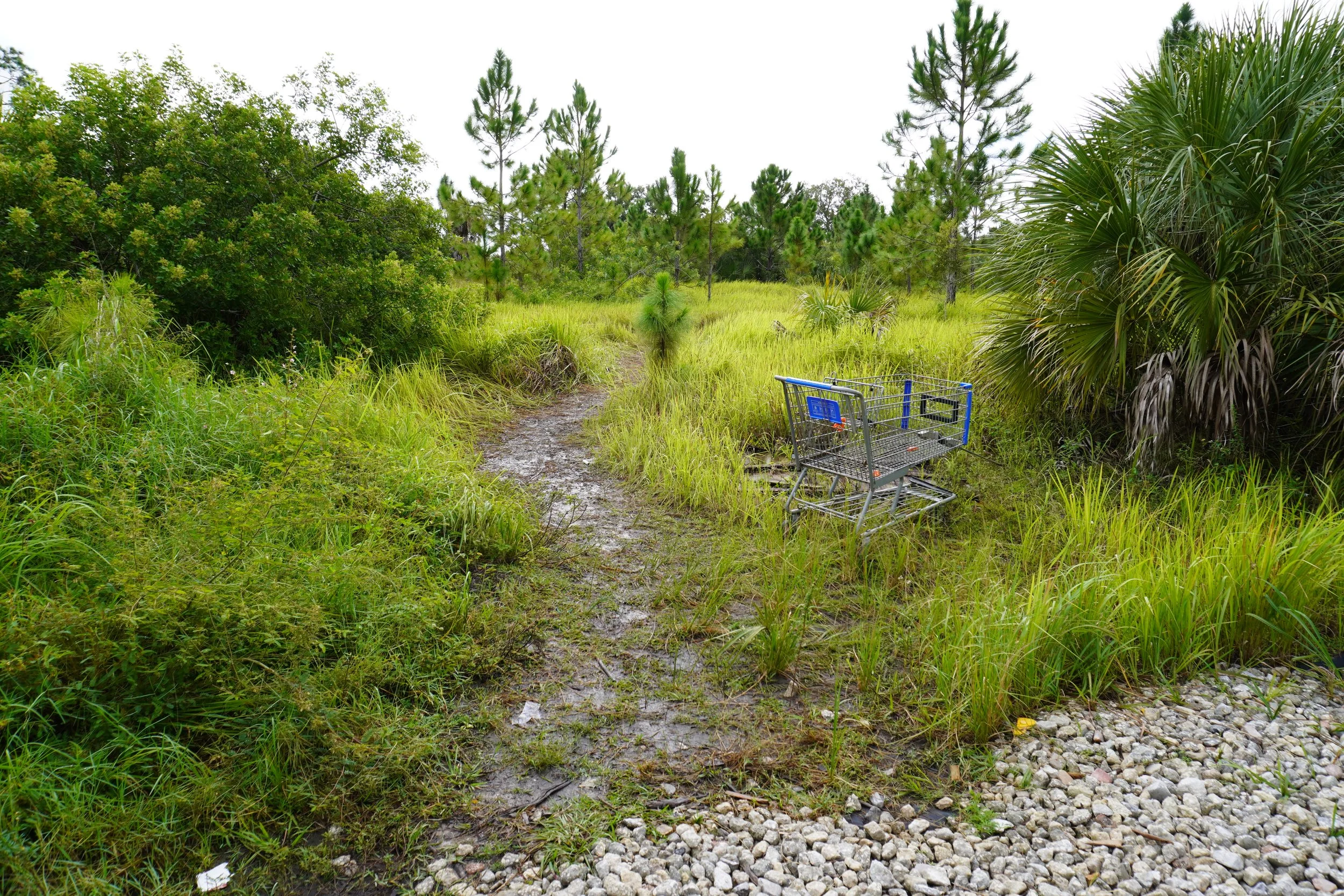
9 A rusted cart on a dirt trail marks the line between civilization and survival.(Photo: Ricardo Stoyell)
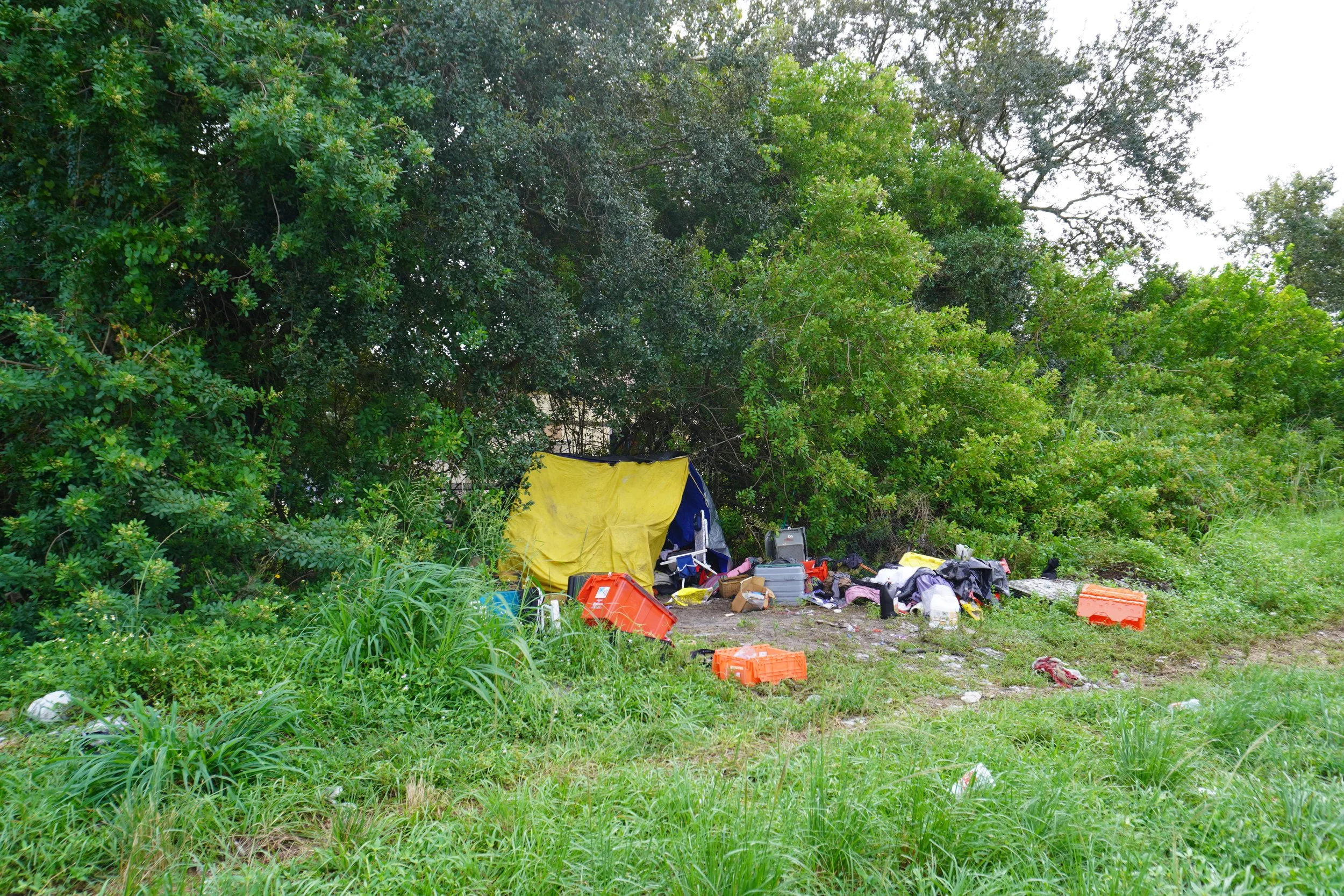
A forest path disappears into flooded ground, echoing the uncertain path forward.(Photo: Ricardo Stoyell)
References
Florida Council on Homelessness. (2024).
Annual Report on Homelessness in Florida.
Florida Department of Children and Families.
National Homelessness Law Center. (2024).
Criminalization of Homelessness Report.
Pew Charitable Trusts. (2025, July).
How States and Cities Decimated America’s Lowest-Cost Housing Option.

Trapped Without Shelter: How Brevard County Profits from the Pain of the Poor
In Brevard County, homelessness isn’t just ignored—it’s punished. This exposé uncovers how Florida’s laws and local enforcement turn poverty into profit through arrests, hidden jail fees, and forced displacement. Told through personal experience and backed by evidence, Trapped Without Shelter demands accountability and justice.
Introduction: When Survival Is a Crime
You’re arrested for sleeping. Booked for existing. Fined for having nowhere to go.
I know—because I lived it.
In Brevard County, Florida, especially here in Melbourne, homelessness is not treated as a crisis to solve. It's treated as a nuisance to erase. Police target the poor, not to protect the community—but to sanitize the city for profit. And it’s working... for them.
But it’s destroying lives like mine. Like yours. Like the voiceless ones no one hears from because they’re locked up, shipped out, or buried under bureaucracy.
This is what they don’t want you to see.
The Cost of Being Homeless in Brevard County

"The Price of Poverty"
“Stripped, Starved, Hunted”: My Testimony
I was arrested for trespassing while resting near a business—because I had nowhere else to go. I was barefoot when released. My wallet was empty. I owed more money than I started with. And I was told: don’t come back here.
They expect us to "get a job." But how, when we’re not even allowed to exist?
There’s no shelter. No transportation. No water. No electricity. And the only “help” comes with religious strings attached. Faith-based shelters demand conversion. If you don’t comply—you don’t eat, don’t shower, don’t sleep inside.
This isn’t rehabilitation. It’s coercion.
And every time you’re seen again—police circle like hawks. The goal is clear: remove the visible poor so developers can sell a prettier Melbourne.

The Pattern: Who Really Benefits?
Behind the scenes, this cycle makes money:
Police trust funds are paid with court fines and booking fees
Private jails benefit from longer pre-trial detentions due to unpaid bail
Religious nonprofits get tax funding while forcing participation in their faith
Developers and politicians cash in on “cleaning up the streets”
Call to Justice
This is systemic abuse—not an accident, not isolated.
It’s time to expose the silence.
We need:
A federal investigation into Brevard County’s use of arrests as revenue.
An end to forced religious programming tied to aid.
A Housing First policy with real shelter options—not church pews and police cells.
Transparency. Public records must be opened. Every arrest, every fine, every dollar tracked.
What You Can Do
Share this post.
File a public records request: [link to FOIA template]
Donate to secular aid groups serving Brevard County.
Join the #ExposeTheSilence campaign and share your story.
You Are Not Alone
To anyone living on the street, scared of being seen, hunted by the very system sworn to protect you—you are not the problem.
You are the truth they are afraid of.
And now, we’re going to make sure the world sees it.
— Ricardo A. Stoyell
Founder, ExposetheSilence.org

The Power of Storytelling: Creating Impact Through New Media
Discover how authentic storytelling, empowered by new media, can drive social impact, elevate voices, and inspire transformation. This blog explores the intersection of journalism, branding, and human rights to help individuals and organizations create narratives that matter.
Storytelling has always been at the heart of human connection.
Today, through the tools of new media, we have the power to inspire change, spark action, and build stronger communities by sharing authentic narratives.
As a communicator and strategist, I believe that every story holds the potential to create impact — when shared truthfully and strategically.
This blog will explore the intersection of journalism, branding, and human rights, offering insights, strategies, and real-world examples to empower individuals and organizations to find and share their voice.
Stay tuned for stories that matter, conversations that inspire, and tools to create your own transformation.

Why Expose The Silence Exists
Every day, stories of abuse, corruption, and systemic failure are swept under the rug.
Expose The Silence was created to give voice to the voiceless.
This platform delivers investigative reporting and courageous journalism to uncover what others fear to reveal.
This isn’t just journalism—it’s justice.
Every day, stories of abuse, corruption, and systemic failure are swept under the rug.
Expose The Silence was created to give voice to the voiceless.
This platform delivers investigative reporting and courageous journalism to uncover what others fear to reveal.
This isn’t just journalism—it’s justice.