
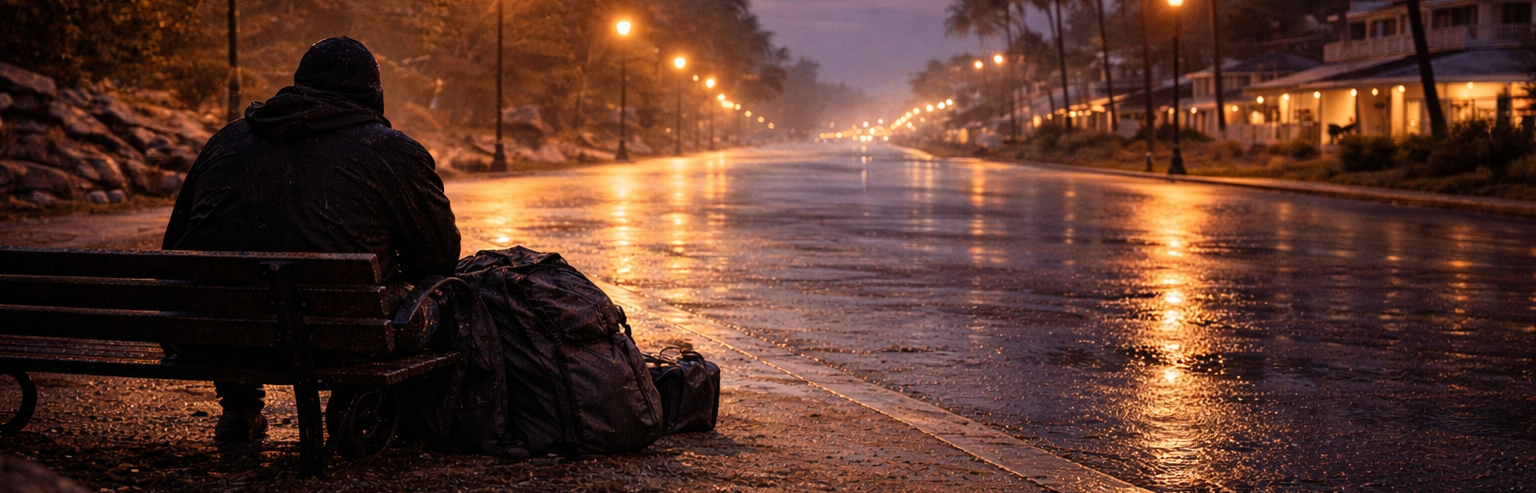
WHEN POVERTY BECOMES A CRIME
The Escalating Cost of Survival in Brevard County
The Criminalization of Poverty
As the sun disappears beyond the Atlantic horizon and the lights of Florida’s Space Coast begin to glow, most residents return home after work. Restaurants close, traffic fades, and neighborhoods settle into familiar nighttime routines.
But for some residents of Brevard County, the night brings a different challenge: finding somewhere to exist without being told to move along.
For individuals experiencing homelessness or severe financial instability, a simple act such as resting on a bench, sleeping in a vehicle, or failing to pay a minor fine can carry consequences far beyond the moment itself. What begins as a small citation can escalate into late fees, court appearances, warrants, and even incarceration.
Across Florida and the United States, researchers increasingly describe this pattern as the criminalization of poverty — a cycle in which economic hardship intersects with enforcement policies in ways that can deepen instability rather than resolve it.
In Brevard County, where rising housing costs and economic pressure affect thousands of households, the issue raises difficult questions about how communities respond to poverty and whether enforcement alone can address challenges rooted in economic hardship.
When Survival Becomes a Violation
For households living on the financial edge, the margin for error can be extremely small. A missed paycheck, medical expense, or car repair can push a family from stability into crisis within weeks.
Across Florida, this reality affects far more residents than many realize.
According to the United Way Worldwide, nearly half of Florida households fall into the ALICE category — Asset Limited, Income Constrained, Employed. These households earn above the federal poverty line but still struggle to afford basic necessities such as housing, food, transportation, and healthcare.
Many of these families work full-time jobs yet remain only one emergency away from losing financial stability.
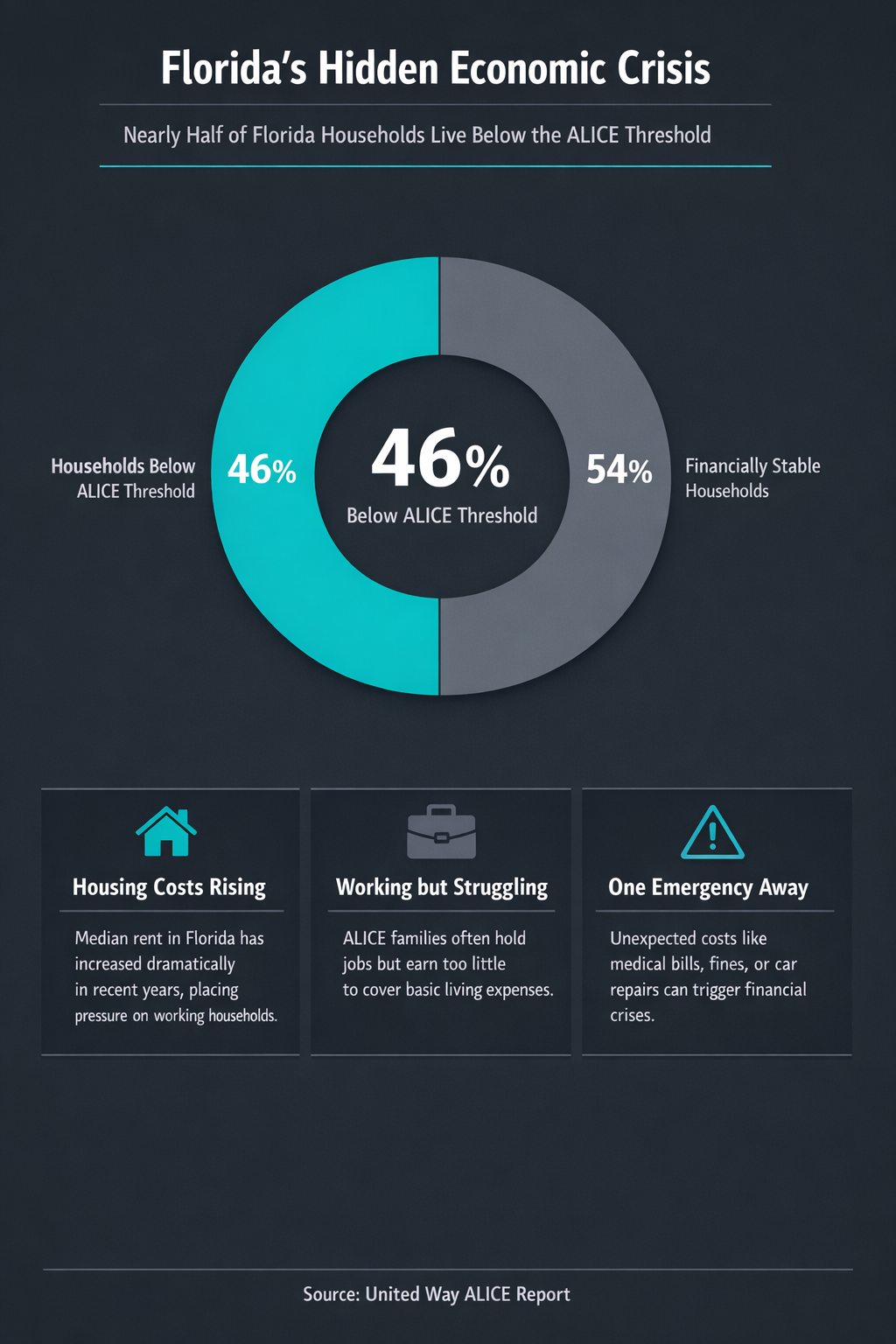
Nearly half of Florida households fall below the ALICE threshold, meaning they earn too much to qualify for many assistance programs but too little to comfortably afford basic living expenses.
Economic instability can intersect with local enforcement policies regulating public space, creating additional challenges for vulnerable residents.
Activities such as sleeping in certain areas, loitering, or failing to pay a citation can quickly become legal issues when individuals lack the resources to resolve them.
Voices From the Community
Behind statistics and policy debates are the experiences of people navigating economic hardship every day.
Their stories highlight the human dimension of a problem often discussed only through statistics and policy reports.
The Escalation Pipeline
Minor civil violations rarely appear serious when they are first issued. But when fines cannot be paid immediately or court appearances are missed due to financial or transportation barriers, the consequences can escalate rapidly.
Researchers studying municipal enforcement policies have documented similar patterns across multiple U.S. cities.
According to the National Homelessness Law Center, laws that penalize activities such as sleeping in public spaces can effectively punish people for behaviors that are unavoidable when someone has no access to housing.
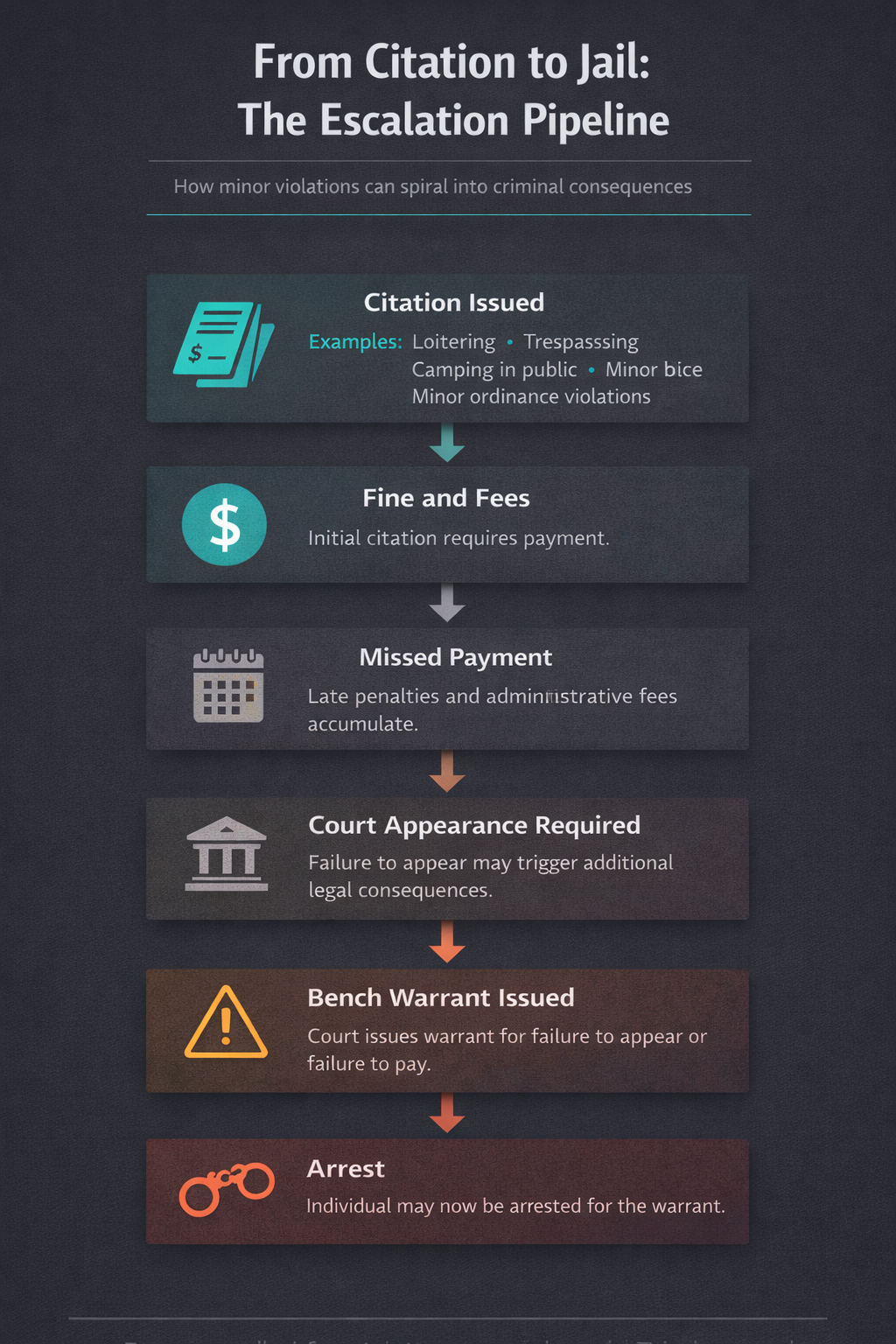
Minor civil violations can escalate into arrest or incarceration when fines go unpaid or court obligations are missed.
A citation can lead to administrative fees, missed court dates, warrants, and eventually arrest — even when the original violation involved a nonviolent offense.
Florida’s Hidden Economic Pressures
Florida has experienced rapid population growth in recent years, accompanied by dramatic increases in housing costs across many metropolitan areas.
Across the United States, housing researchers increasingly identify affordability as one of the strongest predictors of homelessness. Gregg Colburn, a housing policy researcher at the University of Washington and co-author of Homelessness Is a Housing Problem, has studied homelessness patterns across major U.S. cities and found that structural housing pressures often drive homelessness more than individual circumstances.
“The strongest predictor of homelessness across communities is the cost of housing,”
Colburn writes in research examining homelessness trends across multiple metropolitan areas.
His findings suggest that rising rents, housing shortages, and stagnant wages can combine to create conditions where even small financial disruptions can lead to housing instability.
For working families already living near the financial margin, rising rent and limited affordable housing options can create severe pressure.
Without stable housing, everyday tasks such as applying for jobs, maintaining transportation, or receiving mail become significantly more difficult.
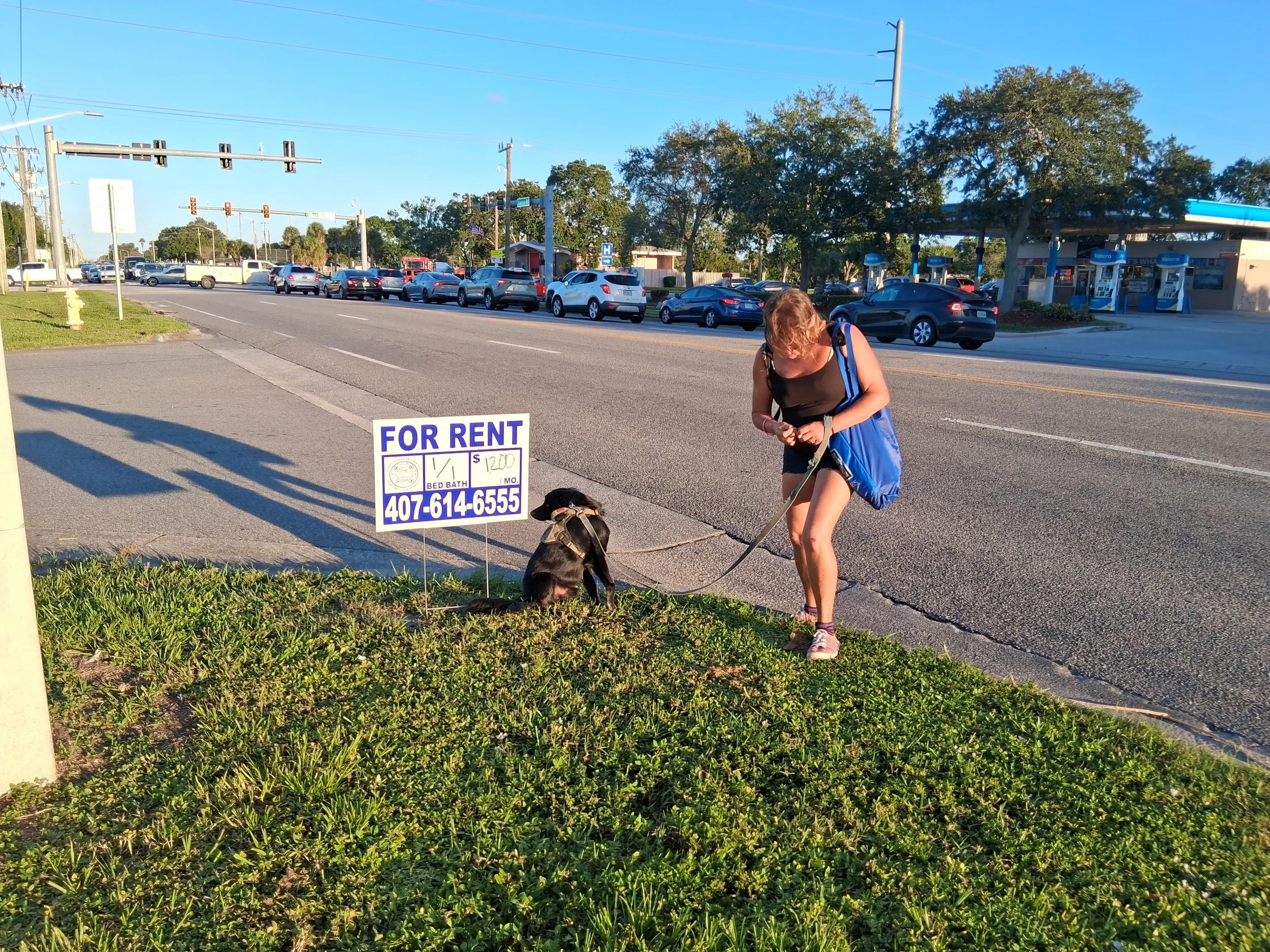
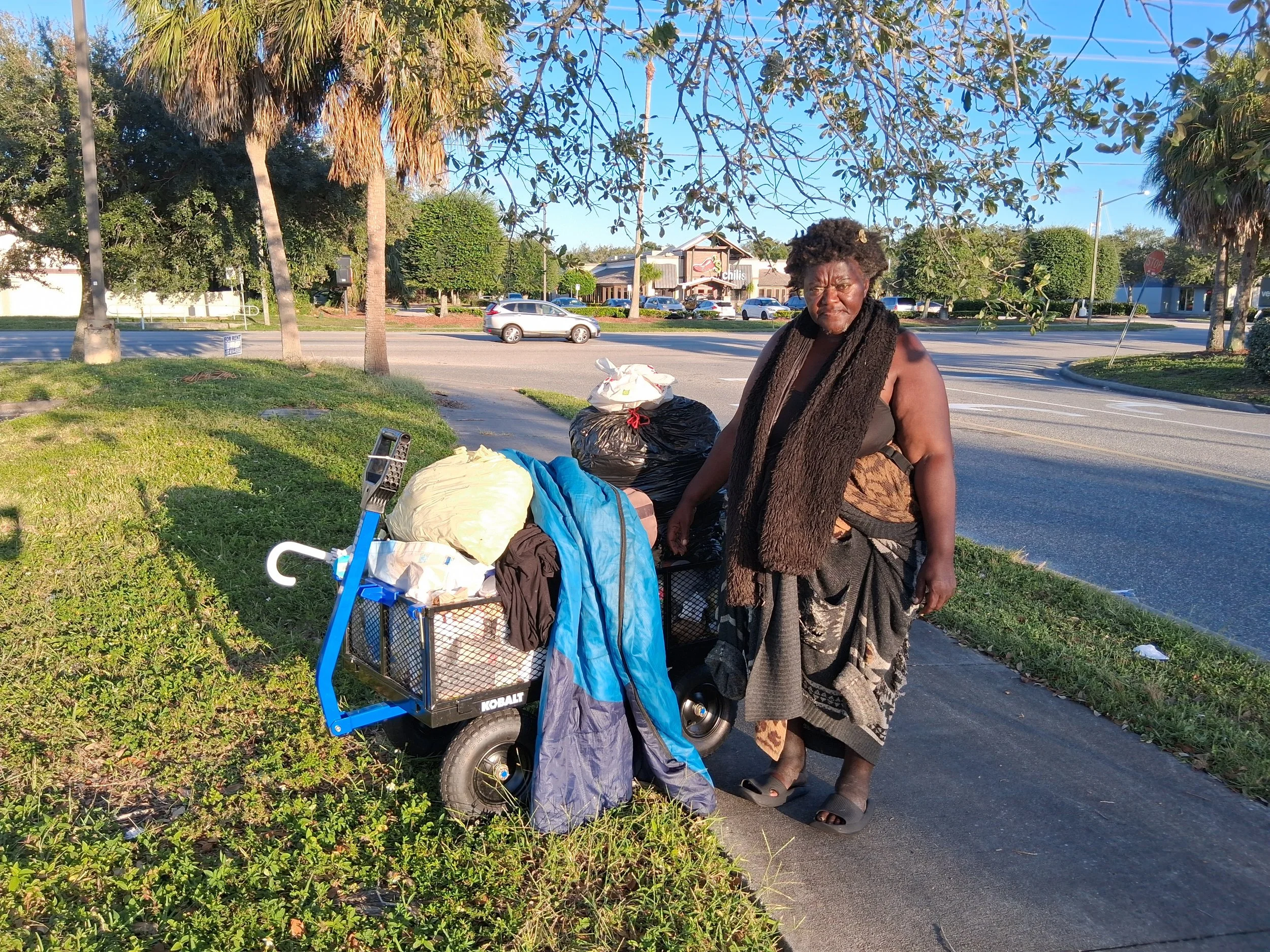
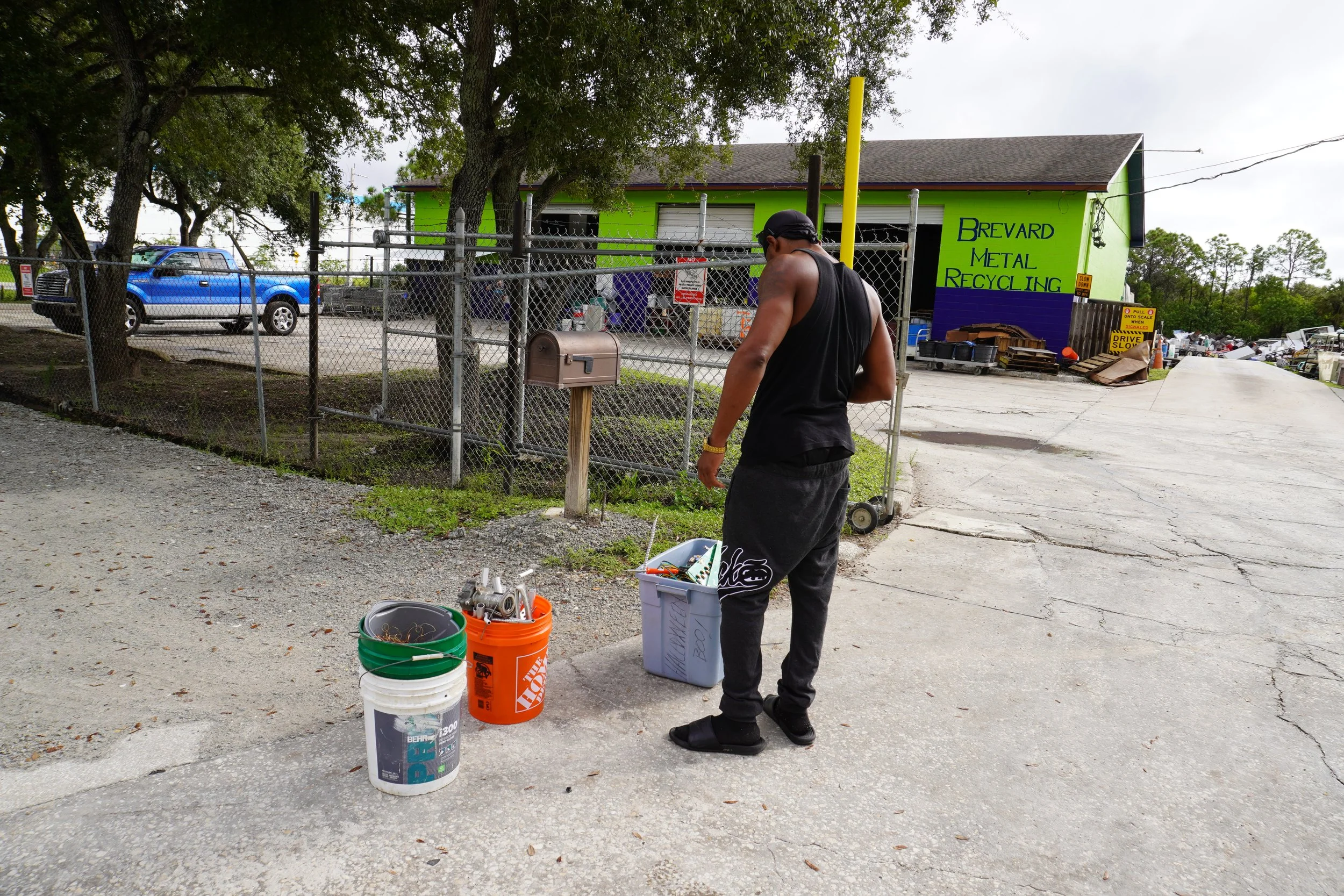
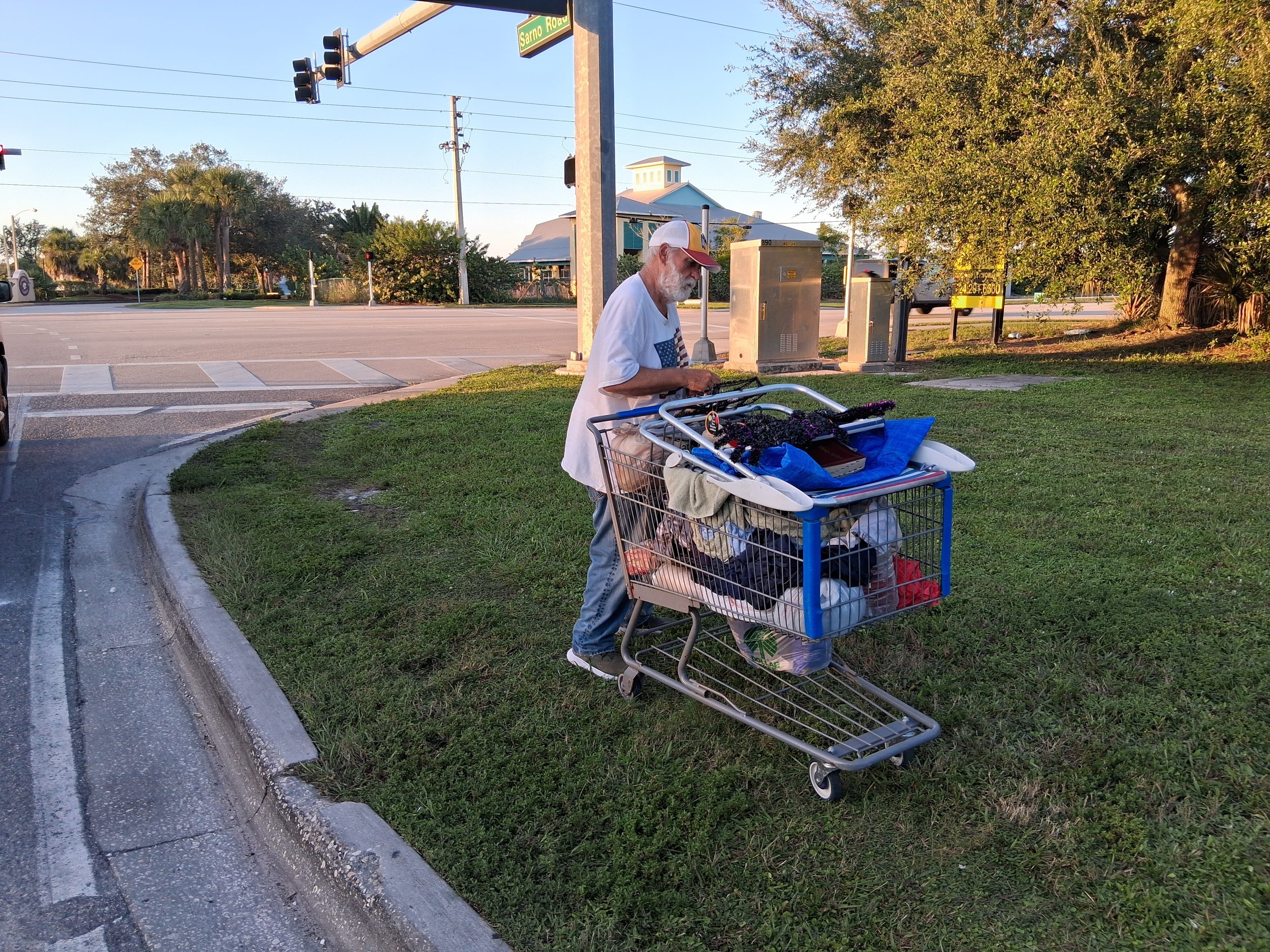
Photos: Scenes across Brevard County showing the everyday reality faced by individuals experiencing homelessness
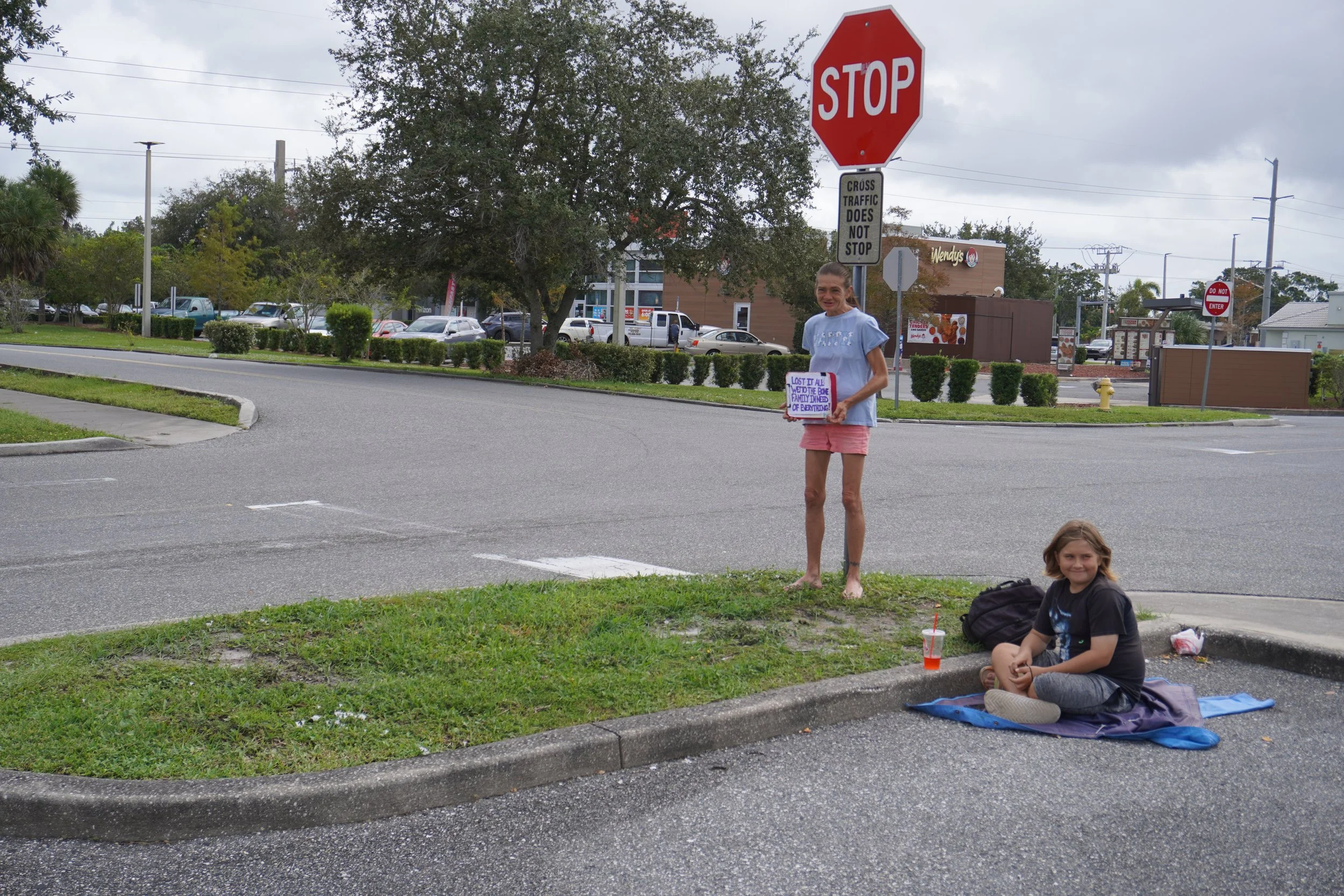
When instability affects families
Economic instability does not only affect housing or employment. It can also shape whether families are able to access support systems that might help them stabilize their lives. Mental health professionals say financial pressure, stigma, and limited access to resources often prevent families from seeking counseling until problems escalate.
Bob Ranieri, a licensed mental health counselor who works with individuals and couples, said many families delay seeking counseling not because they do not care about their wellbeing, but because fear of judgment and financial strain can make support feel out of reach.
“One of the big challenges is sometimes they’re afraid of talking about what they’re going through for fear they might be judged,”
Financial barriers often determine whether families can pursue counseling at all. Ranieri said many individuals face competing obstacles—including childcare responsibilities, transportation challenges, and limited job flexibility—that make consistent care difficult.
“That’s normally a big issue there, because a lot of times they don’t have the funds to either get further education or to provide babysitting services so that they can get better jobs and increase their family income,” he said.
National research supports those concerns. The National Alliance on Mental Illness reports that cost, lack of insurance coverage, and limited provider availability remain among the most common barriers preventing people from accessing mental health services.
Community Response
Organizations across Brevard County work to support individuals experiencing housing instability and economic hardship.
Service providers say demand for assistance has increased as housing costs rise and economic pressures grow.
A Sharing Center administrator and Brevard County resident discuss the challenges facing individuals experiencing homelessness.
Service providers emphasize that access to housing assistance, employment programs, and mental health resources can play a critical role in helping people regain stability.
Homelessness and Enforcement in Florida
Across Florida, municipalities have implemented ordinances regulating activities such as public camping, sleeping in vehicles, and loitering in certain areas.
Supporters argue these policies are necessary to maintain safety and order in shared public spaces.
Critics say enforcement-focused approaches can deepen cycles of poverty and legal involvement.
Research from the Urban Institute suggests that housing instability often intersects with the justice system in ways that disproportionately affect low-income individuals.
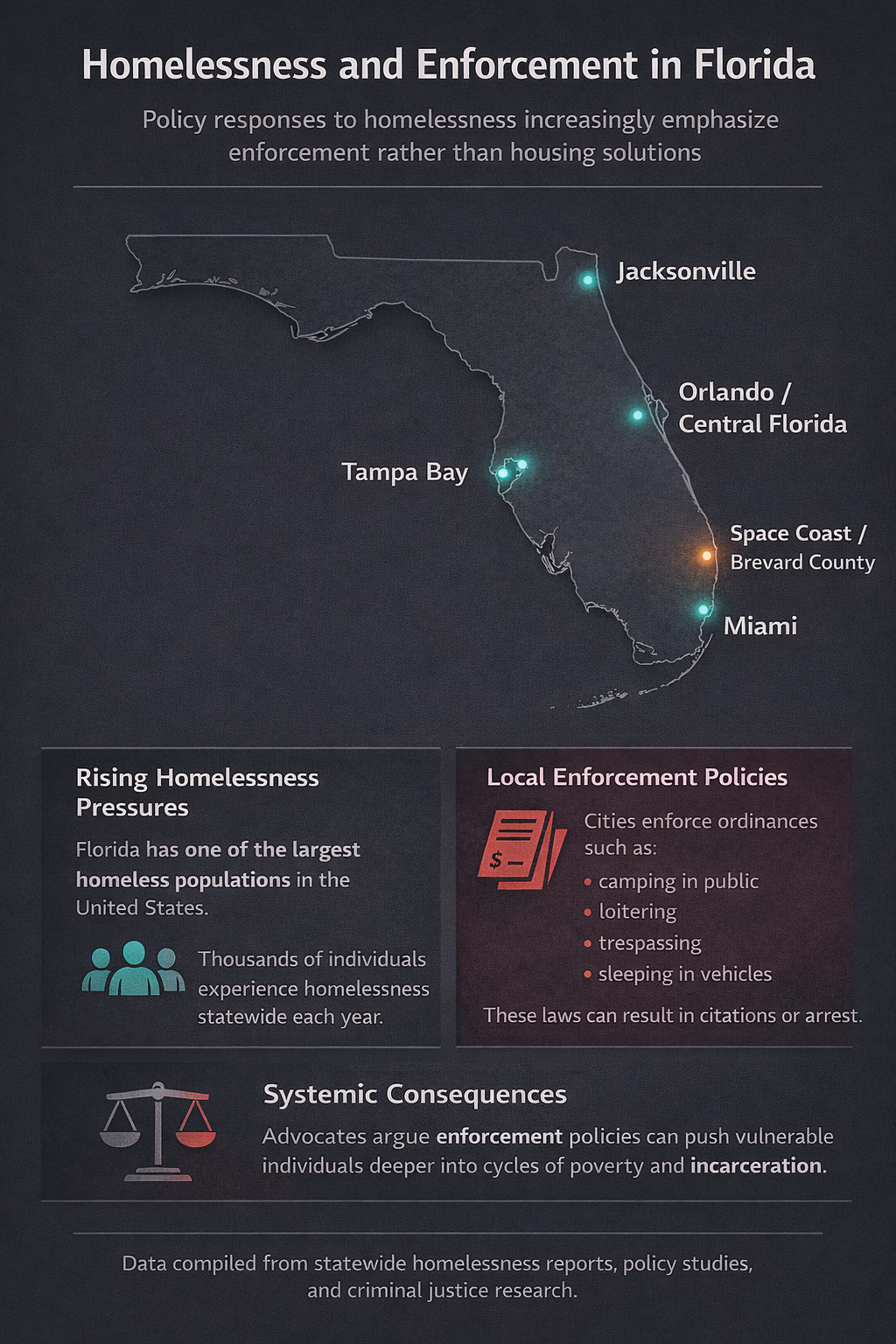
Cities across Florida continue debating whether enforcement policies improve public safety or deepen cycles of poverty.
The Cost of Criminalization
Beyond the human impact, researchers have also examined the economic consequences of enforcement-heavy approaches to homelessness.
Studies have found that repeated use of emergency services, law enforcement, courts, and incarceration can create significant costs for municipalities.
Researchers at the Vera Institute of Justice have reported that preventative housing programs can often cost significantly less than cycling individuals through emergency systems.
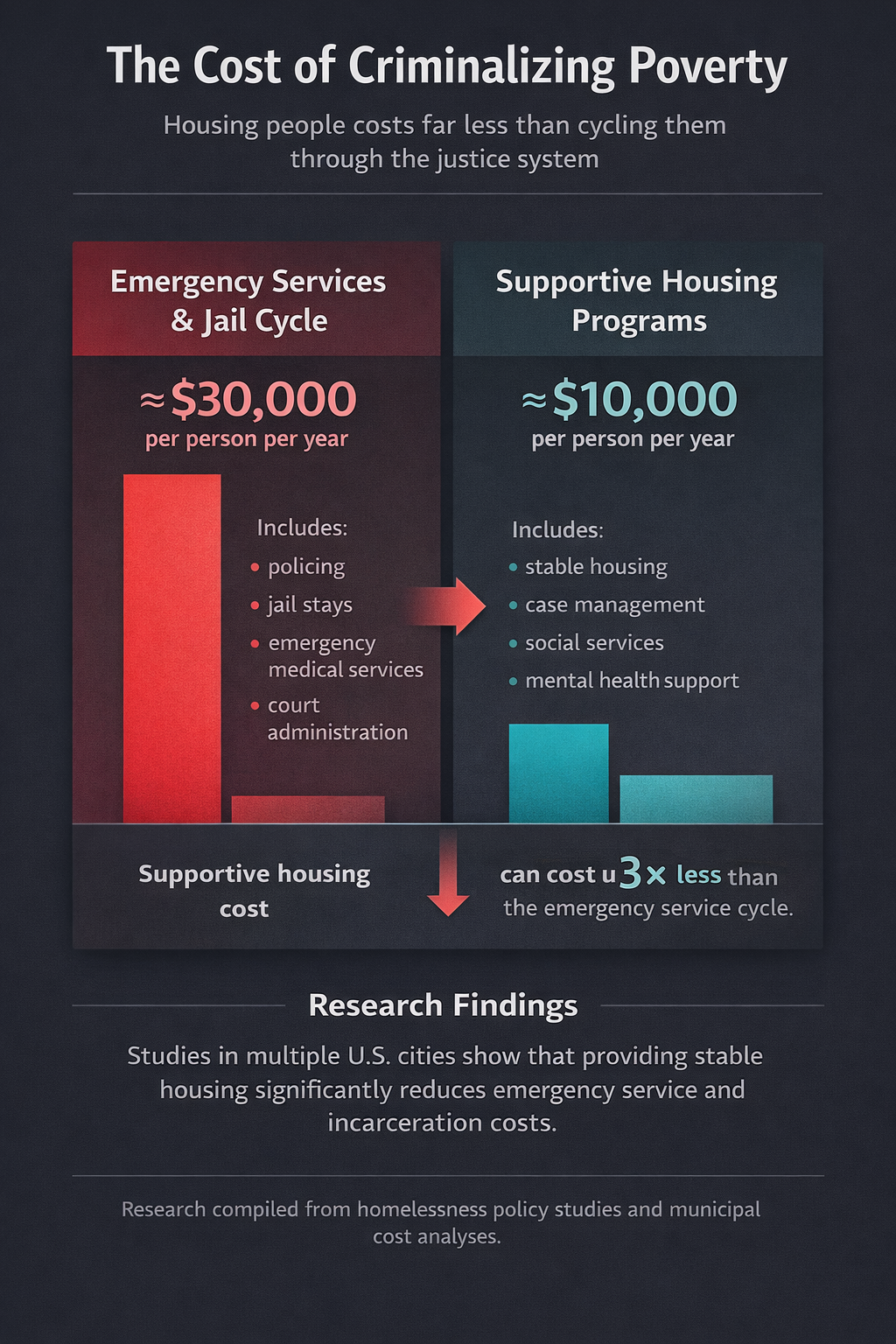
Research suggests supportive housing programs can cost significantly less than the combined expenses of policing, emergency services, and incarceration.
Searching for Solutions
The debate surrounding homelessness and enforcement policies remains complex.
Advocates for stronger enforcement argue that cities must maintain safety and order in shared spaces. Others emphasize that addressing root causes such as housing affordability, mental health services, and economic inequality may provide more sustainable solutions.
As Brevard County continues to grow and housing costs rise across Florida, communities will likely continue grappling with how best to respond.
For many residents, the question ultimately becomes whether public systems offer pathways back to stability — or reinforce cycles that are increasingly difficult to escape.
Join the Conversation
This investigation explores how housing costs and enforcement policies intersect in Brevard County.
What should communities prioritize?
Housing solutions
or
Enforcement policies?
Share your thoughts in the comments on the video below.
Tags: Housing Crisis, Homelessness, Brevard County, Florida, Economic Instability, Criminal Justice, Investigative Journalism