
VOICES ON THE CORNER
What a Small Palm Bay Protest Reveals About America's Growing Crisis of Trust
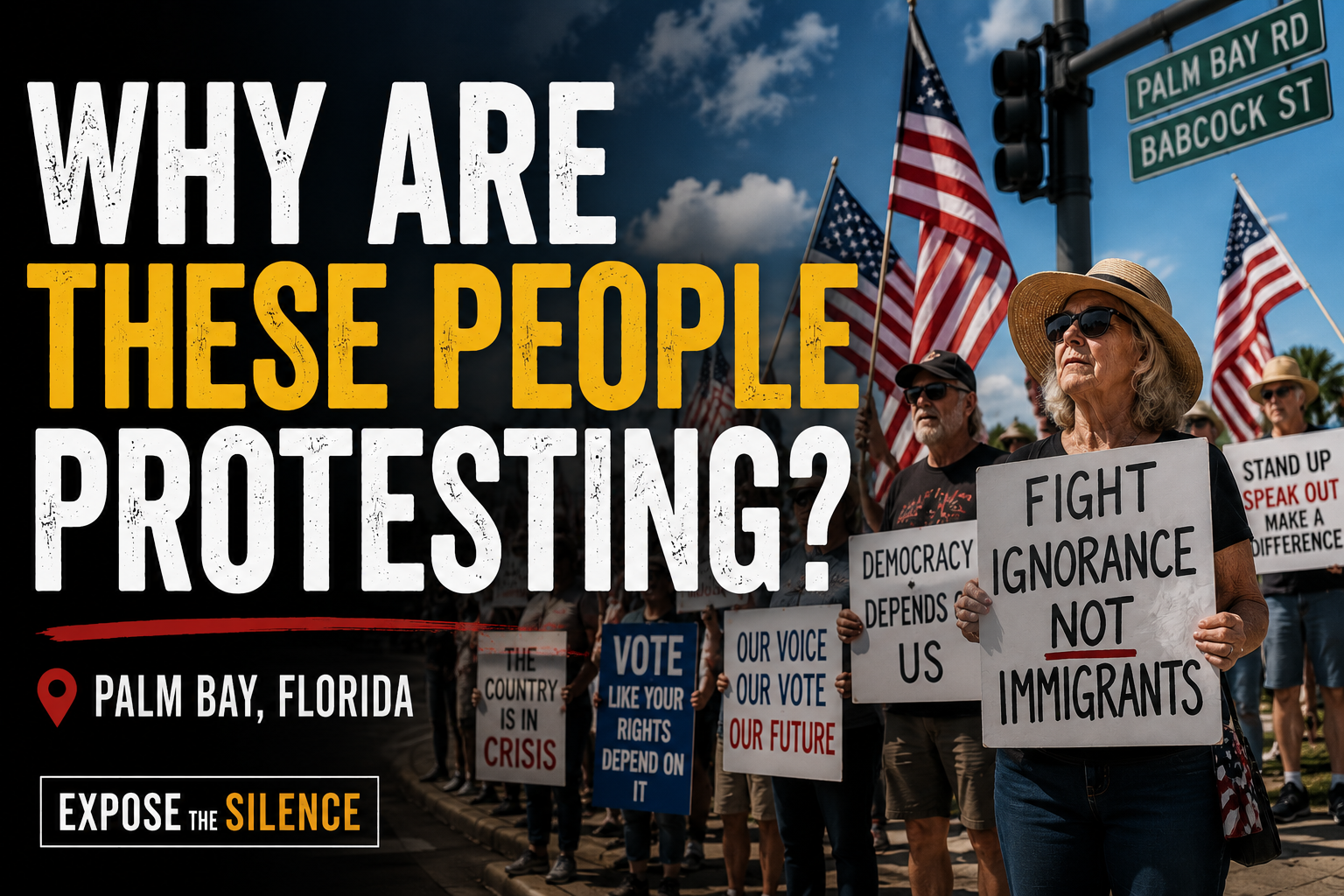
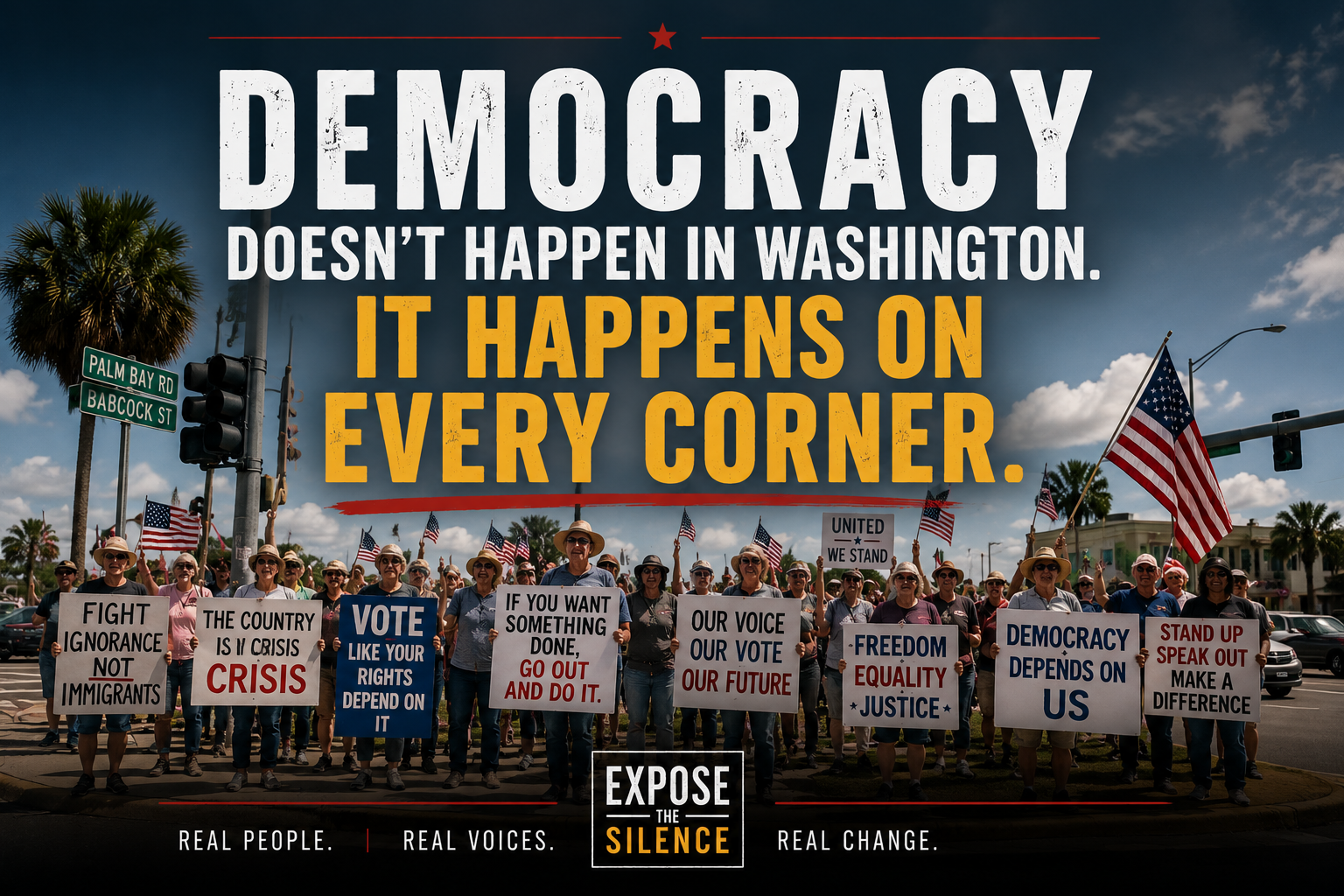
At the intersection of Palm Bay Road and Babcock Street, a small group of citizens gathered with handmade signs and a message they believed could no longer remain silent.
Some signs focused on immigration.
Others warned about threats to democracy.
Some called for greater voter participation.
Others expressed concerns about government accountability, civil liberties, detention policies, and foreign affairs.
To passing motorists, it appeared to be a modest roadside demonstration.
Yet the concerns expressed by these citizens reflect many of the same debates taking place across the United States today.
The protest was not organized around a single issue.
It was a public expression of frustration, concern, and civic engagement from individuals who believe America is at a crossroads.
WHAT WERE THEY SAYING?
The messages displayed during the demonstration varied widely.
One participant held a sign reading:
"Fight Ignorance, Not Immigrants."
Another displayed:
"Vote Like Your Rights Depend On It."
Others carried signs warning about government overreach, detention facilities, democratic participation, and international conflicts.
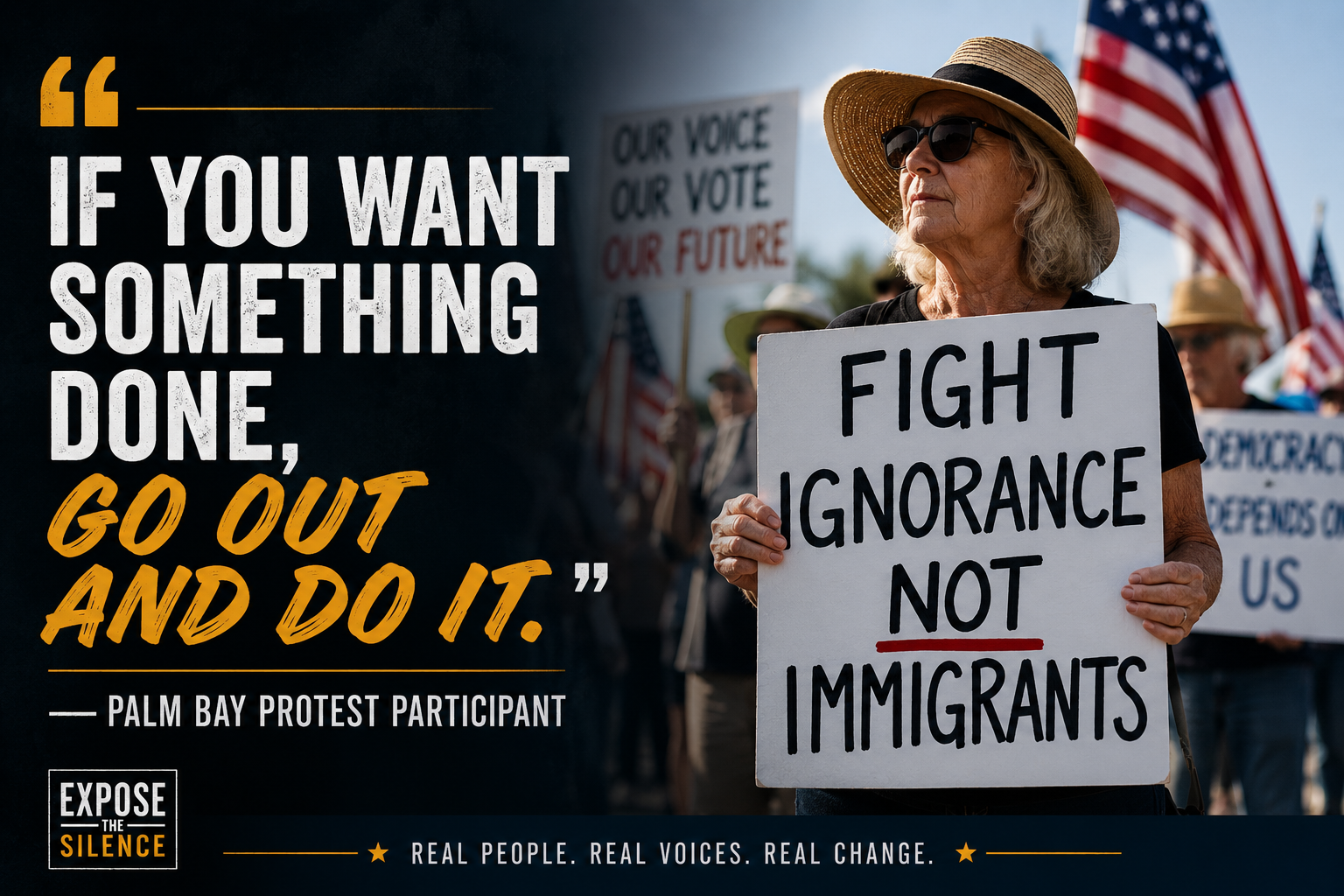
One protester expressed concern about what she views as increasing public apathy.
"If you want something done, go out and do it."
Another argued that Americans should remember the country's immigrant history.
"The only real Americans were Native Americans. Everybody else came from somewhere."
While opinions differed, participants repeatedly returned to a common theme:
Citizens must become more involved in public life.
THE IMMIGRATION DEBATE
Immigration was one of the most visible themes represented during the demonstration.
Participants expressed concern about how immigrants are portrayed in public discourse and questioned whether current policies reflect American values.
The sign reading:
"Fight Ignorance, Not Immigrants"
captured a broader concern shared by several demonstrators: that immigration debates have increasingly become driven by fear, misinformation, and political polarization.
According to the U.S. Census Bureau, immigrants account for approximately 14–15% of the American population, representing one of the largest immigrant populations in the world.
Supporters of immigration reform argue that immigrants contribute significantly to the economy, workforce, entrepreneurship, and cultural diversity.
Critics often cite concerns regarding border security, public resources, crime, and economic competition.
The Palm Bay demonstrators largely emphasized the humanitarian and historical dimensions of the issue.
THE CRISIS OF TRUST
Although the protest covered multiple topics, a deeper theme connected many of them.
TRUST.
Trust in government.
Trust in institutions.
Trust in elected officials.
Trust in media.
Trust in the systems responsible for protecting democratic values.
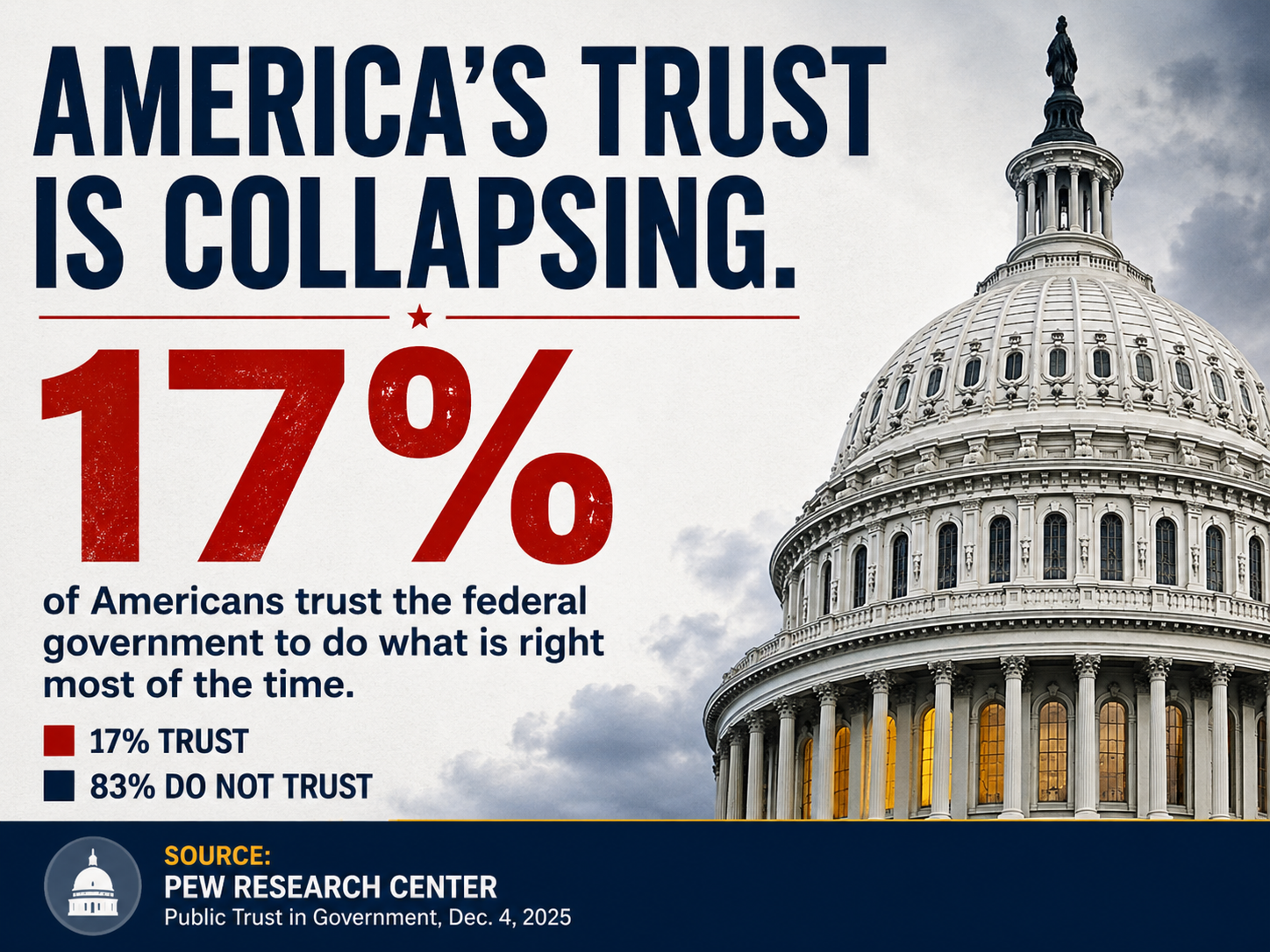
Infographic 1. Public trust in the federal government has fallen to one of the lowest levels recorded in modern American history.
According to Pew Research Center, only 17% of Americans report trusting the federal government to do what is right most of the time.
That represents one of the lowest levels of trust recorded in modern American history.
The decline in trust affects more than politics.
It shapes how Americans view elections, news, public health, law enforcement, and one another.
For many citizens, the loss of trust has become a motivating force for civic participation.
CIVIC ENGAGEMENT IS STILL ALIVE
Despite declining trust in institutions, Americans continue to invest heavily in their communities.
According to AmeriCorps, approximately 75.7 million Americans volunteered through organizations in 2023.
That represents nearly one-third of the adult population.
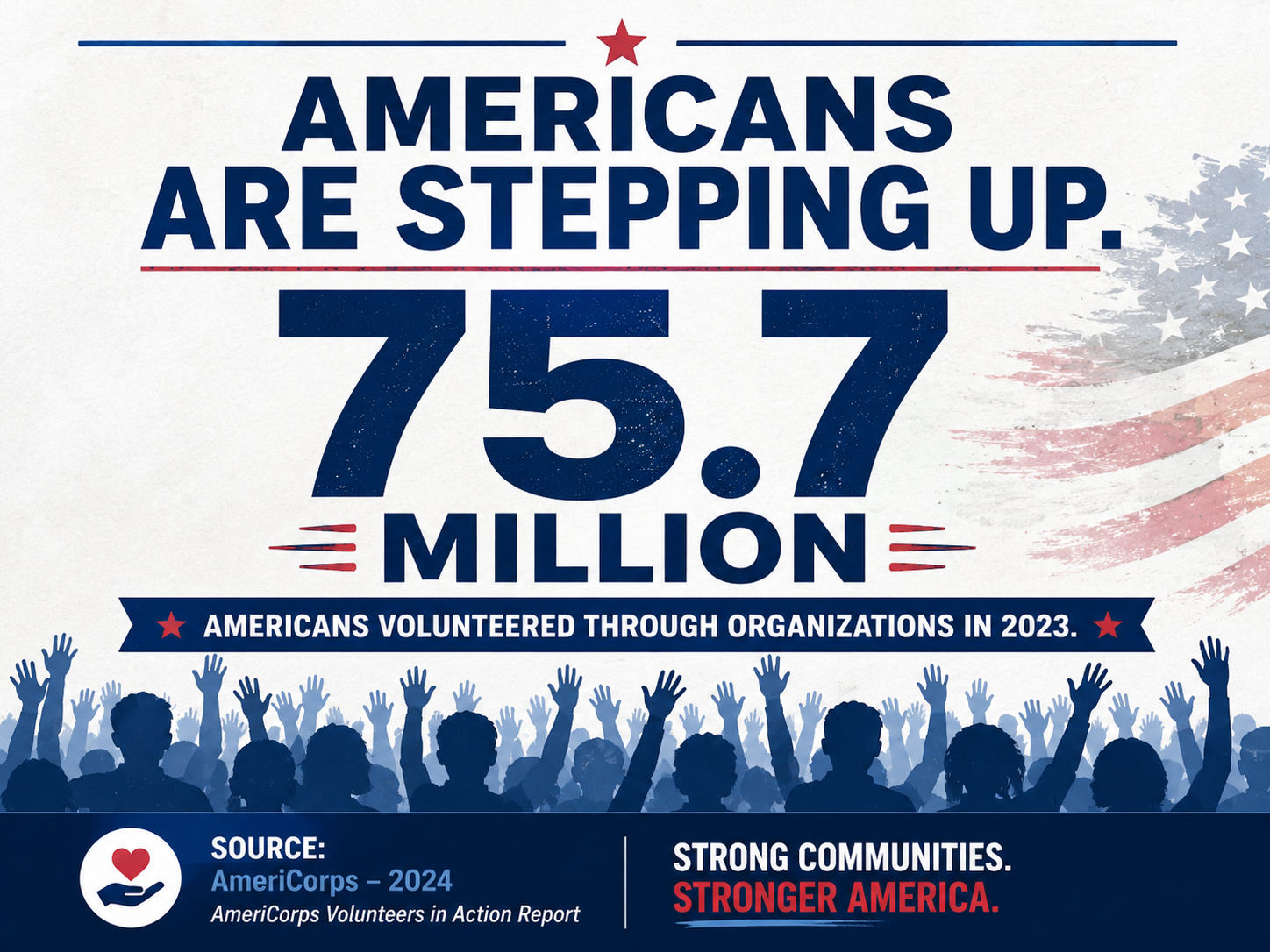
Infographic 2. Despite declining trust in institutions, civic engagement remains strong across the United States. According to AmeriCorps, approximately 75.7 million Americans volunteered through organizations in 2023, demonstrating that millions continue to invest their time, skills, and energy in strengthening their communities.
Volunteerism remains one of the strongest indicators that civic life in America is still active.
From food banks and animal rescues to youth mentorship and disaster relief, millions of Americans continue serving their communities regardless of political affiliation.
The Palm Bay demonstrators represent another form of civic engagement: public participation.
AMERICANS ARE SPEAKING UP
The citizens gathered at this intersection are not alone.
Research suggests that approximately 35% of Americans have participated in some form of activism, public advocacy, petitioning, demonstration, or civic action.
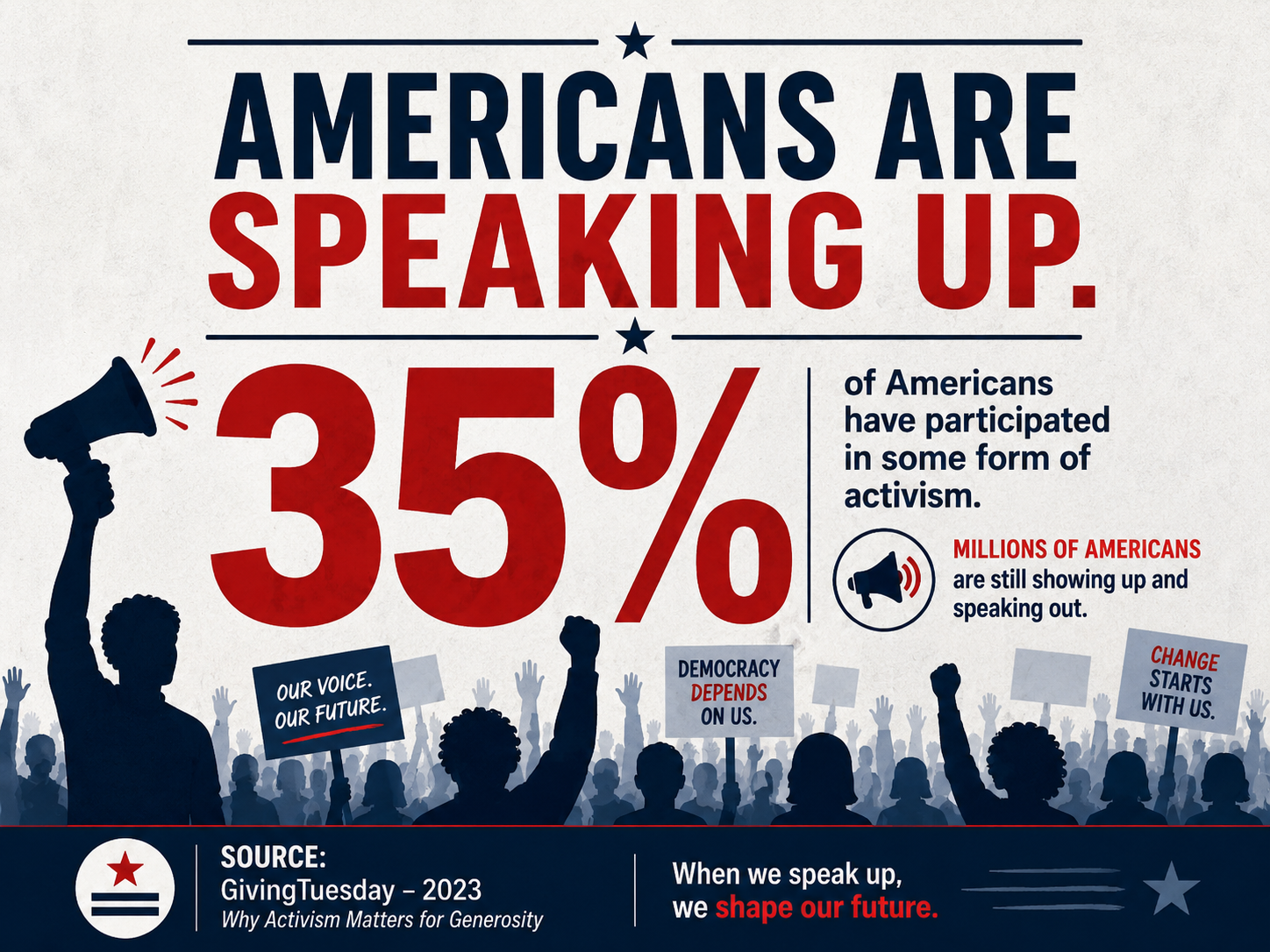
Infographic 3. The citizens gathered at Palm Bay Road and Babcock Street are part of a broader trend of civic participation across the United States. Research indicates that approximately 35% of Americans have engaged in some form of activism, advocacy, petitioning, public demonstration, or civic action, reflecting a growing desire among citizens to make their voices heard on issues they believe matter.
Whether motivated by social justice, civil rights, economic concerns, environmental issues, immigration policy, or political reform, millions of Americans continue to engage in public advocacy.
The Palm Bay demonstration represents one small example of a larger national trend.
People increasingly feel compelled to make their voices heard.
A NATION OF INDEPENDENTS
One of the most significant political developments in America today is the rise of political independents.
According to Gallup, approximately 45% of Americans now identify as independents rather than aligning with either major political party.
A record high.
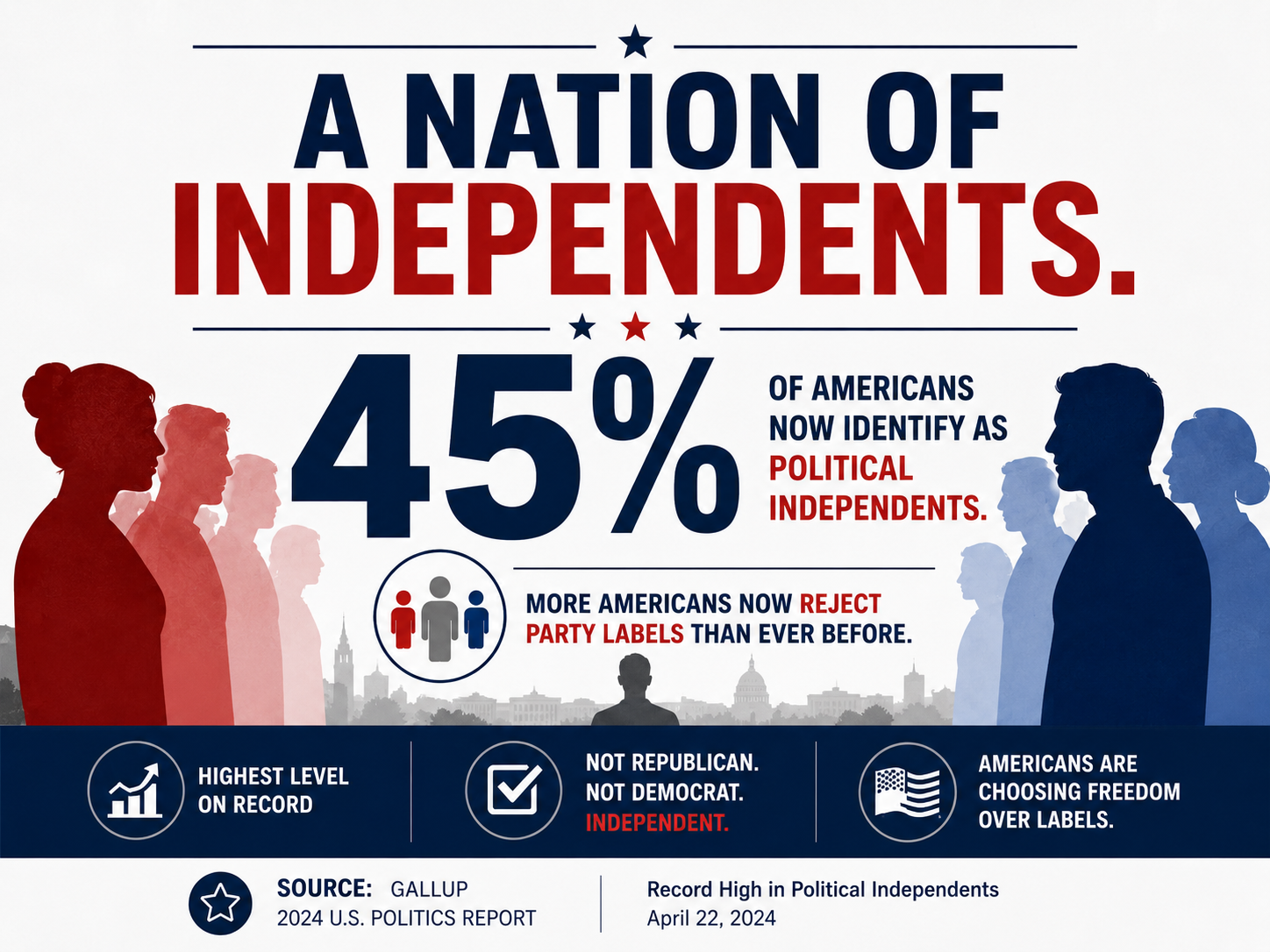
Infographic 4. America's political landscape is changing. According to Gallup, approximately 45% of Americans now identify as political independents rather than aligning with either major political party. The trend suggests a growing number of citizens feel disconnected from traditional political institutions and are seeking solutions beyond conventional partisan divides.
The growth of political independence suggests that many Americans feel disconnected from traditional political institutions.
For some, neither party fully represents their views.
For others, the country's challenges have become too complex for simple partisan solutions.
The result is a growing number of citizens searching for alternatives outside conventional political labels.
WHY PEOPLE TAKE TO THE STREETS
Public demonstrations have long been part of American democracy.
From the Civil Rights Movement to anti-war protests, labor movements, women's suffrage campaigns, and contemporary social justice efforts, public assembly remains one of the most visible expressions of civic participation.
The individuals standing on this Palm Bay street corner were exercising that tradition.
Their signs differed.
Their priorities differed.
But their actions reflected a common belief:
Democracy requires participation.
VOICES FROM THE CORNER
"If you want something done, go out and do it."
"Fight Ignorance, Not Immigrants."
"Vote Like Your Rights Depend On It."
"The country is in crisis."
These statements may not represent every American.
But they represent citizens who felt strongly enough to leave their homes, stand in public, and advocate for what they believe.
The demonstration at Palm Bay Road and Babcock Street was small.
But the issues raised were not.
Immigration.
Civil liberties.
Voting rights.
Government accountability.
Public participation.
Trust.
Whether one agrees with the protesters or disagrees with them entirely, their presence reflects a reality that cannot be ignored:
Many Americans believe the country is facing important challenges and feel compelled to speak out.
At a time when political division often dominates public conversation, these citizens chose a different approach.
They showed up.
They participated.
And they reminded everyone driving past that democracy is not something that happens only in Washington.
It happens wherever citizens decide their voices matter.
Sources
Pew Research Center – Trust in Government
Gallup – Political Independents in America
AmeriCorps – Volunteering and Civic Life in America
U.S. Census Bureau – Foreign-Born Population Statistics
Field interviews and photographs conducted in Palm Bay, Florida
Editorial Note
This article documents a public demonstration and the perspectives expressed by participants. Inclusion of those views does not imply endorsement by Expose The Silence.
